Behind the search for “branding rebranding” is a practical decision: does your business need a clearer expression of the same promise, or a change in what customers believe it stands for?
That distinction matters for challenger brands. Change too little and you keep carrying a positioning problem into sales conversations. Change too much and you spend money replacing recognition you should have protected.
Branding builds meaning. Rebranding deliberately changes established meaning, recognition or both. A design refresh can support either, but a new visual identity is not automatically evidence of a new strategy.
The useful boundary is not old versus new. It is what customers must understand differently, and why.
What the “branding rebranding” question really means
Branding is the ongoing work of shaping how people identify, understand and experience a business. It connects your audience, positioning, promise, personality and identity with what customers encounter in practice.
It starts before a company launches, but it does not stop once the logo exists. A familiar business still builds its brand through product decisions, customer service, communications and distribution.
Rebranding is a deliberate intervention in that established system. It changes some combination of the brand’s positioning, name, messaging, identity or architecture because the existing version no longer serves the business well enough.
This makes rebranding a specific kind of brand work, not branding’s replacement. After the transition, everyday brand building continues.
Consider a software company expanding from freelancers to enterprise procurement teams. Improving its website navigation is ordinary optimization. Making its existing promise clearer is ongoing branding. Repositioning the business around enterprise governance, with different messaging and evidence, crosses into rebranding.
The practical difference between branding and rebranding is therefore the starting condition: are you building understanding, or asking people to revise an understanding they already have?
Find the boundary in meaning and recognition
Two questions make the decision more concrete: What meaning must change? What recognition should survive? These are related, but they are not interchangeable.
A company can change its positioning while retaining its name and recognizable visual assets. Another can modernize its appearance without changing its audience or promise.
| Type of work | What changes | What usually stays | Example situation |
|---|---|---|---|
| Ongoing branding | Clarity, consistency and execution | Core positioning and identity | Teams describe the same offer inconsistently |
| Brand refresh | Selected visual or verbal elements | Central promise and much of the recognition | The identity works poorly across digital formats |
| Strategic rebrand | Positioning, audience focus or brand architecture | Valuable assets that remain relevant | The business enters a materially different category |
| Comprehensive rebrand | Multiple strategic and identity elements, potentially including the name | Selected associations and evidence of continuity | A merger creates a substantially different organization |
These labels are useful working definitions, not universal industry standards. Some agencies call a refresh a partial rebrand. The scope document matters more than the label.
Write down what will remain unchanged as carefully as what will change. Existing customers need continuity, and the team needs boundaries that prevent a focused project from becoming an expensive reinvention.
Reasons to change, and benefits worth pursuing
A rebrand becomes defensible when something meaningful has shifted: the business model, priority audience, competitive landscape, offer or organizational structure.
A manufacturer moving from contract production into its own premium products may need a different market position. A company assembled through acquisitions may need clearer relationships between its brands. A regional business entering another country may discover that its name or associations do not travel well.
The benefits should follow directly from that change. Stronger positioning can make the company easier to shortlist. Clearer brand architecture can help customers understand an expanded offer. A coherent identity can make a growing organization easier to recognize.
In branding and rebranding, benefits should be expressed as customer or business outcomes, not aesthetic preferences. “Make enterprise buyers understand our implementation capability” is actionable. “Look more premium” leaves too much unresolved.
Leadership boredom, a competitor’s redesign or a new marketing director’s preferences are weak reasons on their own.
First check whether the problem belongs to the brand
Poor conversion does not automatically mean weak branding. Customers may understand the promise perfectly and still reject the price, product limitations or buying process.
Likewise, reputation problems caused by unreliable delivery require operational correction. A fresh identity cannot make an unfulfilled promise credible. It can even attract more attention to the gap.
Ask lost prospects and recent customers where their decisions changed. If people say, “We thought you only served small businesses,” perception may be constraining growth. If they say, “Your onboarding took too long,” start with delivery.
Sometimes both problems exist. Fix the experience while preparing a more accurate market story, rather than using the launch to imply that everything is already resolved.
This diagnosis protects the budget. It also prevents a familiar mistake: judging the success of a rebrand against a commercial problem it was never equipped to solve.
Establish readiness before approving creative work
The strongest project brief contains a clear difference between today’s perception and tomorrow’s required perception.
Complete this sentence: “Today, priority customers see us as ___; we need them to understand ___ because our business now ___.” If the team cannot agree on the answer, creative exploration will expose the disagreement rather than resolve it.
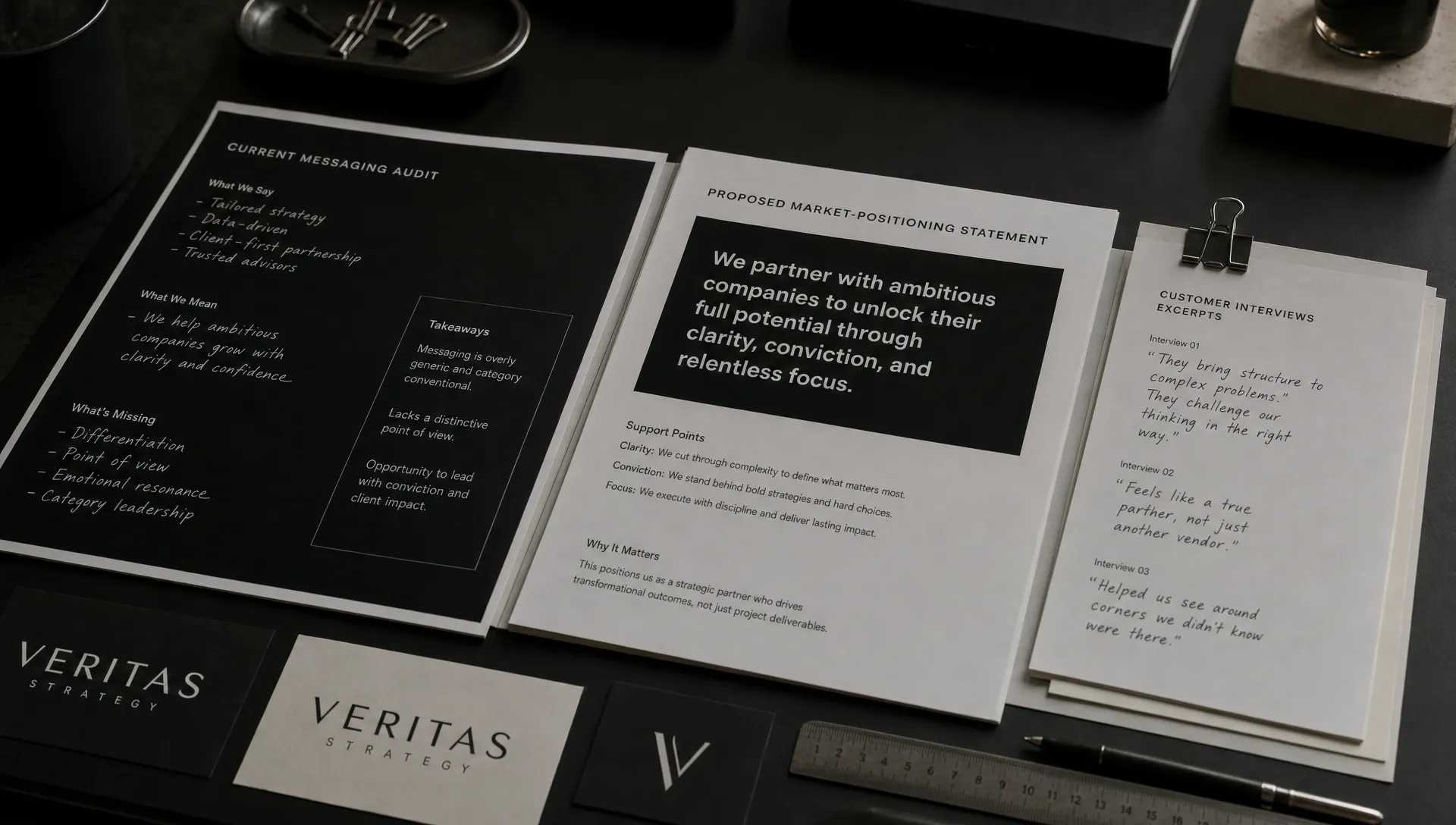
Gather evidence from customer interviews, sales calls, search behavior, win-loss discussions and an audit of existing touchpoints. Include people who did not buy, not just loyal customers who already understand the business.
Branding and rebranding decisions also need an internal readiness check. Is the offer ready? Can employees explain the change? Can customer-facing teams deliver the proposed promise? Is someone accountable for the transition after launch day?
A useful decision document records the problem, supporting evidence, proposed scope, assets to retain and conditions that would stop the project. This gives leadership a basis for approving change without treating every later preference as a new strategic requirement.
Separate strategic scope from production scope
Decide what must change in the market
Strategic scope defines the change in understanding. It might involve a new audience priority, a sharper competitive position, a different promise or a clearer relationship between product brands and the parent company.
Choose the smallest scope capable of solving the verified problem. An unclear product hierarchy does not necessarily require renaming the company. An inaccessible color palette does not automatically invalidate the positioning.
This is also where you identify valuable associations. Customers may trust a particular name, recognize a distinctive symbol or associate the company with unusual expertise. Preserve those advantages unless there is a reason not to.
Then calculate what must change operationally
Production scope defines the work required to make the decision real. A modest strategic change can still affect hundreds of templates, product screens, partner listings and sales documents.
Conversely, a substantial repositioning may need relatively little visual change if the existing identity remains appropriate.
When budgeting for branding and rebranding, separate strategic development from asset production, technical implementation, training and transition communications. Otherwise, an approved creative budget can conceal an unfunded rollout.
Boil’s guide to branding services at different growth stages provides useful context for matching the work to the business need rather than buying every possible deliverable.
Define success before the identity changes
A rebrand needs a baseline, a desired outcome and an observation period. Without those, launch enthusiasm can substitute for evidence.
Use a small set of measures connected to the original problem. If buyers misunderstand the offer, test comprehension. If the business is excluded from consideration, investigate awareness and shortlist inclusion among the intended audience. If recognition is already strong, monitor whether the change preserves it.
| Decision objective | Useful measure | Important qualification |
|---|---|---|
| Clarify the offer | Accurate descriptions in customer interviews | Ask open questions before showing suggested answers |
| Reach a new buyer group | Qualified inquiries from that segment | Use a consistent definition of qualification |
| Preserve familiarity | Recognition of retained and revised assets | Compare equivalent audiences and test conditions |
| Support commercial performance | Win rate within the priority segment | Account for pricing, sales and product changes |
For branding and rebranding alike, measurement should distinguish understanding from behavior. People may understand the new proposition immediately but take longer to enter a buying cycle.
Choose review intervals that fit that cycle, then compare like with like. A seasonal spike or simultaneous advertising increase can distort conclusions. Avoid claiming that every improvement after launch was caused by the rebrand.
Boil’s discussion of branding impact beyond a new identity explores why clarity, trust and commercial usefulness matter alongside appearance.
Turn the promise into observable proof
Positioning becomes useful when customers can connect the claim with something they can inspect or experience.
For a concrete example, Livestock Way’s livestock hauling load board presents a specific proposition through visible rates, rig-compatible loads and direct shipper-to-hauler connections. Those details give practical substance to the offer rather than relying on broad claims about being a better transport platform.
The lesson is not that every business needs more features in its messaging. It is that the promise should have recognizable evidence.
Before approving a new position, connect each important claim with proof. “Easy to implement” might require a documented onboarding process. “Built for complex organizations” needs evidence of relevant capabilities. “Personal service” should be reflected in actual access and response practices.
This test belongs in both branding and rebranding. If the supporting evidence is missing, narrow the claim or improve the experience. Do not ask design to make an unsupported promise feel convincing.
Plan the transition around customer continuity
Equip employees and partners before public launch
Employees need more than a presentation of the new identity. They need to understand why the change is happening, what stays the same and how to explain it in ordinary conversations.
Prepare customer-facing teams for predictable questions: Is ownership changing? Are contracts affected? Will the products or people change? Why does the business look different?
Give teams consistent answers, but avoid turning every interaction into a scripted announcement. A salesperson needs a concise explanation. A support team may need detailed guidance on account access, invoices and product naming.
Partners require their own preparation. Distributors, resellers and referral sources may control materials you cannot update directly. Give them approved assets, deadlines and a named contact.
For branding and rebranding projects, internal alignment is visible outside the company. Customers notice when the website tells one story while sales and service tell another.
Protect digital visibility and recognizable touchpoints
Inventory the touchpoints before choosing the launch date. Include domains, important URLs, email addresses, social profiles, product interfaces, business listings, documents, packaging and physical signage.
If URLs change, create an old-to-new mapping and use appropriate permanent redirects. Update internal links, canonical references and sitemaps, then monitor indexing and traffic. Google’s guidance on site moves with URL changes explains the technical considerations and potential temporary search fluctuations.
Do not assume every rebrand needs a new domain. Keeping an established address can reduce unnecessary migration work when the name remains suitable.
Where recognition needs support, use transitional messaging such as “Newname, formerly Oldname.” Keep it long enough to help customers understand the connection, rather than removing it because the launch campaign has ended.
Boil’s guidance on launching a rebrand without confusing customers covers continuity across the rollout in greater detail.
What familiar brand changes teach about scope
Dunkin’: adjust the name without discarding every association
Dunkin’ Donuts announced its shortened Dunkin’ name in 2018, with the change taking effect in 2019. It retained recognizable elements including its pink and orange colors.
The useful lesson is selective continuity. A name can evolve while familiar assets help people connect the revised identity with the business they already know. This does not mean a name change is automatically necessary when an offer expands.
Meta: distinguish a corporate identity from a product identity
Facebook announced Meta as its new company brand in 2021. Its official announcement explained that the change brought its apps and technologies under a new company brand; the Facebook app retained its name.
That distinction matters for branding and rebranding because companies and products do not always need the same identity. Brand architecture can be part of the solution when a corporate name no longer represents the organization’s scope.
Neither example proves that a particular redesign caused commercial success. Both demonstrate a more useful principle: define the level at which change is needed, then decide what customers should continue to recognize.
Avoid mistakes that make the change larger than the solution
One common mistake is replacing everything because the project has been labeled a rebrand. This increases cost and removes useful familiarity without proving that either sacrifice is necessary.
Another is using consensus as the main evaluation method. Stakeholder input matters, but a design that everyone finds acceptable may still fail to express the intended position. Evaluate work against the agreed audience, strategic objective and usability requirements.
A third is treating launch day as completion. Old templates return, partners keep outdated descriptions and product teams create inconsistent variations unless ownership continues after release.
Across branding and rebranding, assign responsibility for maintaining the system, resolving exceptions and reviewing results. Guidelines help, but someone must make decisions when the guidelines meet a situation they did not anticipate.
Frequently asked questions
Does branding end when rebranding begins? No. Branding is ongoing. Rebranding is a deliberate change within that work, followed by continued efforts to build understanding, recognition and trust.
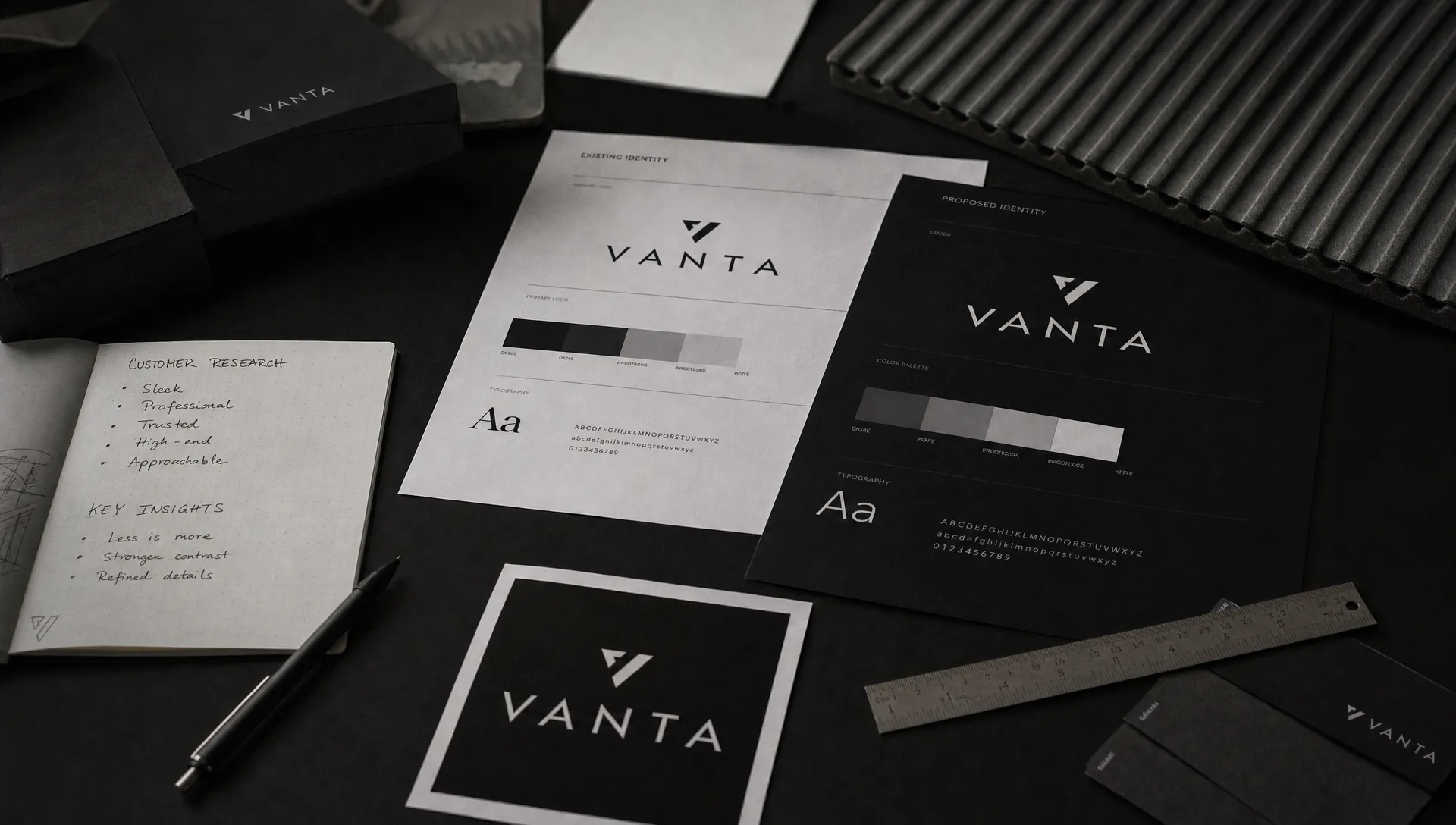
Is a new logo always a rebrand? No. A logo update may be a refresh within an unchanged strategy. It becomes part of a broader rebrand when it supports a deliberate change in established identity or market meaning. Define the actual scope rather than relying on terminology.
Can you rebrand without changing your name? Yes. A business can change its positioning, messaging, architecture or visual identity while keeping its name. Rename only when the existing name creates a meaningful constraint that cannot be solved more proportionately.
How often should a company rebrand? There is no universal schedule. Review the brand when evidence shows a mismatch between the business, its audience and market perceptions. Age alone is not a sufficient reason to replace an effective identity.
What should a rebranding budget include? Include research, strategy, creative development, production, technical implementation, employee preparation and transition communications. Also account for materials controlled by partners and the ongoing work needed after launch.
Decide what needs to change before deciding how it should look
The boundary between branding and rebranding is a decision about continuity: what should customers keep believing, and what must they understand differently?
Start with that answer. Preserve what earns trust, change what limits growth and fund the operational work that makes the promise real.
If your challenger brand is facing that decision, explore Boil’s branding and go-to-market approach. Bring the commercial problem first, so the scope of change follows the growth you need.
