
Most teams don’t “need branding”, they need specific branding services at a specific moment.
A pre-launch founder who buys a full brand book is usually paying for certainty. A scaling team that keeps “tweaking the logo” is usually avoiding the harder work of positioning, messaging, and go-to-market execution.
This guide breaks down what actually matters at each growth stage, so you can spend time and budget where it moves market share (not where it just looks nicer).
A quick definition: what counts as “branding services”?
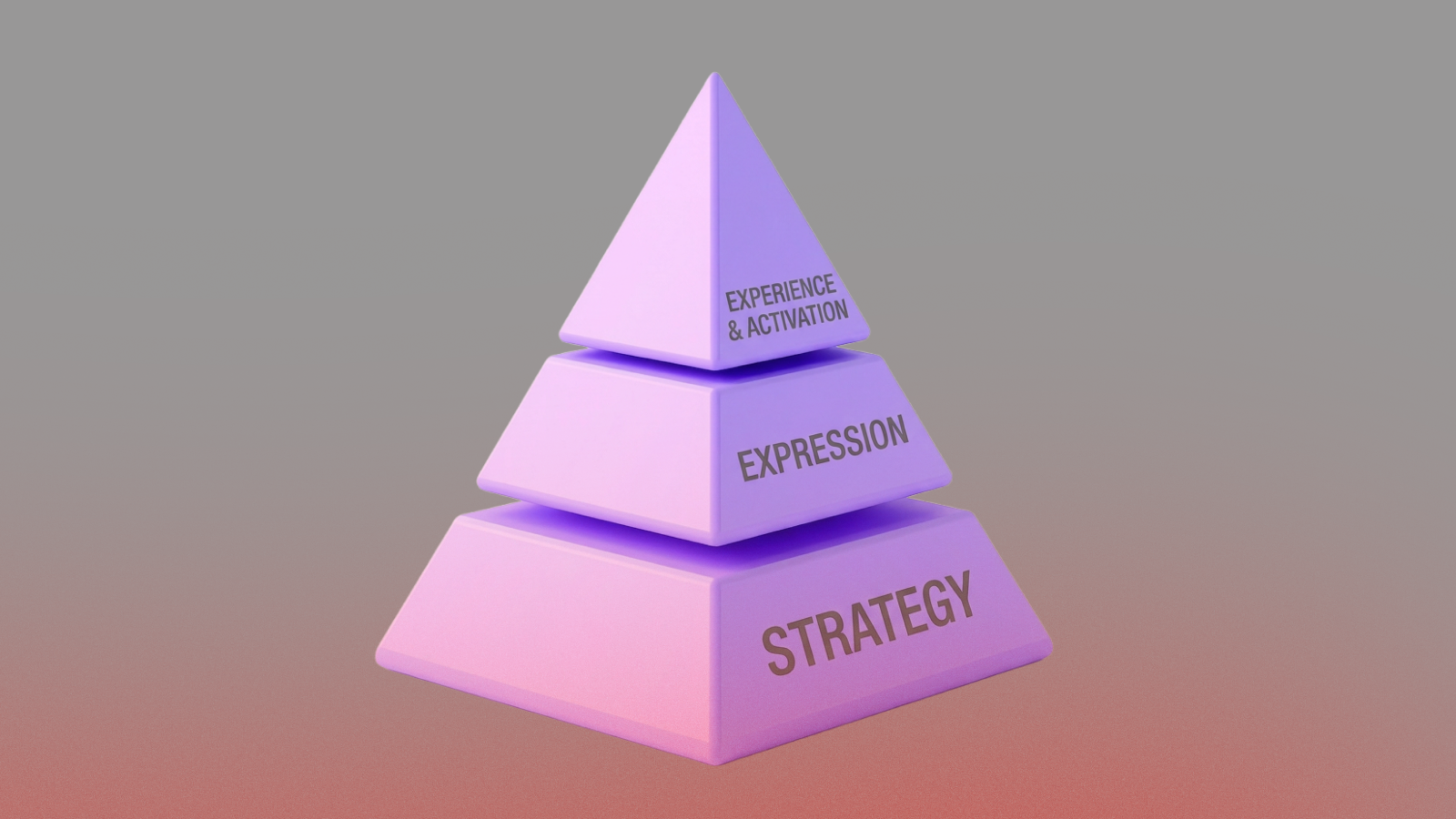
Branding services span three layers that often get mixed up:
The stage you’re in determines which layer is the constraint.
Stage 0: Pre-launch (idea, prototype, pre-revenue)
What you actually need
At this stage, your brand’s job is to make your first customers understand you fast and trust you enough to try.
Focus your branding services on:
What to avoid
A full visual identity system is rarely the bottleneck. The bottleneck is usually:
How to measure success
You’re looking for early signals:
Stage 1: Early traction (first customers, still finding product market fit)
What you actually need
Your brand’s job is to turn learning into clarity, then ship that clarity everywhere.
The highest-leverage branding services in this stage are:
This is also when consistency becomes a growth multiplier. You need repeatable assets, not one-off design.
What to avoid
How to measure success
Stage 2: Product market fit and scaling (new hires, more channels, higher stakes)
What you actually need
Now the brand’s job is to scale coherence across people, channels, and touchpoints.
This is where full-scope branding services start paying off:
A common scaling failure is “brand as decoration”. At this stage, the brand is an operating system: it speeds up content, hiring, partnerships, and product marketing.
Where AI and automation can help
Scaling also exposes operational drag: content production, campaign iteration, reporting, knowledge management, and internal enablement.
If AI is part of your growth plan, consider bringing in an AI specialist to audit workflows and build practical automation. An example is an AI agency for audits, training, and custom solutions that focuses on turning AI into measurable business value.
How to measure success
Stage 3: Expansion (new markets, new segments, new category pressure)
What you actually need
At expansion, the brand’s job is to travel well.
Your best branding services here are about translation without dilution:
If you’re a challenger, this is also when you decide whether to compete in the existing category or create a new frame (category design). The wrong choice creates years of expensive confusion.
What to avoid
How to measure success
Stage 4: Rebrand or strategic reset (maturity, M&A, reputation issues, or a new direction)
What you actually need
Rebranding is not “new visuals”. The job is change management plus renewed differentiation.
The branding services that matter most:
A strong rebrand creates momentum because it aligns what you say, what you do, and what people experience.
What to avoid
How to measure success
The simplest way to choose branding services: identify the constraint
If you’re unsure what to invest in, diagnose the constraint by asking:
Branding becomes expensive when it’s not connected to the constraint.
What a “right-sized” branding engagement can look like
A practical way to structure branding services (without overbuying) is to aim for one clear outcome per engagement:
You can do all three, but you rarely need all three at once.
Frequently Asked Questions
What are branding services, exactly? Branding services cover the strategy (positioning and narrative), expression (identity and messaging), and experience (website, product, and go-to-market execution) that shape how people perceive and choose your brand.
When should a startup pay for a full brand identity? Usually when you have early traction and you’re about to scale channels or hiring. Before that, prioritize positioning and messaging so your first customers can quickly “get it.”
Is rebranding only for big companies? No. Rebranding makes sense whenever your strategy changes (new market, new offer, new audience) or when your current identity and message actively limit growth.
What’s the difference between brand strategy and go-to-market strategy? Brand strategy defines what you will be known for and why you matter. Go-to-market strategy defines how you will enter, win, and grow in the market (channels, launches, activation, metrics). They should reinforce each other.
Need branding services that match your growth stage?
Boil is a next-generation branding and go-to-market agency built for challengers, helping ambitious brands stand out and grow market share through strategy, creative, and digital experiences.
If you want help mapping your stage to the right scope (and avoiding expensive “brand theater”), start at Boil and explore their approach to branding, go-to-market, and rebranding support.
