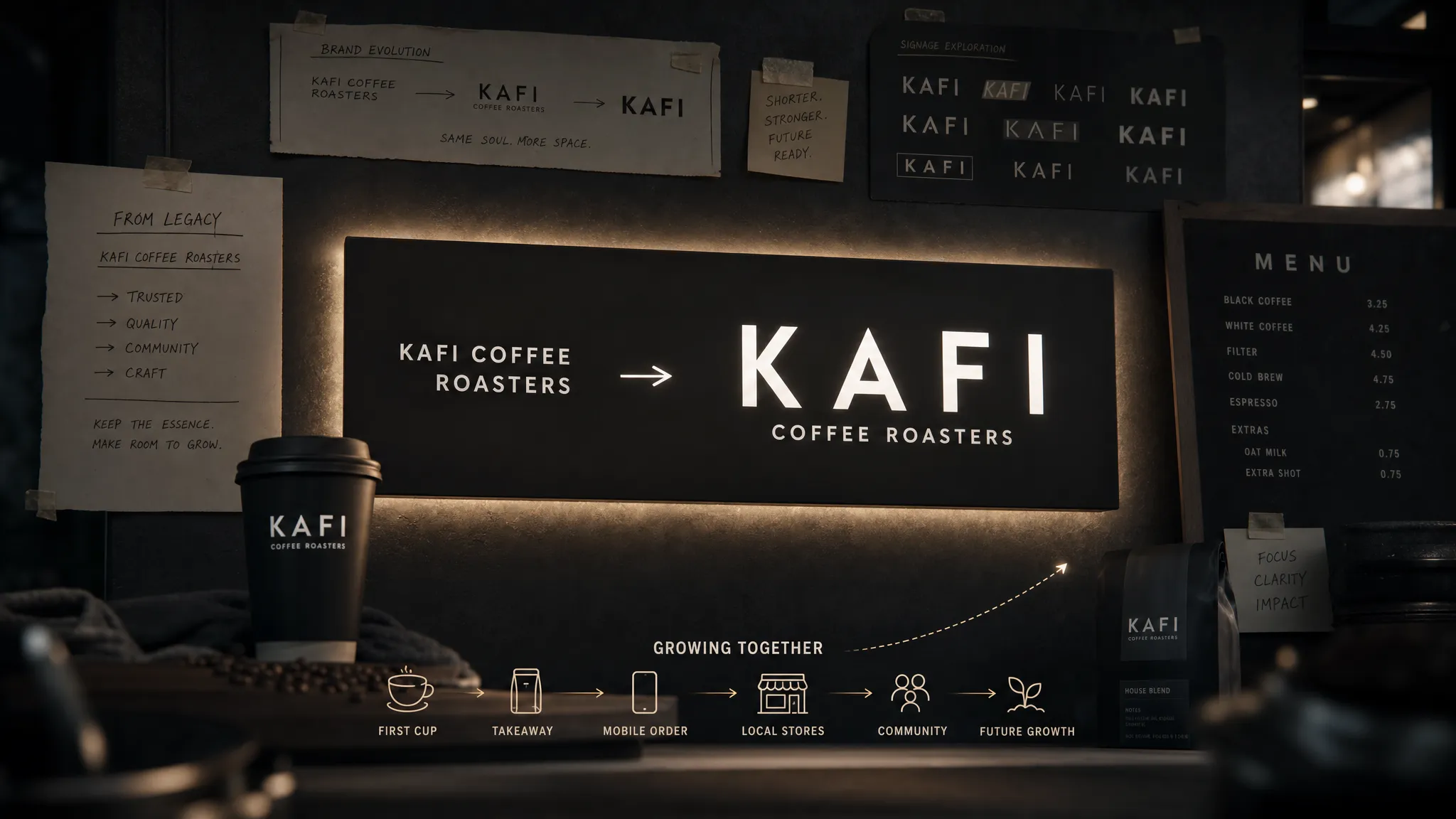
The rebranding Dunkin Donuts story is often reduced to one simple move: the company dropped “Donuts” and became “Dunkin'.” But the reason it worked was not just because the name became shorter. It worked because the shorter name captured what customers already called the brand, protected decades of recognition, and gave the business room to grow beyond a product that no longer defined the full experience.
For founders, CEOs, and marketing leaders, Dunkin' is a useful case study because it shows a rare balance: meaningful strategic change with minimal audience friction. The brand did not try to look like a completely different company overnight. It changed the frame while keeping the feeling.
That is the real lesson. A strong rebrand does not always need to shout. Sometimes the smartest move is to remove what is holding the brand back.
What actually changed in the Dunkin' rebrand?
Dunkin' Donuts announced in 2018 that it would officially shorten its name to Dunkin' in January 2019. The move followed years of customers already using the shorter name in everyday speech, reinforced by the famous “America Runs on Dunkin'” line.
The company did not abandon its visual memory. It kept the orange and pink color palette, the rounded type style, and the energetic tone people associated with the brand. The shift was visible, but not disorienting.
That distinction matters. A name change can trigger anxiety when customers feel a brand is walking away from what they love. Dunkin' avoided that by keeping enough familiar assets to reassure loyal customers while signaling a wider commercial ambition.
In other words, this was not a cosmetic tweak. It was a business strategy made visible.
Why “Dunkin'” was already the name customers used
The strongest rebrands often formalize a truth that already exists in the market. Dunkin' did not invent a new identity from scratch. It codified what people were already saying.
That gave the company a major advantage. The shorter name felt natural because it was already part of customer language. It sounded casual, fast, and habitual, which matched the way people used the brand: grabbing coffee, breakfast, or a snack on the move.
A weaker version of this move would have been a completely new abstract name, a radical logo, or an identity system that tried to chase a trend. Instead, Dunkin' recognized the equity sitting inside its existing nickname and turned it into the master brand.
This is one of the safest ways to evolve a mature brand: listen for the shorthand customers already use, then assess whether that shorthand can carry future growth.
For challenger brands, the principle is especially relevant. You may not have Dunkin's scale, but your audience may already be giving you clues. They might shorten your name, describe your product differently than your team does, or associate you with a use case you have underplayed. Those signals can reveal where your next positioning move should come from.
The strategic problem with “Donuts”
The word “Donuts” was not wrong. It had heritage, familiarity, and category clarity. But by the late 2010s, it was too narrow for where the business wanted to go.
Dunkin' had become much more than a donut shop. Coffee, breakfast sandwiches, cold beverages, mobile ordering, drive-thru convenience, and all-day snacking were central to the customer experience. The old name anchored perception to one product, while the business model increasingly depended on a broader set of occasions.
This is a common rebranding trigger. A company starts in one category, becomes known for it, then expands into a wider value proposition. At some point, the original name becomes a ceiling.
That ceiling can show up in several ways:
- Customers only consider you for one product, even when you offer more.
- Investors or partners misunderstand your growth strategy.
- New markets interpret the brand too literally.
- Talent struggles to see the company as innovative or evolving.
- Marketing teams must keep explaining that the brand is “more than” its name suggests.
Dunkin' solved that by keeping the brand equity in “Dunkin'” while removing the category constraint in “Donuts.” It was a smaller name with a bigger commercial surface area.
Why the shorter name won
The shorter name won because it did four jobs at once.
First, it made the brand easier to say, remember, and use. In an era of mobile apps, social media, delivery platforms, packaging, signage, and loyalty programs, shorter brand names carry practical advantages. They are easier to fit, faster to recognize, and more flexible across touchpoints.
Second, it made the brand less product-limited. Dunkin' could continue selling donuts without being defined only by donuts. That gave the company more permission to lead with beverages, breakfast, convenience, and future menu innovation.
Third, it preserved emotional continuity. Customers were not asked to learn a new personality. The brand still felt upbeat, accessible, and familiar. This is why the move is often discussed alongside the best rebrands of all time, because it changed the strategic meaning without burning down the existing memory structure.
Fourth, it aligned the brand with the speed of the experience. “Dunkin'” sounds like motion. It fits a morning routine. It feels like something you do on the way somewhere. That subtle linguistic fit matters more than many teams realize.
A good rebrand is not just what looks better in a presentation. It is what works harder in the real world.
Dunkin' protected its distinctive brand assets
The reason the name change felt smooth was that Dunkin' did not change everything at once. It protected what brand strategists call distinctive assets, the recognizable cues that help people identify a brand quickly.
Dunkin' kept its high-energy orange and pink. It kept a familiar typographic spirit. It kept the apostrophe. It kept a tone that was friendly, direct, and American in feel. It also had years of “America Runs on Dunkin'” doing the strategic groundwork before the formal name change.
That is why the rebrand did not feel like a break. It felt like an edit.
This is one of the most important lessons for any company considering a major identity change. If you change your name, colors, logo, messaging, product architecture, and customer experience at the same time, you increase the risk that your audience will lose the thread. If you know which assets carry recognition, you can change more confidently.
At Boil, we often see challenger brands underestimate this point. They know what they want to move away from, but they have not mapped what must be carried forward. That is where many rebrands lose momentum. The goal is not to preserve everything. The goal is to preserve what creates trust.
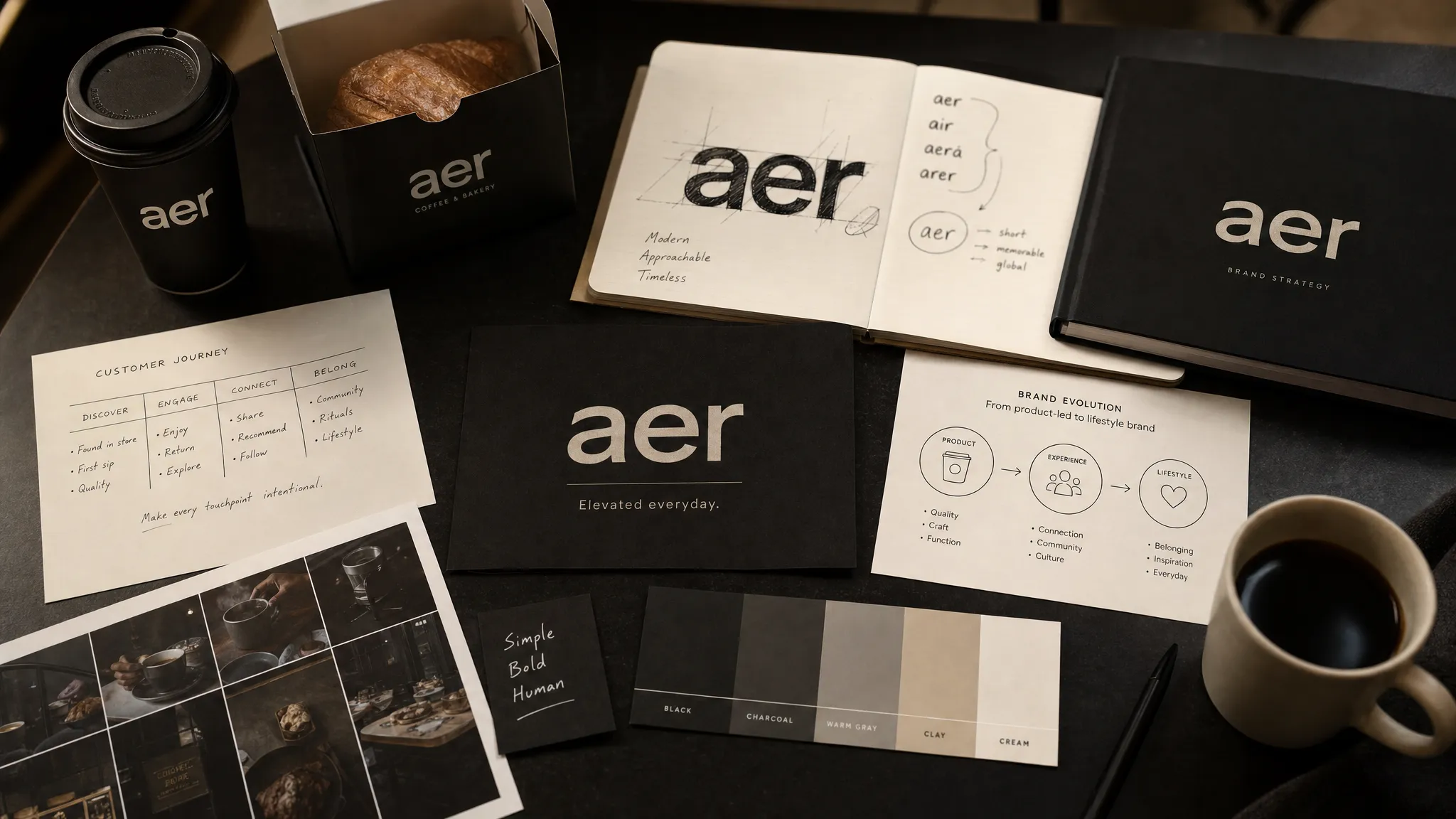
The rebrand worked because operations supported the promise
A brand change only becomes credible when the business experience supports it. Dunkin' did not simply remove a word and hope perception would shift. The company was already investing in a more modern, beverage-led, on-the-go experience.
That included updated store formats, digital ordering, faster service models, and menu innovation. The brand strategy and the operating model were moving in the same direction.
This matters because customers do not experience a rebrand as a strategy document. They experience it through packaging, service, product quality, app flows, staff behavior, availability, and price. If the new positioning says “modern and convenient” but the store experience feels slow and dated, the rebrand fails at the point of contact.
Dunkin' gave the shorter name a job. It was not just a cleaner sign. It was a shorthand for the direction of the business.
That is a crucial distinction for founders and CEOs. Rebranding should not be isolated inside marketing. It should connect to product, sales, operations, customer success, hiring, channel strategy, and expansion plans.
The global lesson: shorter names travel better, but strategy still has to localize
A shorter, simpler name can help a brand travel across markets. It is easier to pronounce, easier to place on signage, easier to use in digital interfaces, and often easier to adapt across cultures. But simplicity alone does not guarantee international success.
When a brand expands into new regions, the name is only one part of the equation. Market readiness, channel selection, compliance, logistics, pricing, retail access, and local buying behavior all determine whether a brand can scale profitably.
That is where growth teams need to connect brand strategy with market entry strategy. If a rebrand is meant to unlock international growth, teams should validate which markets are commercially attractive, which channels are realistic, and what localization work is required before committing resources. Platforms that provide an AI-powered market readiness scan and partner matching can help consumer brands evaluate expansion opportunities faster and reduce the risk of entering the wrong market with the wrong route to market.
Dunkin' is a reminder that brand architecture can create permission to grow. But permission is not execution. The companies that win internationally pair a clear brand with disciplined market entry decisions.
What challenger brands can learn from Dunkin'
Dunkin' had massive awareness before the rebrand, but the underlying logic applies to smaller and scaling companies too. The question is not “How do we copy Dunkin'?” The question is “What constraint is our current brand creating?”
For a challenger brand, that constraint might be a name tied to an old product, a visual identity that looks too small for enterprise buyers, a message that no longer matches the audience, or a category position that competitors have crowded.
Here is the practical playbook.
Start with the business shift, not the logo
Dunkin' changed because the business had changed. The company needed a brand that could support beverages, convenience, digital behavior, and broader daily routines. That is the right order.
Before touching identity, define the strategic shift in plain language. Are you moving from product to platform? From local to international? From low-cost to premium? From niche audience to mainstream adoption? From one category to multiple buying occasions?
If you cannot explain the business shift clearly, the rebrand will likely become subjective. Teams will debate taste instead of strategy.
Identify what must be kept
Dunkin' did not treat its legacy as a problem. It treated it as an asset. That is why the new identity still carried old memory.
Before a rebrand, audit the assets your audience already recognizes. These might include a color, tagline, name fragment, product ritual, mascot, sound, founder story, packaging shape, or tone of voice. Some assets may feel old internally but still work externally.
This is the discipline behind a successful transition. If you need a deeper framework, Boil's guide to rebranding without losing your audience breaks down how to evolve without creating unnecessary confusion.
Make the new brand easier to buy
The best rebrands reduce friction. Dunkin' became easier to understand across more occasions. A B2B SaaS company might simplify a technical message. A consumer goods brand might clarify its shelf presence. A hospitality brand might make its promise easier to compare.
Ask whether the new brand helps buyers make decisions faster. If the answer is no, the work may be more decorative than strategic.
Use rollout as a trust-building moment
Dunkin' benefited from a gradual runway. Customers had already heard the shorter name in advertising for years. By the time the official change happened, it felt familiar.
Challenger brands can do the same at a smaller scale. Test language in campaigns. Introduce new messaging before changing everything. Bring sales teams and partners into the process early. Explain the reason for the change in customer-facing terms, not internal branding jargon.
The more your audience understands the “why,” the less likely they are to interpret change as instability.
Where the Dunkin' rebrand could have gone wrong
The move looks obvious in hindsight, but it carried real risks.
The company could have alienated donut loyalists if the change felt like a rejection of its heritage. It could have looked generic if the visual identity lost its warmth. It could have confused customers if stores, packaging, and advertising rolled out inconsistently. It could have overpromised a modern experience if operations lagged behind.
The fact that these risks were largely managed is the point. Strong rebrands are not just bold. They are well-controlled.
A failed version of this rebrand might have replaced the brand with a minimalist identity that looked like every other coffee startup. Dunkin' resisted that trap. It modernized without sanding away its personality.
That is especially relevant today, when many brands are tempted by sameness. Clean typography and simplified logos can be useful, but if simplification removes distinctiveness, the brand becomes easier to ignore.
The deeper lesson: remove the limiting word
The most powerful part of the Dunkin' case is not that the name became shorter. It is that the brand removed the word that limited future perception.
Many growing companies have their own version of “Donuts.” It might be a legacy product, a geographic label, a technical term, or a founder-centric name that no longer reflects the scale of the company.
The word may have helped you get traction. It may still carry emotional value. But if it narrows buyer perception, blocks new categories, or makes expansion harder, it deserves scrutiny.
The key is to separate heritage from constraint. Dunkin' kept the useful heritage and removed the limiting constraint. That is why the shorter name won.
Frequently Asked Questions
Why did Dunkin' Donuts rebrand to Dunkin'? Dunkin' shortened its name to reflect how customers already referred to the brand and to support a broader business strategy beyond donuts, especially coffee, beverages, breakfast, and on-the-go convenience.
Was the Dunkin' rebrand successful? Yes, it is widely viewed as successful because it simplified the brand while preserving familiar assets such as color, tone, and recognition. The change felt strategic rather than disruptive.
What can small brands learn from rebranding Dunkin Donuts? Smaller brands can learn to formalize customer language, protect distinctive assets, and remove parts of the brand that limit future growth. The lesson is not to copy the name change, but to copy the strategic discipline.
Should every brand with a narrow name rebrand? Not always. A narrow name can be powerful if it supports a clear position. A rebrand becomes worth considering when the name prevents customers, partners, or investors from understanding the full value of the business.
Is a shorter brand name always better? No. Shorter is only better when it improves recognition, usability, and strategic flexibility. A short name with no meaning or distinctiveness can be weaker than a longer name with strong equity.
Thinking about a rebrand that creates room to grow?
Dunkin' shows how a brand can evolve without losing its audience. The shorter name worked because it was grounded in customer behavior, business strategy, and recognizable brand assets.
If your brand is outgrowing its original category, preparing for new markets, or struggling to communicate its full value, the next move should be strategic before it becomes visual. Start by clarifying what needs to change, what must be protected, and what growth the new brand needs to unlock.
For a structured starting point, explore Boil's complete rebranding guide, or speak with Boil about building a brand that can win more market share without losing the audience that got you here.
