
Some rebrands become design case studies. A smaller number become business case studies. The difference is simple: the identity did not just look better, it helped people understand a new ambition faster.
The best rebrands of all time were not random makeovers. They were strategic resets at moments when a brand needed to change how the market saw it. Sometimes that meant recovering lost relevance. Sometimes it meant escaping a limiting category. Sometimes it meant simplifying a brand so it could scale across new products, audiences, and channels.
For challenger brands, these examples are more than inspiration. They are evidence that a rebrand can shift perception, sharpen positioning, and support growth when it is tied to a real business decision.
What makes a rebrand worth studying?
A rebrand earns its place among the greats when it solves a strategic problem. A prettier logo alone is not enough. The work has to change meaning in the market.
The strongest rebrands usually do four things well:
- They clarify the business the company is really in.
- They preserve useful brand equity while removing outdated baggage.
- They turn positioning into a memorable story, voice, and identity system.
- They are backed by product, culture, customer experience, and go-to-market execution.
That is why the best examples below include more than visual identity changes. Each one worked because the brand expression, business strategy, and market timing moved together.
1. Apple: from struggling computer company to creative rebellion
Apple is often treated as the ultimate rebrand because it was not just a design update. In the late 1990s, the company had lost focus, market share, and cultural momentum. When Steve Jobs returned, Apple simplified its product line, sharpened its message, and repositioned itself around creativity, individuality, and the people who “think different.”
The visual system became cleaner. The rainbow Apple logo gave way to a more flexible monochrome mark. The advertising moved away from technical specifications and toward identity, ambition, and cultural energy. Apple stopped trying to sound like every other computer company.
Why it worked: Apple’s rebrand was connected to a bigger operational reset. The message was not empty inspiration. It was reinforced by product decisions, retail experience, industrial design, and a clear point of view about technology as a creative tool.
Lesson for challengers: If your brand has become too complex, the answer is not more messaging. It is focus. A great rebrand often starts by deciding what the company will no longer be.
2. Old Spice: from outdated grooming brand to cultural entertainment engine
Old Spice had heritage, but heritage had become a problem. For many younger consumers, the brand felt like something their fathers or grandfathers used. The core challenge was not awareness. It was relevance.
The 2010 “The Man Your Man Could Smell Like” campaign changed the conversation. Old Spice kept its name and broad masculine territory, but it rebuilt the tone around absurd humor, confidence, and entertainment. The brand became instantly shareable, then extended that attention through real-time social responses.
Why it worked: Old Spice did not deny its past. It exaggerated and modernized it. The rebrand turned a dated perception into comedic fuel, then used digital channels to make the brand feel alive.
Lesson for challengers: You do not always need to abandon your history. Sometimes the stronger move is to reinterpret it in a way that your next audience can enjoy.
3. Burberry: from overexposed check pattern to modern luxury icon
By the late 1990s and early 2000s, Burberry had a brand equity problem. Its famous check pattern was widely recognized, but overuse and licensing had weakened its premium perception. The brand risked becoming more associated with imitation and mass visibility than with British luxury.
The turnaround involved more than a logo or campaign. Burberry regained control of distribution, elevated the product, brought focus back to the trench coat, used the check more selectively, and invested in digital-first luxury experiences under leaders such as Angela Ahrendts and Christopher Bailey.
Why it worked: Burberry respected its heritage without letting one asset dominate the whole brand. The rebrand restored scarcity, quality, and coherence across product, retail, runway, and digital experience.
Lesson for challengers: Distinctive assets are powerful, but they need governance. If everything carries the same visual cue all the time, even strong equity can become cheapened.
4. Airbnb: from accommodation marketplace to “Belong Anywhere”
Airbnb’s 2014 rebrand was one of the clearest examples of a company reframing its category. Before the shift, the brand was often understood as a platform for finding cheaper or more interesting places to stay. That was useful, but limiting.
The “Belong Anywhere” positioning moved Airbnb from transactions to emotion. The Bélo symbol, new photography style, warmer language, and host-led storytelling all supported a broader promise: travel as connection, not just lodging.
Why it worked: Airbnb identified the deeper meaning behind its product experience. People were not only booking rooms. They were seeking local access, community, and a feeling of being welcomed.
Lesson for challengers: The strongest category shifts happen when you stop describing what the product does and start naming what people are really trying to feel, become, or achieve.
5. Dunkin’: from donuts to daily ritual
Dunkin’ Donuts had a valuable brand, but the name created a strategic constraint. The business had grown far beyond donuts, especially through coffee and beverages. The 2018 decision to become simply Dunkin’ reflected how customers already spoke about the brand.
Crucially, Dunkin’ did not throw away its memory structure. It kept the familiar orange and pink, rounded typography, casual tone, and quick-service energy. The rebrand made the brand more flexible without making it unfamiliar.
Why it worked: Dunkin’ changed what needed to change and protected what still worked. The shorter name opened space for a broader menu and modern retail experience while preserving decades of recognition.
Lesson for challengers: A rebrand does not have to be radical to be strategic. Sometimes the best move is to remove the word, message, or structure that is quietly limiting growth.
6. Mastercard: from wordmark dependency to symbol confidence
Mastercard’s rebrand is a masterclass in simplification. The interlocking red and yellow circles had been a distinctive asset for decades. As digital payments expanded and brand experiences became smaller, faster, and more screen-based, the company simplified its mark and eventually removed the word “Mastercard” from the logo in many uses.
That is not a small decision. Dropping the name only works when the symbol is strong enough to carry recognition by itself.
Why it worked: Mastercard did not chase novelty. It refined an asset people already knew. The simplified identity improved usability across apps, cards, terminals, sponsorships, and digital environments.
Lesson for challengers: Distinctiveness compounds over time. If you have a recognizable asset, do not replace it casually. Strengthen it, simplify it, and make it easier to use everywhere.
7. LEGO: from scattered expansion back to the system of play
LEGO’s turnaround is sometimes discussed as a business transformation rather than a rebrand, but that is exactly why it belongs here. In the early 2000s, LEGO had expanded into too many directions and drifted from the simple power of the brick.
The brand recovered by returning to its core: structured creativity, imagination, and the system of play. It rebuilt around products that made sense, embraced fan communities, used licensing more strategically, and later extended the brand through games, films, and digital experiences without losing the central idea.
Why it worked: LEGO rediscovered the meaning that made it valuable in the first place. The rebrand was not about looking newer. It was about making the company easier to understand again.
Lesson for challengers: Growth can blur your brand. If customers, teams, or investors can no longer explain what makes you special, the rebrand may need to simplify the business story before it redesigns the identity.
8. McDonald’s: from fast food giant to feel-good global brand
McDonald’s “I’m lovin’ it” era, launched in the early 2000s, became one of the most durable global brand platforms in modern marketing. The phrase was short, emotional, and easy to localize. It shifted the emphasis from menu items alone to everyday enjoyment.
The rebrand also coincided with changes in restaurant design, product communication, packaging, and a more lifestyle-oriented tone. McDonald’s remained unmistakably McDonald’s, but the brand became more flexible and emotionally accessible across cultures.
Why it worked: The platform was simple enough to travel globally and broad enough to stretch across products, moments, music, sponsorships, and retail experience.
Lesson for challengers: A strong brand platform should not be a line that only works in one campaign. It should be an organizing idea that different teams can use without diluting it.
9. Instagram: from retro camera app to modern visual culture platform
Instagram’s 2016 rebrand was controversial at launch. The detailed retro camera icon was replaced by a simplified glyph and bright gradient. Many users criticized the change immediately, which is common when familiar consumer brands change visible assets.
Over time, the logic became clearer. Instagram was no longer just a nostalgic photo-filter app. It was becoming a broader visual platform for creators, brands, video, stories, messaging, and culture. The simplified icon and flexible gradient system matched a more expansive product future.
Why it worked: The brand changed to reflect what the product was becoming, not what it had been. The identity was more adaptable across mobile interfaces and future feature expansion.
Lesson for challengers: Launch-day backlash is not the same as failure. The better question is whether the new identity supports where the company is going.
10. Accenture: from forced name change to future-facing consultancy
When Andersen Consulting became Accenture in 2001, the company faced a high-risk naming challenge. It needed to separate from Arthur Andersen and build recognition quickly under an invented name.
The new name, derived from “accent on the future,” gave the business a forward-looking strategic frame. The rollout was large, consistent, and urgent. Instead of treating the name change as a legal inconvenience, Accenture turned it into a signal of independence, modernity, and ambition.
Why it worked: The rebrand converted a structural problem into a positioning opportunity. It gave clients a clear reason to understand the company differently.
Lesson for challengers: A rebrand is often triggered by pressure: mergers, splits, category shifts, reputation issues, or market expansion. The best teams use that pressure to create a sharper story.
What the best rebrands of all time have in common
Across these examples, the same pattern appears: the rebrand worked because it was attached to a strategic move. Apple simplified the company. Airbnb reframed the category. Dunkin’ removed a growth constraint. Mastercard scaled a distinctive asset. Burberry restored control and prestige.
The visual change mattered, but it was never the whole story.
Successful rebrands tend to share these traits:
- A clear business trigger: There is a real reason to change, such as a new audience, new category, new product portfolio, or new market ambition.
- A strong equity audit: The brand knows what to keep, what to modernize, and what to retire.
- A memorable point of view: The rebrand says something specific about the world, not just something flattering about the company.
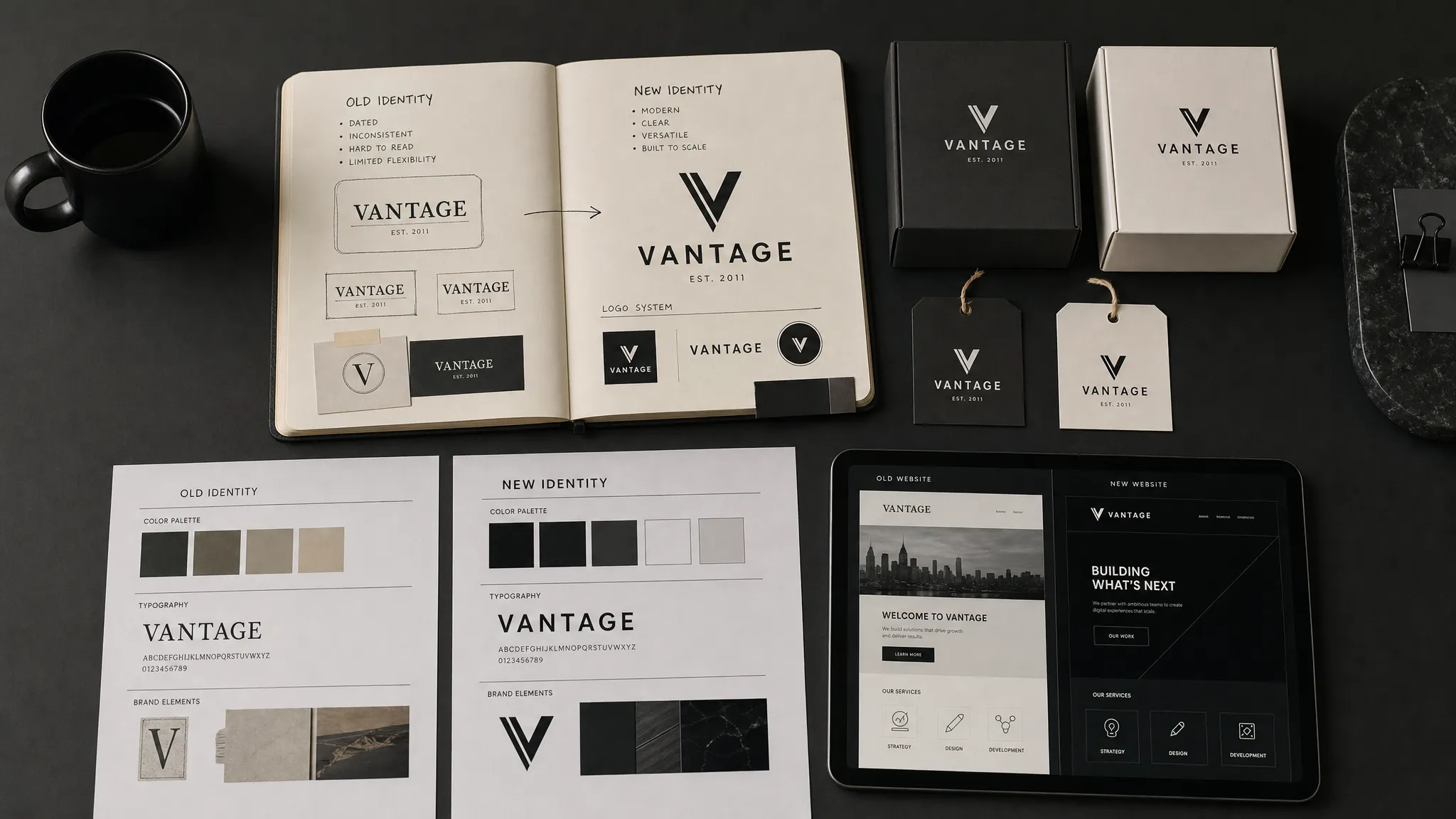
- A usable identity system: The new brand works across website, product, sales, social, packaging, internal comms, and campaigns.
- Internal alignment: Teams understand the shift before customers are asked to believe it.
- Proof after launch: Product, service, and experience reinforce the new promise.
That point of view is especially important. Brands earn trust when their message feels grounded in something real. You can see the same principle outside commercial branding in personal publishing, where projects like Raw Life Thoughts build coherence through a distinct voice and lived perspective. A rebrand works the same way: without a point of view, design becomes decoration.
What challenger brands can learn from these rebrands
Challenger brands rarely have the budget, distribution, or inherited awareness of market leaders. That makes rebranding both more dangerous and more powerful. You cannot afford to change for vanity, but you also cannot afford to remain misunderstood.
The first lesson is to diagnose the constraint. Are you losing because the category does not understand you? Because your brand looks too small for enterprise buyers? Because your name limits expansion? Because your product has evolved but your story has not? Each problem needs a different scope of change.
The second lesson is to protect memory. Many failed rebrands destroy assets that were still doing useful work. Before changing the name, logo, color, tone, or category language, identify what customers already recognize and value. If you need a practical way to reduce risk, start with evidence. Boil’s guide to brand market research explains what to validate before scaling major brand decisions.
The third lesson is to launch the rebrand like a go-to-market campaign. Your audience needs to know what changed, why it matters, and what remains true. Employees need language. Sales teams need proof. Partners need context. Customers need reassurance. A strong announcement builds a bridge from the old brand to the new one, rather than pretending the past never existed. If that is your immediate challenge, read Boil’s guide on how to announce a rebrand without losing brand equity.
Finally, remember that rebranding is not a substitute for strategy. It is the expression of strategy. If the positioning is vague, the identity will be vague. If the offer is confused, the website will be confused. If the team is misaligned, the market will feel it.
A simple checklist before you rebrand
Before your team commits to a major rebrand, pressure-test the decision with these questions:
- What business problem must the rebrand solve?
- Which audience needs to see us differently?
- What existing brand equity is worth protecting?
- What belief or point of view will make the new brand memorable?
- Does the product or customer experience support the new promise?
- Can the new identity scale across every important touchpoint?
- How will we measure whether the rebrand worked?
If you cannot answer those questions clearly, pause before redesigning. You may need positioning work, brand architecture, market research, or a go-to-market reset before a full identity change. Boil’s Complete Rebranding Guide breaks down how to think through scope before you move.
Frequently Asked Questions
What is the best rebrand of all time? Apple is often considered one of the best rebrands of all time because it changed the company’s market perception, product focus, and cultural relevance. But the “best” rebrand depends on the business problem being solved. Airbnb, Burberry, Old Spice, Mastercard, and Dunkin’ are also standout examples.
What makes a rebrand successful? A successful rebrand clarifies positioning, preserves valuable equity, improves distinctiveness, and supports a real business strategy. It should help customers understand why the brand matters now, not just notice that the logo changed.
Is rebranding only about changing a logo? No. A logo change can be part of a rebrand, but true rebranding can include strategy, naming, messaging, visual identity, website, product experience, internal culture, and go-to-market execution.
How do challenger brands know when to rebrand? Challenger brands should consider rebranding when their current identity or positioning limits growth. Common triggers include audience shifts, market expansion, unclear differentiation, outdated perception, mergers, new product architecture, or a category strategy that no longer fits.
Can a rebrand hurt brand equity? Yes. A rebrand can damage equity if it removes recognizable assets without a clear reason, confuses loyal customers, or launches without internal alignment. The best rebrands create a bridge between what people already trust and what they need to understand next.
Ready to make your rebrand work harder?
The best rebrands of all time did not win because they were prettier. They won because they made the brand easier to understand, easier to remember, and easier to choose.
For ambitious challengers, that is the real opportunity. A rebrand can help you sharpen your position, stand out from incumbents, and connect your identity to a stronger go-to-market story.
If your brand is ready for a new chapter, Boil helps challenger brands turn strategy, creative identity, and digital experience into market growth.
