
Rebranding corporate identity becomes an internal problem when employees cannot tell which decisions are final, which assets to use or how the new direction changes their work. A launch presentation might explain the vision, but it will not stop sales from sending an old proposal or finance from issuing an invoice with incorrect company details.
For ambitious challenger brands, that confusion creates friction just when the business wants to move faster. The solution is to manage the rebrand as an operational change, not just a creative reveal. Give people a clear boundary between what changes and what stays, named decision owners and a usable route from old materials to new ones. Here is how to put that structure in place.
Rebranding corporate identity starts with operational clarity
Corporate identity is the system through which a business presents and expresses itself. It includes its name, visual identity, language and recognizable behaviors. Brand positioning informs that system, but a positioning statement alone does not tell employees how to prepare tomorrow’s presentation.
A corporate identity update also does not automatically change the legal entity, employment terms or reporting structure. If those changes are happening too, explain them separately with the appropriate owners.
Internal clarity means employees can make the right decision without asking the project team every time. They should know what the identity represents, how it affects their role and where to find approved materials.
Define the change before you distribute it
When rebranding corporate identity, write a scope statement that separates approved changes from assumptions. Otherwise, employees will fill the gaps themselves.
Use three categories: changing, staying the same and not yet decided. Be specific. “Our identity is evolving” gives a department little to work with. “Our trading name, presentation templates and tone of voice change at launch; our legal entity and existing agreements do not” gives people a usable boundary, provided those facts are confirmed.
Document dependencies as well. A name change may affect email domains, procurement records, software interfaces and contractual language. A visual refresh may leave those untouched. Ask the relevant legal, finance and IT owners to verify the implications rather than treating every rebrand as the same project.
Keep unresolved organizational questions out of the brand story. If employees ask whether the rebrand signals restructuring, leadership should answer with confirmed information or state what remains undecided. Do not use optimistic brand language to disguise uncertainty.
Give decisions named owners
Clear decision rights make rebranding corporate identity less dependent on executive availability. Without them, minor questions travel upward while departments quietly invent their own answers.
Separate strategic approval from everyday execution. A leadership sponsor can approve the direction without reviewing every email signature. A brand owner can maintain standards without becoming responsible for every departmental rollout task.
The following is a suggested ownership model, not a universal organizational chart:
| Decision area | Accountable owner | Required output |
|---|---|---|
| Business rationale and scope | Executive sponsor | Approved change brief |
| Identity standards and exceptions | Brand lead | Current guidelines and decision log |
| Technical identity changes | IT lead | Tested migration and access plan |
| Legal names and financial documents | Relevant legal or finance owner | Approved wording and document requirements |
| Department adoption | Functional lead | Updated workflows and completed checks |
Name individuals against these roles. “Marketing owns it” is too broad when someone needs an answer before a customer meeting.
Give exceptions a route, too: a named contact, an expected response time and a record of the decision. Record whether an exception applies to one asset or changes the standard for everyone. Otherwise, a temporary workaround can become an unofficial alternative identity.
Give managers a usable explanation, not a script to memorize
The internal story for rebranding corporate identity should connect the business reason to practical consequences. Employees need more than a list of design improvements, but they do not need the entire strategy deck to explain the change accurately.
Prepare a short manager brief covering why the change is happening, what it means for the team, what remains stable and where questions should go. Keep the central explanation consistent while allowing managers to discuss role-specific implications.
An illustrative explanation might read:
We are updating our identity to reflect the customers and markets we now serve. Our core service commitments remain unchanged. Your team will use the new presentation and proposal templates from the internal launch date. Existing signed agreements remain in place, and legal questions should go to the designated owner.
Only include commitments that your business has verified. Managers should be able to distinguish a confirmed answer from an open question.
For the wider sequencing of employee and customer messages, use a dedicated plan for communicating a rebrand internally and externally. The operational task here is making that explanation usable in everyday conversations.
Make approved assets the easiest assets to use
Rebranding corporate identity will stall if the new materials are harder to find than the old ones. Publishing guidelines is not enough when employees still start from last quarter’s proposal.
Create one authoritative location for current assets. It should contain approved templates, messaging examples, ownership details and visible version information. Link to that location rather than distributing separate attachment collections that immediately begin to diverge.
Then replace the defaults inside the tools employees already use. Update shared presentation masters, document templates, email signatures, recruitment materials and customer support responses where applicable. Check permissions so people can use approved files without accidentally changing the master versions.
Archive old assets deliberately rather than leaving two equally credible options available. Remove superseded templates from active libraries, mark retained files clearly and preserve records required by legal or retention policies.
Some materials will need controlled coexistence. A long-running contract process or printed inventory may justify an exception. Record the asset, owner, reason and retirement condition. “We will replace it eventually” is not a transition rule.
The goal is not to ban every historical appearance of the old identity. It is to prevent employees from mistaking historical material for an approved starting point.
Teach the tasks that change by role
Role-based practice makes rebranding corporate identity easier to adopt than a single company-wide presentation. Employees need to rehearse the decisions they will actually face.
For sales, that could mean adapting a proposal and explaining the new positioning without making unsupported product claims. For recruitment, it could mean rewriting a vacancy using the approved employer language. For customer support, it could mean answering a question about a changed company name without implying that the customer’s agreement has changed.
Use realistic exercises with a clear reference answer. Ask participants to locate an approved asset, complete a common task and explain where they would escalate an unusual request. Their mistakes reveal gaps in the system, not just gaps in attention.
Include managers, new hires and employees outside headquarters. If the identity spans languages or regions, provide approved adaptations and explain which elements are fixed. Local teams should not have to choose between literal wording that fails in their market and an unauthorized rewrite.
Keep a feedback channel open after training. Repeated questions usually indicate that a guideline, template or decision needs clarification.
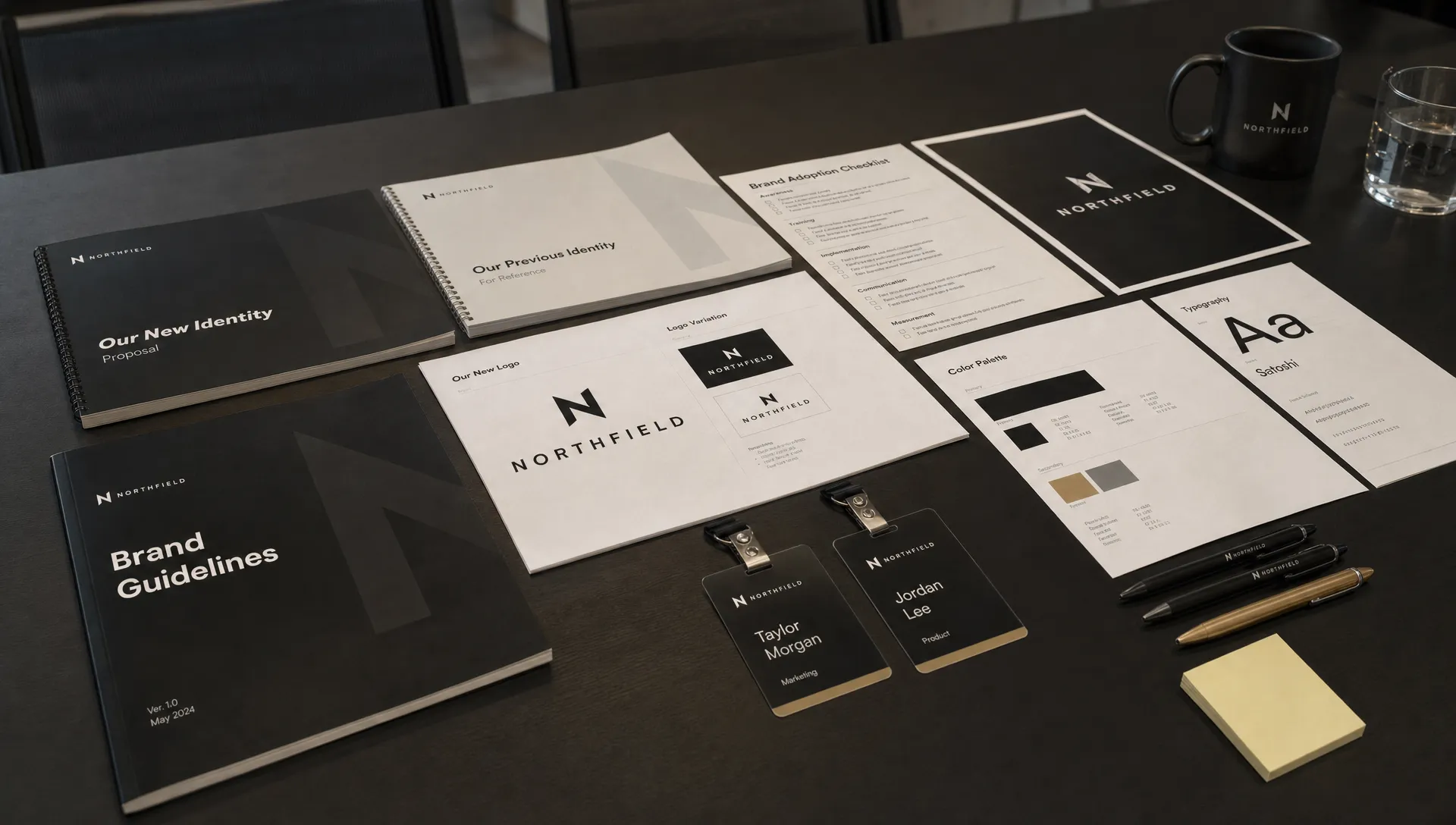
Test readiness before announcing completion
Treat rebranding corporate identity as ready when employees can use it correctly, not when the files have been delivered. A small pilot should include people who produce materials, people who approve them and people who answer customer questions.
Have participants complete normal work using the proposed system. Observe where they search, which instructions they misinterpret and when they create a workaround. Do not guide them through every step, because that hides the friction you need to find.
Useful readiness checks include:
- Can an employee find the current template without asking the project team?
- Can a manager explain what is changing and what is not?
- Can a customer-facing colleague answer a likely question accurately?
- Can a department owner identify an exception and route it correctly?
Set release conditions around the failures that matter. Incorrect legal wording or inaccessible customer-facing templates may block launch. A low-use internal document might be assigned a later replacement date.
Keep the distinction explicit. A prioritized backlog is sensible; an undisclosed backlog creates surprise. Once internal readiness is established, coordinate the public transition with the plan for launching a rebrand without confusing customers.
Extend the same controls to agencies and partners
External collaborators can reintroduce confusion even after internal teams are aligned. When rebranding corporate identity, include freelancers, distributors, recruitment partners and campaign agencies in the asset and approval plan.
Give each partner a brief that identifies approved messaging, permitted assets, publication dates and an internal contact. Replace standing briefs and recurring campaign templates, not just the files attached to the launch announcement.
If your B2B go-to-market plan includes LinkedIn creator campaigns, give creators the same approved positioning and claim boundaries your sales team uses. A creator post should not introduce an explanation of the rebrand that employees have never seen.
Assign an internal owner to check partner outputs before publication where your agreement allows it. When older content will remain live, decide whether it needs an update, contextual note or no action. Historical posts do not all require deletion, but active campaign material should reflect the approved identity.
This keeps partner management connected to internal ownership rather than creating a separate, less controlled version of the brand.
Measure adoption, not announcement attendance
The useful question after rebranding corporate identity is whether work has become consistent. Attendance figures and asset downloads show exposure, but they do not establish correct use.
Sample real outputs from different departments. Review proposals, recruitment materials, support responses and partner briefs against the same standards. Track the share using current templates, recurring errors, unresolved exceptions and the time it takes to answer brand questions.
Use a defined sample and review method so comparisons mean something. Ten carefully reviewed documents can expose a broken default, but they cannot establish organization-wide compliance. Expand the review where the risk or volume justifies it.
Discuss findings with functional owners rather than treating every mistake as a design issue. If people consistently use an old template because it contains a required approval field, repair the new template. If employees cannot explain the business rationale, revisit manager enablement.
Close the loop visibly: publish the clarification, update the source material and tell affected teams what changed. Otherwise, the same question will keep generating different answers.
Frequently asked questions
Is rebranding risky for employees? It can create uncertainty about company direction, responsibilities or job security. Separate confirmed identity changes from organizational decisions, explain what is known and give employees a reliable place to raise questions. Do not imply guarantees leadership has not approved.
Should employees see the new identity before customers? Employees who need to explain or implement it should be prepared before public exposure. The exact sequence depends on confidentiality, regulatory obligations and operational needs. An internal reveal should leave enough time for practice and fixes, not just awareness.
Does a corporate rebrand require changing the legal company name? No. Rebranding corporate identity can change visual and verbal expression without changing the legal entity. If a legal or trading name is changing, have the appropriate advisers confirm documentation, disclosure and registration requirements.
Can old and new identities coexist temporarily? Yes, when coexistence has a defined scope, owner and retirement condition. Avoid leaving both versions available as interchangeable templates. Employees need a clear rule for which identity applies to each situation.
Connect the identity to how your business works
Before approving a public launch date, ask each functional owner to demonstrate one completed task using the new identity. That simple check can reveal more than another presentation review.
Boil combines branding, rebranding and go-to-market expertise for ambitious challenger brands. If your identity needs to support growth without leaving teams guessing, talk to Boil about your rebrand and the decisions your people need to make it work.
