Rebranding after a merger is not a design exercise with a new legal structure attached. It is a trust transfer. Customers need to understand what happened, why it benefits them, what will stay familiar and how the new brand will continue to deliver on the promises that earned their loyalty in the first place.
For leadership teams, the temptation is to move fast. A merger creates pressure to signal momentum, reassure investors, align teams and simplify the market story. Customers experience that same speed differently. If names, product lines, account contacts, invoices, websites or support channels change without a clear reason, they may read the rebrand as instability rather than progress.
Why rebranding after a merger puts customer loyalty at risk
Mergers create ambiguity. Even when the strategic rationale is strong, customers often wonder whether the product they chose will still matter, whether pricing will change, whether service quality will dip or whether the relationship they trusted has been absorbed into something less personal.
That is why rebranding after a merger has to be planned around continuity before novelty. A sharper logo, new tagline or unified brand system can help, but only if it answers the customer’s quiet question: will this still work for me?
The loyalty risk is highest when customers feel the rebrand has been done to them, not for them. They may not object to the merger itself. They object to losing familiar cues without warning. These cues can be as simple as a product name, a trusted founder voice, a support process or a visual identity that helped them recognize the brand in a crowded category.
Merger logic is not customer logic
Executives tend to talk in terms of synergies, market expansion, operational integration and platform consolidation. Customers tend to care about outcomes, consistency and reduced effort. The rebrand must translate the internal merger thesis into customer value.
If the communication sounds like a corporate announcement, it will not do enough to protect loyalty. Customers need language that connects the merger to better service, stronger capabilities, broader expertise, improved access or a clearer product experience. If none of those benefits are real yet, the brand should not overclaim.
Start with a loyalty-risk audit, not a logo brief
A strong approach to rebranding after a merger starts with evidence. Before changing the identity, map what customers already trust across both legacy brands. This helps the team separate assets that are outdated from assets that still carry emotional or commercial value.
A loyalty-risk audit should look beyond marketing. Sales teams, customer success teams, support teams and finance teams usually know which parts of the brand customers rely on day to day. Their input prevents the rebrand from becoming a boardroom exercise detached from the experience customers actually have.
| What to audit | Why it matters | What to protect if equity is strong |
|---|---|---|
| Brand names and product names | Names often carry recognition, search demand and referral value | Keep, endorse or phase out gradually |
| Visual assets | Colors, symbols and layouts help customers recognize the brand quickly | Retain key cues during transition |
| Customer promises | Existing positioning may be tied to trust, speed, expertise or care | Translate the promise into the merged brand |
| Service touchpoints | Support, onboarding and account management shape loyalty more than campaigns | Keep continuity visible |
| Reputation signals | Reviews, case studies, certifications and founder credibility reduce perceived risk | Transfer proof into the new brand story |
This audit should also identify what customers will not miss. Some brands protect the wrong things because internal teams are attached to them. If an asset has low recognition, low emotional value and weak strategic fit, the merger can be a clean opportunity to replace it.
Choose the right brand architecture for the merged company
Brand architecture is where merger strategy becomes visible. The wrong structure can confuse customers, dilute equity or make the organization look less integrated than it is. The right structure helps customers understand the relationship between the old and new brands without forcing them to relearn everything at once.
For most challenger brands, rebranding after a merger will fall into one of three practical routes: a unified masterbrand, an endorsed transition or a portfolio model. Each has a different loyalty profile.
| Brand architecture route | Best fit | Loyalty risk |
|---|---|---|
| Unified masterbrand | The merged company needs one clear market position and one growth story | High if legacy brands had strong separate followings |
| Endorsed transition | One brand is becoming part of a larger promise, but customers still need recognition | Moderate if the endorsement is clear and time-bound |
| Portfolio or house of brands | Different audiences, products or geographies need distinct identities | Lower short-term risk, but higher complexity over time |
A merger is different from an acquisition, but customers may not see the difference. If one side is much better known, the market may interpret the change as a takeover regardless of legal language. In that case, Boil’s guidance on how to keep equity while gaining clarity after an acquisition is a useful companion when deciding what to retain, combine or retire.
Do not force equality if the market does not believe it
Many merged businesses try to represent both legacy companies equally in the new identity. That can feel politically fair inside the organization, but customers judge the brand by clarity. If a blended name is hard to remember, if the positioning becomes generic or if the visual system tries to honor too many histories, loyalty can weaken because the brand becomes less distinctive.
A clear hierarchy is not disrespectful. It gives customers a path through the change. The brand can still honor both companies through messaging, team storytelling, service commitments and product continuity without making every legacy element equally visible forever.
Build a transition story customers can repeat
The transition story is the sentence customers use when someone asks what happened to the company they knew. If they cannot explain it simply, confusion will spread through sales calls, referrals, review sites and internal buying committees.
A useful transition story should cover four things: what changed, what did not change, why the merger happened and what the customer gains. It should be short enough for a salesperson to say in a meeting, specific enough for customer success to use in an email and credible enough for leadership to stand behind.
For example, a weak story says the merger creates a stronger global platform. A stronger story says the two teams have combined their product depth and market access so customers can get the same specialist support with a broader set of capabilities. The second version gives customers a reason to stay.
If your team needs a deeper planning structure, Boil’s guide on how to communicate a rebrand internally and externally explains how to align leadership, employees and customers around the same strategic narrative.
Align operational touchpoints before the public launch
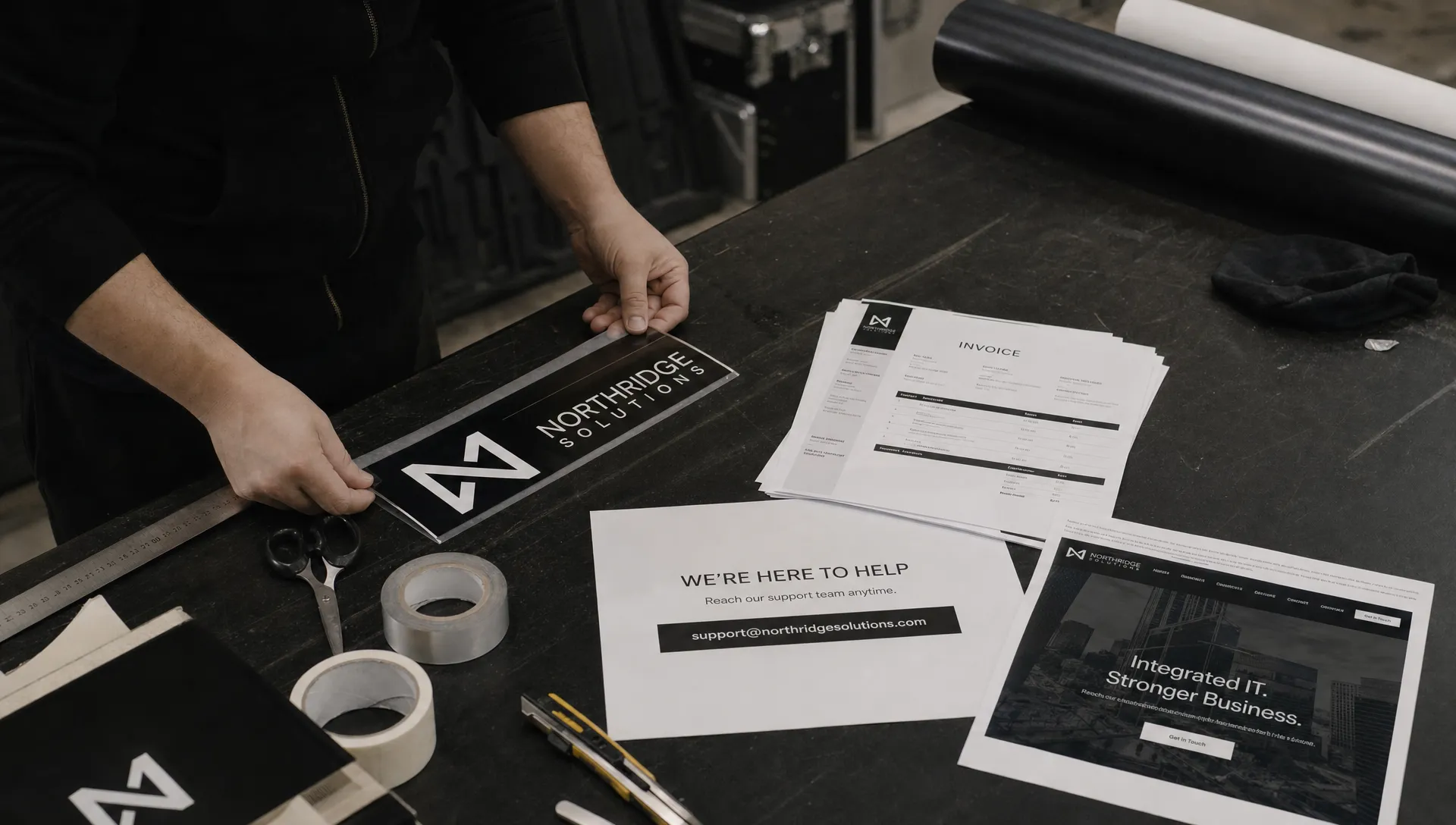
In practical terms, rebranding after a merger needs more than a campaign calendar. Customers will encounter the new brand through functional details before they absorb the strategy. A beautifully announced identity can still lose trust if the login screen changes without notice, the contract language looks unfamiliar or account emails come from a domain the customer does not recognize.
Touchpoint alignment should start with the moments where customers take action or feel risk. That includes onboarding, renewals, billing, support, sales proposals, legal documents, product UI, app store listings, search results, knowledge bases and partner materials. The question is not only whether the new brand appears. The question is whether customers understand that the experience is connected to the relationship they already had.
Finance workflows can become a visible trust signal. An account team might reassure customers in sales calls, but a confusing invoice from an unfamiliar legal entity can undo that work. For companies that manage several entities during integration, tools such as a multi-company invoicing and company-management platform can help keep billing and document processes clearer for the people who have to approve, pay and reconcile them.

Create a customer-facing change map
A change map turns internal decisions into customer reassurance. It should list every meaningful touchpoint, the old experience, the new experience, the timing of the change and the message customers will see. This is especially useful for teams managing multiple markets or product lines because it prevents inconsistent explanations.
The map should also identify no-change zones. If support contacts, service-level expectations, product access or pricing remain the same, say so directly. Customers do not always infer continuity from silence. In a merger context, silence often creates room for concern.
Bring employees into the brand before customers feel it
Employees decide whether rebranding after a merger feels believable. If frontline teams are unclear, hesitant or privately skeptical, customers will notice. The brand launch cannot be limited to a deck and a logo file. It needs internal adoption, practical scripts and space for teams to ask uncomfortable questions before customers ask them first.
The internal rollout should give people more than the polished story. Sales needs objection handling. Customer success needs reassurance language. Product teams need naming and roadmap guidance. Finance needs rules for legal names and invoice references. Recruiters need a talent story. Leaders need a consistent way to explain the merger without drifting into personal interpretations.
A simple internal readiness test is to ask employees from different functions to answer the same customer questions. If their answers vary too much, the brand is not ready for market. The goal is not robotic consistency. It is shared confidence.
Launch in phases, not all at once
A phased launch turns rebranding after a merger into a managed customer journey instead of a single reveal. The bigger the customer base, the more valuable this becomes. Loyal customers do not need surprise. They need sequence, explanation and time to adjust.
| Phase | Audience | Purpose |
|---|---|---|
| Internal alignment | Employees and leadership | Build fluency before external questions arrive |
| Priority customer preview | Key accounts, partners and advocates | Reduce surprise and gather friction points |
| Public announcement | Market, press and broader customer base | Explain the change with one clear story |
| Touchpoint migration | Customers using products, support and billing | Make the new brand visible without breaking recognition |
| Reinforcement | Prospects, customers and employees | Repeat proof that the merger is delivering value |
This approach also lets the team listen. If key customers react poorly to a naming change, a product migration or a messaging claim, you have time to correct before the widest announcement. A phased launch is not indecision. It is risk management.
For more detail on rollout sequencing, Boil’s article on launching a rebrand without confusing customers is especially relevant to post-merger teams managing recognition and change at the same time.
Give loyal customers a reason to feel included
Loyal customers should not learn about the rebrand the same way strangers do. Give them advance notice where appropriate, thank them for being part of the journey and explain how their relationship will be protected. This is not just courtesy. It reinforces that the merged company understands the value of existing trust.
For B2B brands, high-value accounts may need account-specific communication. For consumer brands, loyalty program members, community members or long-time subscribers may deserve early messaging. The principle is the same: the closer the customer relationship, the more personal the transition should feel.
Measure loyalty signals after the rebrand goes live
The best measurement for rebranding after a merger is not whether people like the new logo. It is whether the brand reduces uncertainty and supports retention, preference and growth. Visual approval matters, but customer behavior matters more.
Track loyalty signals before, during and after launch so the team can separate normal transition noise from real erosion. Look for changes in churn, renewal objections, customer support themes, branded search behavior, referral volume, win rates, review sentiment and social comments. Qualitative feedback from customer-facing teams should be reviewed weekly during the first phase after launch.
| Signal | What it may reveal | Useful response |
|---|---|---|
| Increased support questions | Customers are confused about what changed | Add clearer messaging to product, email and help content |
| Renewal hesitation | Customers fear pricing, service or roadmap changes | Equip account teams with specific continuity proof |
| Drop in branded search clicks | Recognition has weakened | Retain legacy cues longer in search and landing pages |
| Negative sentiment around name changes | Emotional equity was underestimated | Explain the rationale and preserve legacy references where useful |
| Lower sales conversion | The new positioning is not clear enough | Refine the value proposition and sales narrative |
Do not treat the launch date as the finish line. Customer loyalty is protected through repetition. The merged brand needs to keep proving that the change was worthwhile through better experiences, clearer offers and consistent behavior.
Common mistakes that weaken loyalty
Post-merger rebrands usually fail customers in predictable ways. The work becomes too internal, too visual or too fast. Teams focus on announcing what the company wants to be, but underinvest in helping customers move from old associations to new ones.
The most common mistakes include removing trusted names too quickly, overexplaining corporate logic, changing too many touchpoints at once, failing to train customer-facing teams, ignoring search behavior around legacy brands and hiding uncertainty behind vague promises. Each mistake adds friction at the exact moment customers are deciding whether to stay.
A better approach is calmer. Keep what carries trust. Change what creates clarity. Explain the why in customer language. Sequence the rollout. Measure the reaction. Then keep reinforcing the new brand through actions, not just assets.
Frequently Asked Questions
How soon should a company rebrand after a merger? The timing depends on customer risk, operational readiness and strategic clarity. Some mergers need a fast unification to reduce confusion, but many benefit from a staged transition that protects recognition while the organization aligns behind the new brand.
Should the merged company keep one of the old brand names? It should keep an old name only if that name has meaningful equity, strategic fit and future relevance. If the name is well known but tied to a positioning the new company is leaving behind, an endorsed transition may be safer than keeping it indefinitely.
What is the biggest risk to customer loyalty during a merger rebrand? The biggest risk is uncertainty. Customers may tolerate visual change, but they react strongly when they cannot tell whether service, pricing, product quality, access or relationships will remain reliable.
How do you explain a merger rebrand to customers? Explain what changed, what stayed the same, why the merger happened and what customers gain. Avoid corporate jargon and give customer-facing teams practical language they can use across sales, support, billing and onboarding.
Turning merger complexity into a brand customers believe
A merger can create a stronger market position, but customers will not reward the strategy unless they can feel the benefit. The rebrand has to make the combined business easier to understand, easier to trust and easier to choose.
That takes more than a new identity. It takes a loyalty-aware strategy, a clear transition story, aligned operations and a launch plan that respects the people who already believed in the legacy brands. Boil helps ambitious challenger brands turn moments of change into sharper positioning, stronger go-to-market momentum and brand experiences built for growth.
