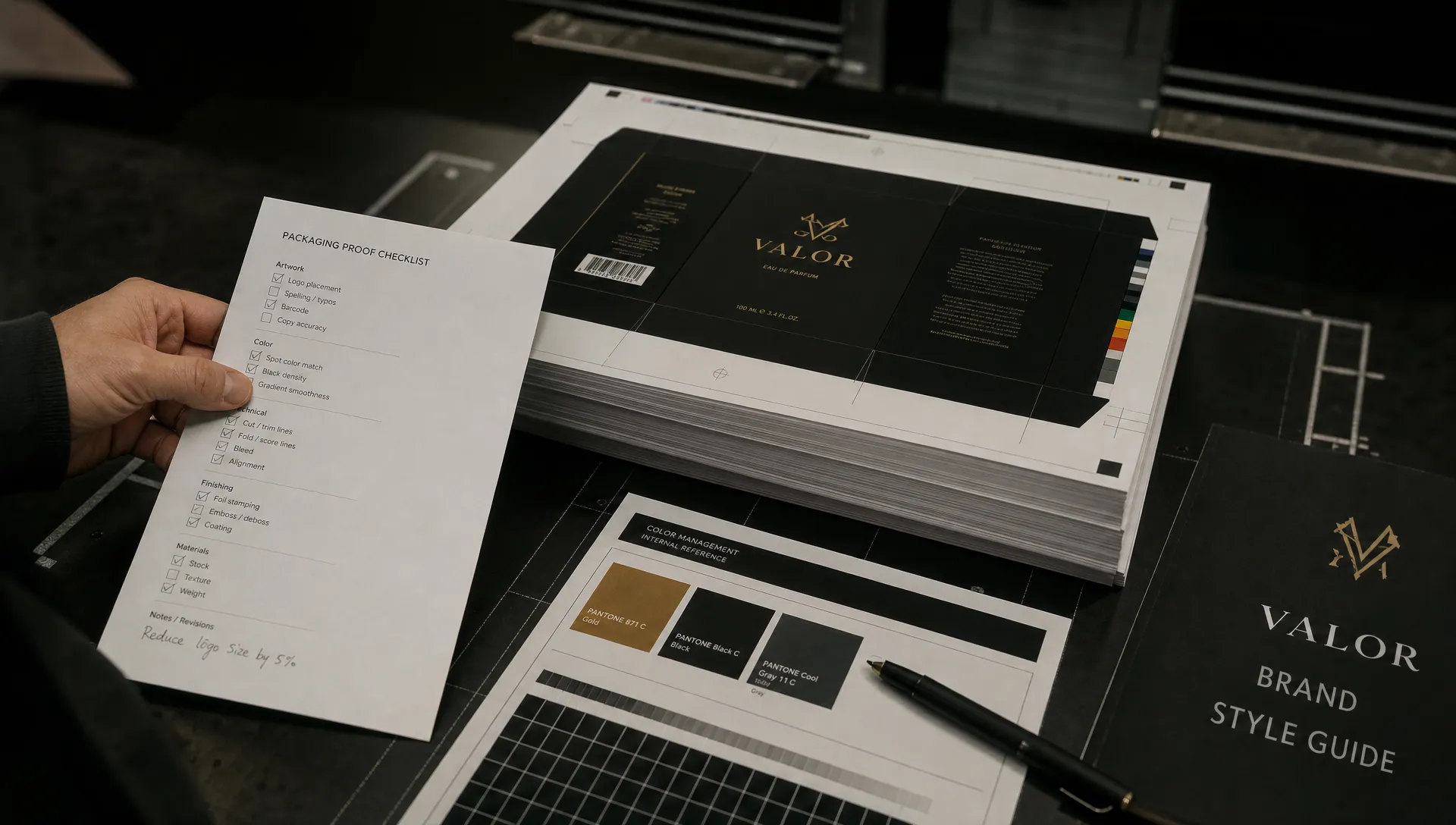
Rebrand implementation is where a strong strategy either becomes a growth asset or turns into a trail of mismatched logos, confused teams and broken customer journeys. The work is less glamorous than the reveal, but it is what makes the reveal credible: every touchpoint, team, vendor and customer-facing system has to move together.
For challenger brands, the stakes are sharper. A rebrand often carries a commercial job, such as entering a new market, increasing pricing power, winning a different buyer or moving beyond an old category. A clean launch is not just about looking polished on day one. It is about protecting trust while giving the business enough operational control to grow faster after the change.
The rebrand implementation plan in one page
A useful plan starts by separating strategy, rollout and adoption. Strategy defines the new position. Rollout changes the assets. Adoption turns the new brand into everyday behavior across sales, marketing, product, recruitment, support and leadership.
Many teams spend months making brand decisions, then underestimate the last mile. The last mile is where customers see old names in invoices, sales teams keep using legacy decks and paid campaigns send traffic to landing pages with the wrong message. By the end of phase zero, rebrand implementation should have clear owners, frozen decisions, a complete asset inventory and a launch order that reflects customer risk.
| Planning layer | Core question | Typical owner | Output |
|---|---|---|---|
| Brand strategy | What are we changing and why? | Leadership and brand team | Positioning, narrative, identity system |
| Operating model | Who approves, updates and governs? | Marketing ops or project lead | Roles, workflows, decision rights |
| Touchpoint migration | What must change before launch? | Channel owners | Asset inventory and rollout tracker |
| Launch sequencing | Who hears what, when and from whom? | Comms lead | Internal and external launch calendar |
| Adoption | How do we know the new brand is being used correctly? | Department leads | QA process, training and post-launch review |
If you are still defining the scope, timeline or budget for the work before implementation begins, Boil’s rebrand agency checklist is a useful planning companion.
Audit every touchpoint before you touch the design files
The biggest implementation failures usually come from invisible surfaces, not the homepage. Teams remember the brand film and LinkedIn banner, but forget the proposal template, help center screenshots, partner portal, invoices, onboarding emails, product empty states, investor deck, sales battlecards, event booths and app store listings.
A complete audit should capture four categories: owned channels, paid channels, earned channels and operational touchpoints. Owned channels include the website, email templates, social profiles, product UI, sales materials and recruitment pages. Paid channels include campaign creative, marketplace listings and sponsored landing pages. Earned channels include PR boilerplates, founder bios, analyst profiles and partner pages. Operational touchpoints include legal documents, contracts, order confirmations, customer support macros and internal documentation.
Build the inventory around risk
Not every asset deserves the same level of scrutiny. A trade show tote bag can probably wait. A legal contract, customer renewal email or product login screen cannot. Rank assets by visibility, customer sensitivity, revenue impact and technical complexity.
At this stage, rebrand implementation becomes less like a design project and more like a controlled migration. The goal is to identify what must be perfect at launch, what can update within a short grace period and what can be retired altogether.
Use a simple status language so everyone can read progress quickly:
- Must launch: Public or customer-critical assets that need to be live on launch day.
- Fast follow: Assets that can update within 1 to 4 weeks without damaging trust.
- Retire: Assets that should be removed instead of redesigned.
- Defer: Low-risk materials that can wait until the next normal update cycle.
Assign workstreams with real decision rights
A rebrand touches too many teams to run through informal favors. If every asset needs brand team approval, the bottleneck becomes inevitable. If every team interprets the new system alone, brand drift starts before launch.
Create workstreams that match how the business operates. Common workstreams include website and SEO, product and app, sales enablement, lifecycle and CRM, paid media, PR and corporate communications, people and recruitment, legal and finance, physical environments and partner channels.
Name one accountable owner per workstream
During rebrand implementation, your owner for each workstream should have authority to commit resources, escalate blockers and approve finished assets within agreed guidelines. This person does not need to do every task. They need to be accountable for completion.
A practical governance model has three levels. The steering group protects business intent and resolves tradeoffs. The brand core team protects coherence and quality. Workstream owners handle execution inside their teams. This prevents every decision from returning to the CEO or creative director, which is usually where timelines start to slip.
| Role | Responsibility | What they should not do |
|---|---|---|
| Executive sponsor | Confirms business priorities and resolves major conflicts | Rewrite design details late in the process |
| Project lead | Runs timeline, dependencies and status reporting | Become the only person who knows the plan |
| Brand lead | Protects visual, verbal and strategic consistency | Approve every low-risk asset manually |
| Workstream owner | Delivers assets for a department or channel | Wait for instructions on every small decision |
| QA lead | Checks launch readiness and post-launch issues | Fix issues without logging ownership |
Freeze the system before scaling production
Implementation becomes expensive when teams keep producing assets from a moving target. Before mass rollout starts, freeze the core brand system. That does not mean the brand can never evolve. It means the launch version is stable enough for teams to produce at speed.
Your freeze pack should include the logo system, color specifications, typography rules, tone of voice principles, messaging hierarchy, photography or illustration direction, iconography, motion basics, UI components if relevant and rules for legacy brand usage.
Give teams templates, not just guidelines
Guidelines explain the system. Templates make the system usable. A sales team under pressure will not study a 90-page brand book before sending a proposal. They will use the closest deck on their desktop unless a better one is easier to find.
Good rebrand implementation turns brand rules into working tools: pitch decks, one-page sales sheets, email signatures, social post templates, paid media layouts, press release boilerplates, proposal covers, product release notes and recruitment posts. The more often an asset is used, the more it deserves a template.
This is also the right moment to document edge cases. What happens to co-branded partner pages? How should old product names appear in support articles? Can regional teams translate taglines? Which legacy assets should be archived for legal or customer service reasons?
Sequence the launch from inside to outside
A rebrand should not arrive as a surprise to the people expected to defend it. Employees need to understand the strategic story before customers ask questions. Sales, customer success, support and recruitment teams need the language to explain what has changed, what has not changed and why it matters.
For more depth on sequencing audiences and messages, Boil has a dedicated guide on how to communicate a rebrand internally and externally. In implementation terms, the key is to give internal teams enough time to practice before the public switch happens.
Launch order should follow customer exposure
A simple launch order often works best: leadership alignment, manager briefing, all-hands announcement, team-specific enablement, partner notifications, priority customer outreach, public launch and post-launch support. The order can change, but the principle should not. People closest to customer questions should never be the last to know.
Customer-facing teams need a short explanation script, not a manifesto. Give them plain answers to predictable questions: why the brand changed, whether pricing or service is changing, what happens to existing contracts, how product names map to old names and where customers can get help.

Protect customer continuity while changing the experience
The best rebrands feel fresh without making loyal customers feel displaced. Familiar cues can be useful when they still carry trust: a product architecture, a service promise, a founder story, a color, a phrase or even a support behavior customers rely on.
Before launch, decide which signals should stay visible during the transition. That might mean using “formerly known as” language for a set period, mapping old and new product names in help content or sending proactive notes to high-value accounts. If audience continuity is a major concern, Boil’s article on launching a rebrand without confusing customers goes deeper into that specific challenge.
Make the new promise operational
A rebrand cannot live only in headlines. If the new positioning promises simplicity, speed, confidence or expertise, the customer experience needs proof points that make the promise tangible.
For example, a travel brand that promises less airport anxiety might point customers to a practical utility like Liquid Limits for checking airport liquid rules before packing rather than relying only on a launch campaign. The same principle applies in any category: the brand claim should show up in tools, onboarding, support, packaging, dashboards, contracts and service design.
This is where rebrand implementation can create a competitive advantage. The visible identity attracts attention, but the operational details convince people the change is real.
Get the digital migration right
Digital surfaces are where small mistakes compound quickly. A broken redirect loses traffic. A mismatched ad creates wasted spend. A forgotten app store screenshot makes the launch look unfinished. A tracking gap means the team cannot measure what happened.
Digital rebrand implementation should have its own migration plan covering domain changes if any, URL redirects, metadata, analytics, pixels, UTM conventions, schema, favicons, email authentication, accessibility, cookie banners, CRM forms, CMS permissions and third-party integrations.
Website, SEO and analytics checklist
For website migration, keep a redirect map before any URLs change. Check the highest-traffic pages, highest-converting pages and pages with important backlinks manually. Update title tags, meta descriptions, Open Graph images and structured data where the brand name appears. If the domain is changing, plan search console verification, sitemap submission and monitoring for crawl errors.
Analytics also needs a pre-launch baseline. Capture traffic, conversion rate, branded search demand, demo requests, pipeline influence, trial starts or other relevant commercial metrics before launch day. That baseline gives you a way to separate launch noise from real performance.
Avoid changing every variable at once if measurement matters. A new brand, new website architecture, new campaign strategy, new pricing page and new attribution model launched on the same day will make it difficult to understand what drove the result.
QA the details that usually get missed
Quality assurance should start before launch week. By then, the team is tired, the deadline is public and every issue feels urgent. Build QA into each workstream and reserve final launch week for verification, not discovery.
Use multiple QA passes. The first checks strategic consistency: does the asset express the new positioning? The second checks brand craft: does it follow identity, tone and design rules? The third checks operational accuracy: do links, names, forms, legal details and tracking work correctly?
Create a launch room and an issue log
A launch room can be a physical room, a shared channel or a live project board. What matters is one source of truth. Each issue should have a severity level, owner, deadline and status. Do not manage launch fixes through scattered chat threads.
A clear severity model keeps people calm:
- Severity 1: Blocks launch or creates legal, revenue or customer trust risk.
- Severity 2: Noticeable public issue that should be fixed within 24 to 72 hours.
- Severity 3: Low-risk inconsistency that can be handled in the fast-follow window.
Rebrand implementation improves when the team accepts that perfection and priority are not the same thing. The work is to know which imperfections matter, then fix them in the right order.
Use a 30, 60 and 90 day adoption plan
Launch day is a milestone, not the finish line. After the announcement, people will still use old files, customers will still search old names and teams will discover edge cases the audit missed. Adoption needs its own plan.
| Timeframe | Main focus | What to review |
|---|---|---|
| First 30 days | Stabilize public channels and fix high-risk issues | Website, CRM, sales decks, support scripts, paid media |
| Days 31 to 60 | Improve consistency across teams and markets | Templates, partner assets, recruitment content, product surfaces |
| Days 61 to 90 | Measure impact and strengthen governance | Brand adoption, search visibility, conversion metrics, customer feedback |
After launch, rebrand implementation shifts from project mode to governance mode. The brand team should not be policing every asset forever. Instead, it should make the right behavior easy through accessible templates, clear review paths, training and periodic audits.
Measure more than impressions
A rebrand can generate attention and still fail commercially. Track metrics that connect to the business case. If the goal was to move upmarket, review enterprise pipeline quality, win rate, sales cycle feedback and the language prospects use in calls. If the goal was market entry, track recognition, relevance and conversion in the new segment. If the goal was consolidation after growth, track internal adoption, reduced asset duplication and customer understanding of the portfolio.
Qualitative feedback matters too. Listen to sales calls, customer support questions, employee comments and partner reactions. Patterns in confusion often reveal implementation gaps faster than a dashboard.
Frequently Asked Questions
How long does rebrand implementation take? Timelines vary by company size, complexity and risk. A focused brand refresh might take several weeks to roll out, while a full corporate rebrand with website, product, legal, sales and market changes can take several months. The best timeline is built from asset inventory and customer risk, not a preferred launch date alone.
Who should own implementation after the brand strategy is approved? One project lead should own the overall plan, but each department needs an accountable workstream owner. Brand, marketing, product, sales, customer success, people, legal and finance often have different risks to manage.
What should be ready on launch day? Public, customer-critical and revenue-critical assets should be ready first. This usually includes the website, core sales materials, customer communications, social profiles, CRM templates, support scripts, legal name guidance if relevant and tracking systems.
How do you prevent old brand assets from resurfacing? Make the new assets easier to access than the old ones. Archive legacy files, update shared drives, remove outdated templates, train teams on where to find approved materials and run a short post-launch audit.
What is the biggest mistake teams make during a rebrand rollout? The biggest mistake is treating launch as a design upload rather than an operational change. A new logo can go live in a day, but a brand only becomes real when teams use it consistently across the customer journey.
Turn the plan into momentum
If rebrand implementation is on your roadmap, the smartest move is to plan the operational detail before the reveal date starts closing in. The stronger the system, the easier it becomes for your teams to launch with confidence and keep the brand coherent after the first announcement.
Boil helps ambitious challenger brands connect strategy, branding, go-to-market thinking and digital experience so a rebrand can do more than look different. If your brand is preparing for its next stage of growth, start a conversation with Boil about building the plan behind the launch.
