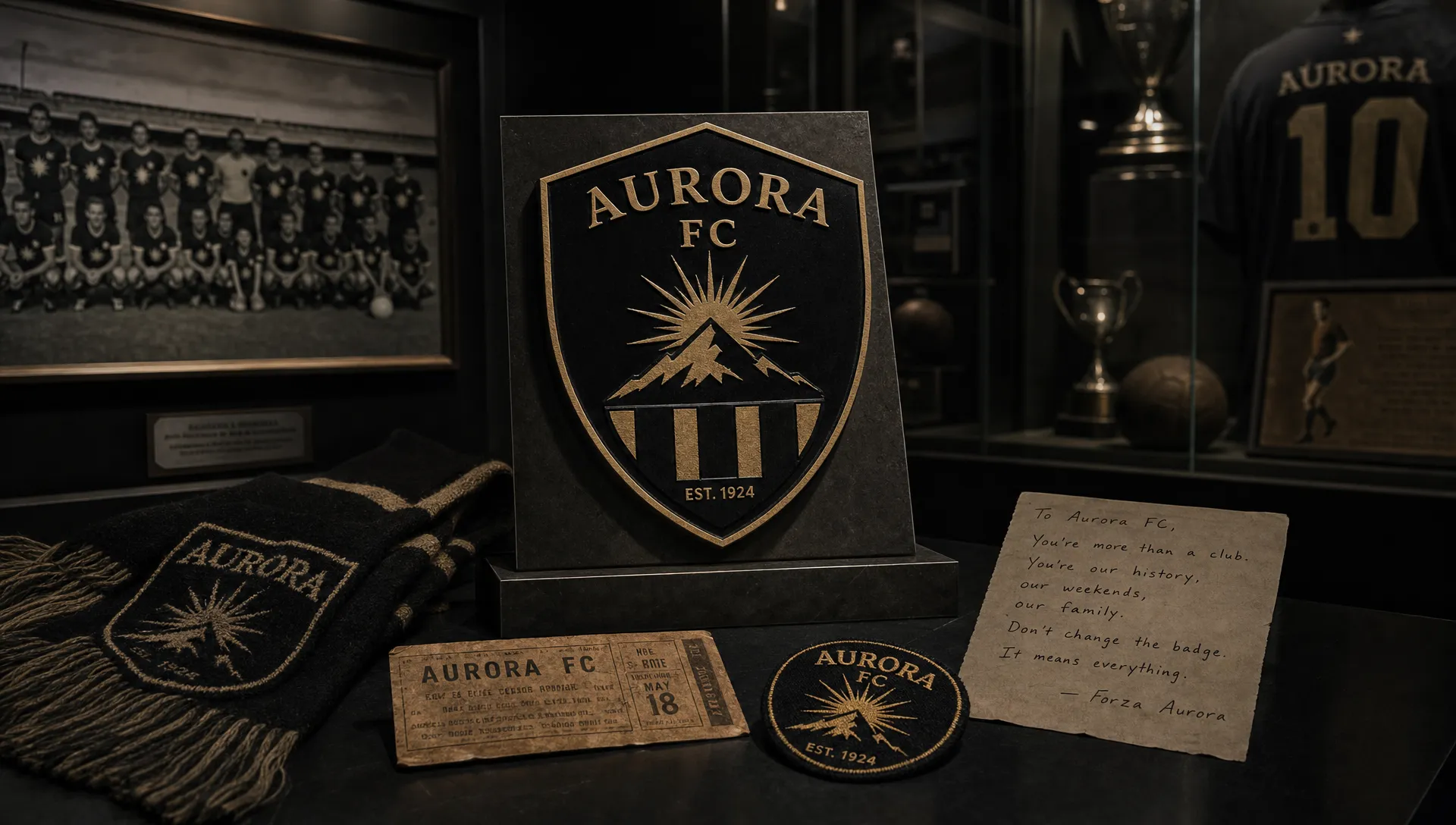
Sports team rebranding is a growth decision wrapped in emotion. A new crest, name, kit or matchday look can unlock commercial value, fresh attention and a stronger future. It can also trigger backlash if loyal supporters feel the club has replaced their identity with a marketing exercise.
That tension is what makes sports team rebranding different from most brand projects. Fans do not simply use the brand. They wear it, sing it, tattoo it, hand it down to their kids and argue about it at halftime. Sponsors, meanwhile, need a brand that feels current, credible and easy to activate across digital content, community programs, hospitality, retail and broadcast.
The best rebrands win both groups. They protect the emotional memory of the team while building a sharper platform for growth.
Start with the business case, not the badge
A sports team should never rebrand because the current identity feels old in a boardroom presentation. That may be a symptom, but it is rarely the real problem. Strong rebrands are tied to a clear strategic need.
A club might need to reposition after promotion, expansion into a new market, a merger, a change in ownership or a shift in audience demographics. A franchise might need an identity that works better for streaming graphics, social avatars, esports extensions and sponsor content. A community team might need to rebuild trust after years of underinvestment.
Before any design work begins, define the commercial and cultural reason for the change. If the team cannot explain the rebrand in one plain sentence, fans will fill the gap with their own assumptions.
| Rebrand trigger | Strategic question to answer | Risk if ignored | Strong outcome |
|---|---|---|---|
| New ownership or investment | What future are we signaling? | Fans see the change as vanity | The identity gives the new era legitimacy |
| Promotion or league expansion | Do we look ready for a bigger stage? | The club feels amateur next to competitors | The team attracts stronger media and sponsor attention |
| Outdated crest or visual system | Can our assets work across modern channels? | The brand breaks in small digital formats | The identity performs across kits, apps, signage and content |
| Relocation or market growth | How do we earn belonging in a broader community? | Existing fans feel abandoned | The brand connects old loyalty with new relevance |
| Sponsor growth goals | What kind of partners do we want to attract? | Commercial teams lack a clear story to sell | Sponsors see a usable platform, not just logo space |
This is where sports branding becomes a leadership exercise. The board, commercial team, fan engagement lead and creative team should agree on the role of the rebrand before debating colors. For a broader view of how rebrands work when they solve a business problem, Boil has also broken down the strategy behind several popular rebrands and why they succeeded.
Protect the parts fans feel they own
The fastest way to lose supporters is to treat heritage as decoration. In sport, brand equity lives in details that may look small from the outside: a color ratio, a nickname, a local landmark in a crest, a song lyric, a mascot gesture or a shirt pattern from a winning season.
A proper sports team rebranding process starts with an audit of fan meaning. That means looking beyond official brand assets and studying the living culture around the team.
Speak with season ticket holders, supporter groups, youth players, lapsed fans, staff, local journalists and community partners. Review old matchday programs, scarves, banners, chants, social comments and merchandise sales. The point is not to let every fan design the badge. The point is to understand which assets carry trust.
It helps to sort brand elements into three groups:
| Brand element type | What it means | Example decision |
|---|---|---|
| Protected equity | Fans would see removal as a break in identity | Keep the primary color, founding year or local symbol |
| Flexible equity | Familiar but open to modernization | Redraw the crest shape, simplify typography or update kit patterns |
| Retired equity | No longer useful or actively holding the team back | Remove unclear details, dated mascots or visuals that do not reproduce well |
This structure keeps the conversation grounded. Instead of asking whether fans like a new design in isolation, you can ask whether the new identity carries enough continuity to feel earned.
If the team has a loyal base, this work is not optional. A useful companion principle is covered in Boil's guide to rebranding without losing your audience: know what people trust before you ask them to accept change.
Build a brand sponsors can activate
Fans need emotional continuity. Sponsors need clarity, confidence and usable assets. A rebrand that only looks good on a home shirt may still fail commercially if partners cannot build campaigns around it.
Modern sponsorship is rarely about passive logo placement alone. Partners want stories, audience access, social content, hospitality moments, community credibility and brand-safe association. A stronger team brand gives the commercial team sharper material to sell.
That begins with positioning. What does the team stand for beyond winning? Is it the club of the city, the development engine for local talent, the challenger taking on richer rivals, the family matchday destination or the culture-led franchise with national reach? Sponsors need to know which audience and emotion they are joining.
The rebrand should also make activation easier. Give sponsors a clear visual system, flexible content templates, event language, photography direction and partnership principles. If every partner execution looks improvised, the team loses value even with a beautiful crest.
This matters especially in sport categories where trust is part of the product. A water-sports club or outdoor adventure brand, for example, can learn from specialist operators such as technical diving and instructor training in Thailand, where credibility depends on clear expertise, safety signals and consistent messaging. The same principle applies to teams: sponsors want to align with brands that know who they are and can protect the reputation of everyone attached to them.
Design the full identity system
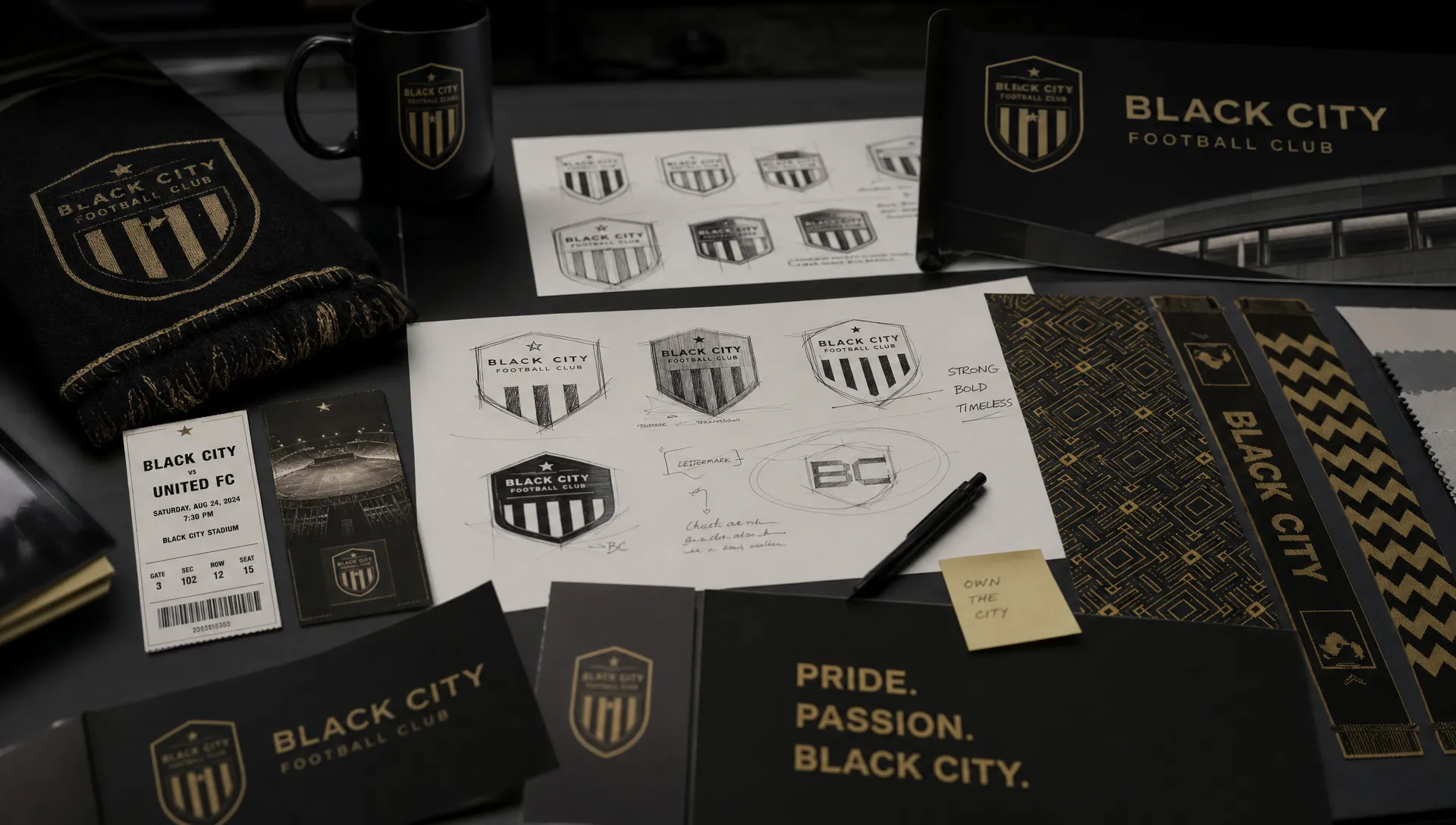
A sports rebrand is not a logo project. It is a system that must survive thousands of uses, from a 16 pixel social icon to a stadium wall, from embroidered merchandise to animated broadcast graphics.
The crest matters, but so do the wordmark, color palette, kit design, typography, photography style, motion graphics, mascot treatment, ticketing, wayfinding, app icons, email templates and sponsor lockups. If the identity is too complex, it will fall apart in daily use. If it is too generic, fans will reject it as soulless.
A good sports identity usually balances three forces:
- Recognition: Supporters should still recognize the team at a glance.
- Distinctiveness: The brand should stand apart from teams in the same league, city and category.
- Performance: The system should work across merchandise, content, signage, broadcast and sponsor applications.
The digital test is especially important. Many legacy team marks were built for print, embroidery or large signage. They may contain fine details that disappear in social feeds or live score apps. Simplification can be valuable, but only when it sharpens identity rather than sanding away character.
Plan the reveal like a season, not a moment
Many rebrands fail at launch because the team treats the reveal as a single announcement. Fans need context before they see the final asset. Sponsors need toolkits before campaigns go live. Staff need answers before supporters call the ticket office.
A strong launch has phases. First, prepare the internal story. Make sure players, coaches, commercial teams, retail teams, community staff and customer support understand why the rebrand is happening. Then brief key stakeholders under embargo, especially supporter representatives and major partners. Finally, reveal the identity with enough substance to show continuity.
The reveal should not just say that the club is entering a new era. It should show what was preserved, what changed and why the change helps the team grow.
| Audience | What they need to hear | Best format |
|---|---|---|
| Loyal fans | The team has not forgotten its history | Heritage video, founder story, supporter Q&A |
| New fans | The brand is easy to understand and join | Social launch, community events, starter merchandise |
| Sponsors | The new platform creates activation value | Partner toolkit, sales deck, co-branded content examples |
| Staff and players | The identity has a clear internal purpose | Internal briefing, brand guide, media talking points |
| Media | The rebrand is a strategic move, not a cosmetic update | Press kit, leadership interview, visual asset pack |
For teams with large existing audiences, the rollout matters as much as the identity itself. Boil's article on launching a rebrand without confusing customers is useful here because the same principle applies to supporters: change lands better when people can follow the logic.
Make sponsors part of the story without making fans feel sold
Sponsors can amplify a rebrand, but they should not appear to control it. If fans believe a club changed its identity mainly to please commercial partners, resistance will grow fast.
The right approach is to make sponsors part of the rollout in ways that add value. A kit partner might support a community shirt exchange. A local sponsor might fund youth team equipment using the new identity. A media partner might help produce a heritage documentary. A technology partner might improve the digital matchday experience.
These activations work because they give fans something useful, memorable or emotionally relevant. They also help sponsors move from logo exposure to deeper association.
The commercial team should prepare partner guidelines before launch. These should explain how the new identity can be used, which assets are protected, how co-branding should appear and what tone partners should avoid. That protects the team from messy executions and gives sponsors more confidence.
Measure whether the rebrand is working
A sports team rebrand is not finished when the new crest appears on the website. The real test is adoption. Are fans wearing it? Are sponsors using it? Are media outlets explaining it correctly? Are players proud to represent it?
Measure both sentiment and behavior. Social comments can reveal early emotional response, but they should not be the only signal. Ticket renewals, merchandise sell-through, sponsor inquiries, earned media quality, community event attendance and digital engagement all matter.
Useful metrics include:
- Fan sentiment across supporter groups, social channels and direct surveys
- Merchandise sales by product type, size, location and buyer segment
- Season ticket renewals and waitlist movement after launch
- Sponsor pipeline changes and renewal conversations
- Social engagement on launch content, kit content and heritage content
- Brand consistency across stadium, retail, digital and partner channels
The aim is not to prove that every supporter loves every detail. That is unrealistic in sport. The aim is to see whether the new identity is becoming useful, recognizable and commercially productive without damaging the bond that made the team valuable in the first place.
Common mistakes in sports team rebranding
Sports teams usually get into trouble for predictable reasons. The first is erasing too much history. A clean new identity can look impressive in a presentation but feel rootless when fans compare it with decades of memories.
The second is overexplaining abstract symbolism. If a crest requires a long paragraph to explain every line, it may not be doing enough visual work. Fans should be able to feel the idea before reading the rationale.
The third is designing for sponsors at the expense of supporters. Sponsor value matters, but fan belief is the inventory sponsors are buying. If the rebrand weakens that belief, the commercial upside will not last.
The fourth is ignoring operational rollout. A team can reveal a strong identity and still look disorganized if old assets remain on ticketing pages, signage, staff uniforms, app screens or sponsor graphics months later.
The fifth is treating criticism as failure. Some resistance is normal, especially in the first days after launch. The better question is whether criticism comes from confusion, grief, poor execution or a genuine strategic mistake. Each requires a different response.
Frequently Asked Questions
What is sports team rebranding? Sports team rebranding is the strategic update of a team's identity, positioning, messaging or visual system. It can include a new crest, name, colors, kit, tone of voice, sponsor platform, matchday experience or digital presence.
When should a sports team rebrand? A team should rebrand when its current identity no longer supports its goals, audience or market position. Common triggers include promotion, relocation, ownership change, expansion, sponsor growth, outdated visuals or a need to reconnect with the community.
How do you rebrand a team without upsetting fans? Start by identifying the assets fans feel they own emotionally. Keep meaningful continuity, involve supporter voices early, explain the business reason clearly and show how the new identity honors the team's history rather than replacing it.
What do sponsors look for in a team rebrand? Sponsors look for audience fit, credibility, clear positioning, brand safety, content opportunities and activation potential. A strong rebrand helps sponsors understand the emotion, community and commercial value they are joining.
Should a team change its name during a rebrand? Not always. A name change is one of the highest-risk forms of rebranding because it affects memory, chants, merchandise and media recognition. Many teams can achieve growth through positioning, identity system, messaging and experience changes without changing the name.
Ready to make the next era feel inevitable?
The best sports team rebranding does not ask fans to forget what they love. It gives that loyalty a stronger future and gives sponsors a clearer reason to invest.
If your club, franchise or sports organization is outgrowing its identity, Boil helps ambitious challenger brands sharpen their positioning, build standout branding and turn go-to-market strategy into growth. The right rebrand should feel brave to the market and familiar enough for fans to make it theirs.
