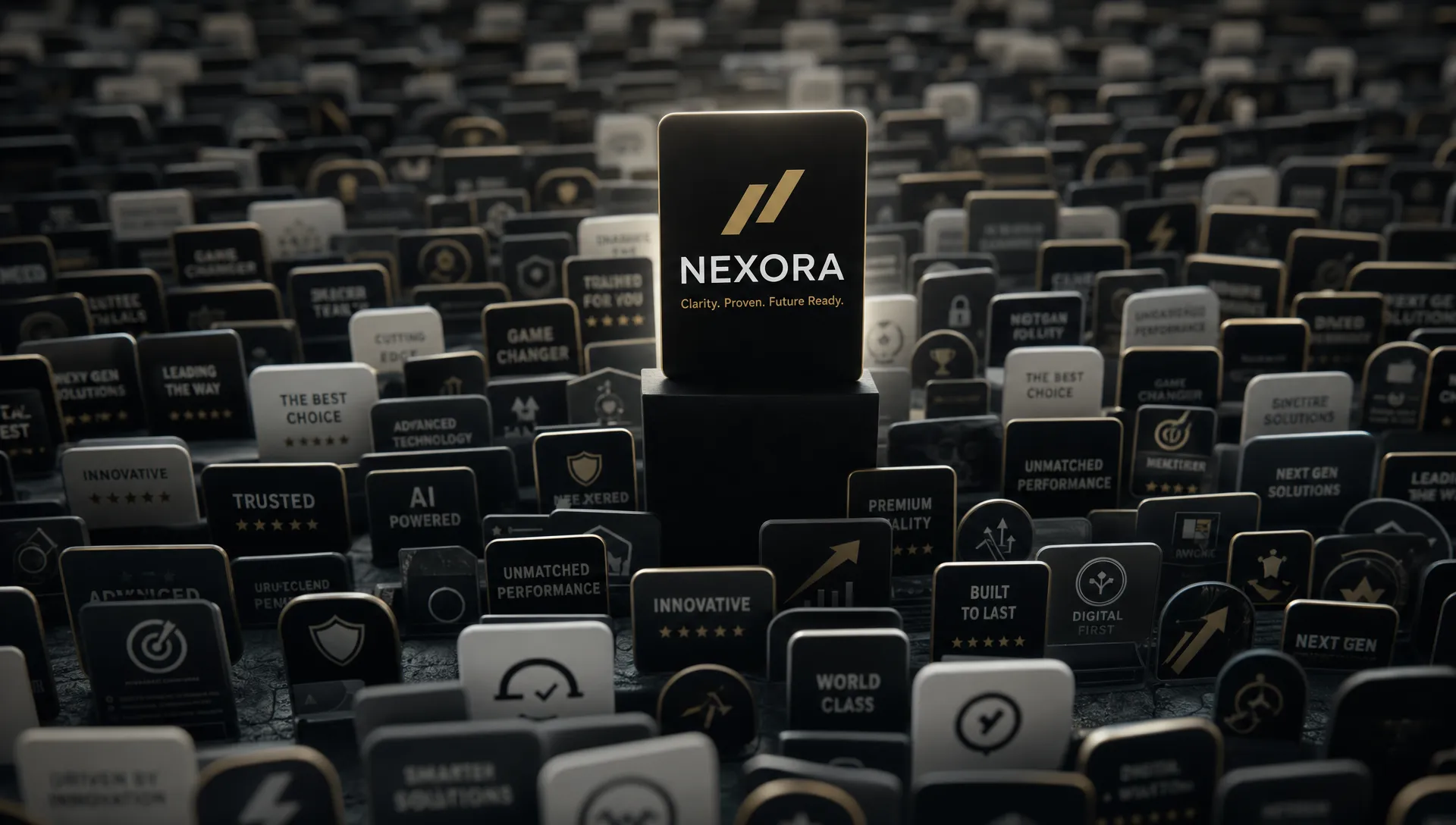
Crowded markets do not punish small brands. They punish unclear ones.
When buyers have too many options, they simplify. They scan for signals they already understand, compare you against the obvious alternatives, and move toward the brand that feels easiest to trust. That is why the work required to make your brand stand out is not just about being louder, brighter, or more provocative. It is about making your value easier to notice, remember, believe, and choose.
For challenger brands, this is good news. You may not have the biggest media budget or the longest history in the category, but you can still win attention if your brand has a sharper point of view, a clearer promise, and a more distinctive experience than the competitors around you.
Why strong brands still disappear
Most brands do not blend in because they lack talent, effort, or ambition. They blend in because they are responding to the same market signals as everyone else. They study the same category leaders, use the same customer language, make the same claims, and optimize for the same short-term conversion cues.
Over time, the result is sameness. Websites sound interchangeable. Visual identities borrow the same gradients, layouts, and symbols. Sales decks lead with similar feature lists. Campaigns promise speed, quality, simplicity, innovation, or better outcomes without making those words specific enough to own.
The most common causes of brand invisibility are simple:
- The audience is too broad, so the message becomes generic.
- The brand is defined by internal capabilities rather than customer tension.
- The visual identity looks different, but the strategic meaning is the same.
- The promise is attractive, but the proof is weak or hidden.
- The brand changes direction too often to build memory.
A crowded market is rarely solved by adding more noise. It is solved by creating more signal.
Start with a commercial position, not a prettier logo
A new logo can help a brand feel more modern, but it cannot compensate for unclear positioning. Before you ask how the brand should look, ask why the market should care.
Your position is the strategic choice that tells customers where you fit, who you are for, what problem you solve better than alternatives, and why your point of view matters now. The narrower and more defendable that position is, the easier it becomes to build a brand that people can remember.
A useful positioning exercise starts with questions that force trade-offs:
- Which customers are we best equipped to serve right now?
- What situation makes them actively look for a new solution?
- What are they tired of accepting from the current market?
- Which competitors or habits are we replacing?
- What proof do we have that our approach works?
This is where many brands hesitate. They fear that choosing a sharper position will exclude potential customers. In reality, a vague brand excludes itself from memory. If your brand is for everyone, buyers have no reason to associate you with a specific need.
If you are still defining the commercial foundation, Boil's guide to branding your business for growth is a useful next step because it starts with the market problem before moving into identity.
Pick the narrow fight you can win
Challenger brands rarely win by attacking the whole category at once. They win by choosing a beachhead where the incumbent is vulnerable, the customer pain is urgent, and the brand can create a visible contrast.
A beachhead might be a customer segment, a use case, a buying moment, a distribution channel, or a cultural tension in the market. The point is not to stay small forever. The point is to become unmistakable somewhere before trying to become relevant everywhere.
For example, a financial app does not need to be the money platform for everyone on day one. It might become the trusted tool for freelancers who hate tax surprises. A skincare brand does not need to own the entire beauty conversation. It might focus on customers who feel overwhelmed by 12-step routines and want evidence-backed simplicity.
The sharper the initial fight, the easier it is to make strategic decisions. Your messaging becomes more direct. Your content becomes more useful. Your product roadmap becomes more focused. Your sales team knows what to qualify for. Your creative work gets a real enemy.
This is especially important when bigger competitors can outspend you. A focused challenge gives your brand a reason to be talked about, not just seen. For more on this mindset, see the brand challenger playbook.
Create a tension competitors cannot own
Distinctive brands are built around tension. They identify something the customer feels but the category has failed to resolve. That tension gives the brand emotional charge and strategic direction.
The tension could be practical. Customers may be frustrated by slow implementation, hidden costs, low transparency, or products built for experts rather than everyday users. It could also be emotional. They may feel ignored, underestimated, confused, or tired of being sold status when they really want confidence.
The best tensions are not invented in a workshop. They are found in customer interviews, sales calls, reviews, support tickets, community conversations, and the language people use when they are frustrated enough to change behavior.
A useful brand tension has three qualities:
- It is already felt by customers before they meet your brand.
- It can be expressed in plain language that people repeat naturally.
- It points toward a promise your business can prove in the real world.
Once you find that tension, it becomes a strategic filter. If an idea does not sharpen the contrast between the old way and your way, it may be creative, but it is not necessarily brand-building.
Translate features into meaning
Many brands try to stand out by listing what they do. The problem is that features are easy to copy, and buyers often lack the context to understand why a feature matters.
Meaning is what turns a capability into a reason to care. A feature says what exists. A benefit says what it does for the customer. Meaning says why that benefit matters in the customer’s life, work, or identity.
Consider a project management platform. A feature might be automated task routing. A benefit might be fewer manual updates. The meaning might be that teams can spend less time chasing work and more time doing work that moves the business forward. The last version is more memorable because it connects the product to a tension people already feel.
This does not mean hiding functional strengths. It means framing them through the customer’s desired change. If your brand leads with internal language, you make the buyer do the translation. If your brand leads with meaning, you reduce the mental effort required to choose you.
Build distinctive memory assets
Standing out once is not enough. Brands grow when people can recognize them again and again across different situations. That is why distinctiveness matters as much as differentiation.
Differentiation explains why you are meaningfully different. Distinctiveness helps people identify you quickly. The strongest brands use both. They have a strategic idea worth remembering and recognizable assets that make the idea easier to retrieve.
Distinctive assets can include:
- A visual system with recognizable color, typography, layout, or motion.
- A tone of voice that sounds specific rather than category-neutral.
- A naming system for products, features, methods, or offers.
- A repeated brand line, phrase, or narrative structure.
- A signature way of showing customers, outcomes, or proof.
The key is consistency. If every campaign introduces a new visual language, you may look fresh, but you make memory work harder. If every page uses a different message hierarchy, buyers cannot easily repeat what you stand for.
Memorability is built through disciplined repetition, not random creativity.
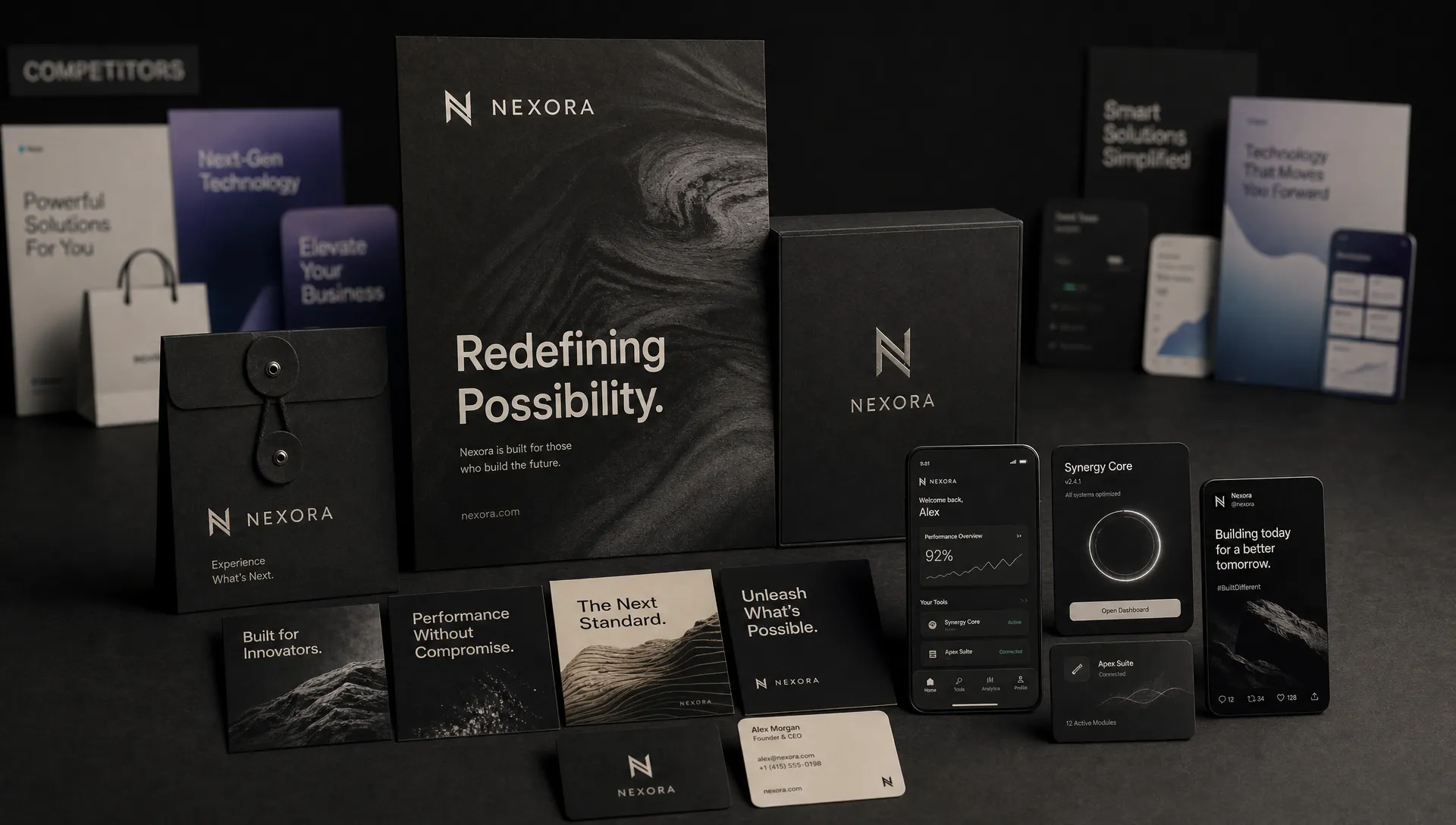
Make your brand sound like itself
In many crowded markets, the quickest way to make your brand stand out is to remove language that could belong to anyone.
Phrases like seamless solutions, next-level performance, customer-centric innovation, and end-to-end excellence often feel safe because they sound professional. But safe language is rarely memorable. It tells the audience that the brand understands the category, not that it understands the customer.
A stronger voice does not have to be quirky or informal. It simply has to be specific. The language should reveal what the brand believes, what it refuses to accept, and how it sees the customer’s world.
For example, instead of saying that a platform helps teams streamline workflows, a sharper brand might say it removes the admin work that keeps good teams stuck in follow-up mode. The second version is more vivid because it names the pain and gives the audience a situation they recognize.
This is where story structure can help. A clear brand story gives people a simple way to understand the enemy, the tension, the insight, and the change your brand makes possible. If that is an area you want to strengthen, Boil's article on story branding breaks down how to make a message easier to understand and repeat.
Create experiences competitors cannot copy overnight
Brand distinctiveness is not limited to identity and messaging. It also lives in the experience people have with your brand, from the first ad they notice to the onboarding flow, packaging, demo, community, event, retail environment, or digital product.
In categories where many brands make similar claims, experience becomes proof. If you say you make things simpler, your website and onboarding should feel simpler. If you say you are more premium, every interaction should feel considered. If you say you are built for a new generation of customers, your digital experience should not feel inherited from the old one.
For ambitious brands, interactive and immersive experiences can also become a strong differentiator. A product launch, virtual world, digital showroom, or branded visual experience can make the brand feel more tangible before a buyer ever speaks to sales. Studios such as The New Face show how crafted virtual experiences and imagery can help ambitious brands express a world, not just a message.
The lesson is not that every brand needs a virtual experience. The lesson is that touchpoints should do more than carry the brand. They should prove it.
Make proof impossible to miss
A bold brand promise without proof creates attention, but not trust. To stand out in a crowded market, your evidence needs to be as distinctive as your message.
Proof can come from customer outcomes, case studies, demonstrations, expert credibility, product data, before-and-after comparisons, founder experience, social proof, or transparent process. The best proof does not sit hidden at the bottom of a web page. It appears where doubt naturally arises.
On a homepage, proof might show that the brand has solved the problem for a recognizable type of customer. In a sales deck, proof might explain why the approach works better than the usual alternative. In a product demo, proof might let the customer experience the difference instead of hearing about it.
The goal is to close the gap between claim and belief. If your market is skeptical, proof should be frequent. If your product is complex, proof should be simple. If your brand is new, proof should reduce perceived risk quickly.
Use consistency without becoming predictable
Some teams resist consistency because they confuse it with boredom. In reality, consistency gives creativity something to compound.
A brand can stay consistent in its core idea, visual cues, language, and promise while still finding fresh ways to show up. Think of consistency as the frame, not the entire painting. The frame helps people recognize the brand. The creative execution keeps the brand alive.
This matters because buyers rarely make decisions after one interaction. They may notice a social post, visit the website weeks later, ask a colleague, compare alternatives, read a case study, and finally speak to sales. If each interaction feels like it came from a different company, the brand loses momentum.
The stronger approach is to build a system. Define what must remain stable and where teams have room to play. Stable elements might include positioning, promise, visual codes, messaging pillars, and tone principles. Flexible elements might include campaign concepts, content formats, seasonal activations, and channel-specific storytelling.
Consistency creates recognition. Flexibility creates relevance. You need both.
Measure whether your brand is actually standing out
You cannot manage distinctiveness by opinion alone. Creative judgement matters, but market response matters more.
To understand whether your brand is becoming more recognizable and easier to choose, track signals across awareness, memory, engagement, and conversion. The right metrics depend on your business model, but useful indicators often include:
- Growth in branded search and direct traffic.
- Higher recall in customer interviews or brand tracking.
- Better conversion from first visit to qualified action.
- More consistent language used by customers and sales teams.
- Increased win rates in the segment or use case you are targeting.
- More organic mentions around the problem you want to own.
Do not measure only whether people like the brand. A pleasant brand can still be forgettable. Measure whether people understand it, remember it, associate it with the right need, and can explain why it is different.
A practical 30-day reset for a crowded category
If your brand feels too similar to the market around it, start with a focused reset rather than a full rebrand.
In the first week, audit sameness. Review competitor websites, ads, sales narratives, social content, and product pages. Look for repeated words, claims, colors, layouts, metaphors, and proof points. The goal is to see the category through the customer’s eyes.
In the second week, choose the tension you want to own. Interview customers, sales teams, and support teams. Find the frustration that appears repeatedly and connects to your strongest capability.
In the third week, sharpen the message. Rewrite your core promise in customer language. Remove claims that any competitor could make. Make the enemy clearer, the benefit more specific, and the proof easier to see.
In the fourth week, test the new direction in market. Update a landing page, sales narrative, campaign concept, or product demo. Watch what people understand faster, what creates questions, and what starts to repeat in sales conversations.
A brand does not become distinctive by accident. It becomes distinctive when strategy, creativity, and go-to-market choices reinforce the same idea over time.
Frequently Asked Questions
What is the fastest way to make your brand stand out? The fastest way is to sharpen your positioning around a specific audience, problem, and point of view. Visual changes can help, but a clearer strategic contrast usually creates the biggest immediate improvement.
Does standing out mean being controversial? Not necessarily. Controversy can create attention, but it is only useful if it supports the brand’s truth and attracts the right audience. Specificity, clarity, and proof are often more powerful than provocation.
Can a small brand stand out against market leaders? Yes. Small brands can stand out by choosing a focused beachhead, building a memorable point of view, and creating distinctive assets that larger competitors are too slow or too broad to copy effectively.
How often should a brand refresh its identity? A brand should refresh when its strategy, audience, market, or offer has changed enough that the current identity no longer supports growth. Refreshing too often can weaken memory, so the goal is to evolve with discipline.
What is the difference between differentiation and distinctiveness? Differentiation is the meaningful reason customers should choose you. Distinctiveness is how quickly they recognize and remember you. Strong brands need both.
Turn distinction into brand growth
To make your brand stand out in a crowded market, do not start by asking what will get attention for a moment. Ask what your brand can own, repeat, prove, and scale.
The brands that win are not always the loudest. They are the ones customers can understand fastest, remember easiest, and trust most when it is time to choose.
If your brand has the ambition to challenge the market rather than blend into it, Boil helps ambitious brands grow market share through creative branding, go-to-market strategy, and digital experiences built for challengers.
