
Most teams don’t struggle to “get a logo.” They struggle to ship a brand that people can recognize in seconds, trust in minutes, and choose repeatedly.
That’s why branding design services should be judged by deliverables that move the business, not by how good a deck looks on presentation day.
In this guide, we’ll break down the core branding design deliverables, what “done” looks like for each, and how they connect to real growth levers like conversion, pricing power, pipeline quality, retention, and market share.
What “branding design services” should really deliver
Branding design is often sold as “creative,” but growth-focused teams need a clearer standard. Great branding design services deliver three things:
If your deliverables don’t create those outcomes, you do not have a brand system, you have files.
The growth model: from brand assets to revenue impact
Brand design deliverables drive growth through a few practical mechanisms:
McKinsey’s research on the business value of design has repeatedly linked strong design practices to better business performance, including higher revenue growth in top design performers (McKinsey, “The business value of design”). Your deliverables are how you operationalize that advantage.
Deliverable set #1: Brand strategy foundations (yes, design depends on it)
Even when you buy “design services,” the best work starts with strategic decisions that remove ambiguity.
1) Positioning statement and category frame
What it is: A short, specific articulation of who you serve, the problem you solve, the alternative you replace, and the differentiated value you claim.
What “done” looks like:
How it drives growth: A sharp position improves lead quality and reduces “wrong-fit” demand, which improves close rates and retention.
2) Messaging architecture
What it is: A structured set of messages (pillars, proof points, objections, and CTAs) mapped to buyer intent.
What “done” looks like:
How it drives growth: Better messaging increases conversion and increases consistency across teams.
3) Brand narrative (story, not slogans)
What it is: A narrative that explains why you exist, what you believe, and why the market needs a different approach.
What “done” looks like:
How it drives growth: Narrative increases salience and memorability, which makes every channel work harder.
If you want a deeper view of how challengers operationalize this into real-world execution, Boil has a useful walkthrough on what to expect from an agency engagement: Agency for branding: what to expect from strategy to launch.
Deliverable set #2: Visual identity system (the assets that create instant recognition)
A logo is not an identity. A growth-ready identity is a system that holds up under pressure across channels.
4) Logo suite (and usage rules)
What it is: Primary mark plus simplified versions for small sizes, app icons, favicons, and social avatars.
What “done” looks like:
How it drives growth: Recognition and professionalism improve trust, and trust improves conversion.
5) Color, typography, and layout tokens
What it is: A defined palette, type hierarchy, and layout logic that makes every touchpoint feel coherent.
What “done” looks like:
How it drives growth: Consistent design reduces production time and helps campaigns build cumulative memory.
6) Brand imagery and illustration style
What it is: Rules for photography, art direction, illustration, icon style, and motion principles.
What “done” looks like:
How it drives growth: Distinctiveness increases ad recall and improves “mental availability,” which boosts efficiency.
7) Brand guidelines that people actually use
What it is: Documentation that makes the brand deployable.
What “done” looks like:
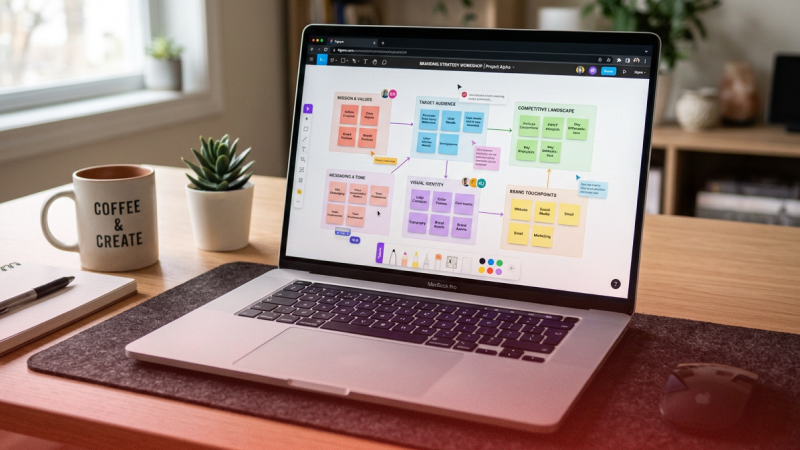
How it drives growth: Adoption. The best identity is worthless if your team can’t ship it.
Deliverable set #3: Digital brand experience (where growth is won or lost)
Many “brand” projects fail because the experience layer is treated as separate. In reality, the website and product experience are often the first proof of your promise.
8) Website information architecture (IA) and conversion paths
What it is: A structured navigation and page framework that helps users self-qualify and move forward.
What “done” looks like:
How it drives growth: Better IA reduces bounce and increases conversion.
This is especially obvious for content-heavy sites where users need quick filtering and trust signals, for example a curated directory like this dog-friendly hotel directory that relies on clear destinations, selection logic, and findability to feel useful.
9) UX and UI design system (components, not just pages)
What it is: Reusable components that keep pages consistent and speed up iteration.
What “done” looks like:
How it drives growth: Faster experimentation with fewer inconsistencies, plus fewer UX issues that quietly kill conversion.
Nielsen Norman Group’s usability research is a good reminder here: users do not “appreciate” complexity, they punish it with hesitation and abandonment (NN/g usability articles).
10) Web copy aligned to the design system
What it is: Copy that is written to fit modules, flows, and scannable patterns.
What “done” looks like:
How it drives growth: Copy and design together remove doubt, and doubt is what stalls pipeline.
Deliverable set #4: Go-to-market design (how you show up when it matters)
Design that does not reach market is just potential energy. A growth-oriented scope includes launch-ready materials.
11) Sales enablement kit
What it is: Deck templates, one-pagers, proposal layouts, and case study formats.
What “done” looks like:
How it drives growth: Better sales materials raise close rates and reduce time spent rebuilding slides.
12) Launch campaign toolkit
What it is: A system for announcing the new brand, not just “revealing” it.
What “done” looks like:
How it drives growth: Launch creates a spike in attention and a clean “line in the sand” for repositioning.
13) Brand rollout plan (internal and external)
What it is: A plan to update touchpoints in the right order, with minimal disruption.
What “done” looks like:
How it drives growth: Prevents brand inconsistency that erodes trust and confuses the market.
How to evaluate branding design services (a practical buyer checklist)
When you’re choosing a partner, don’t start with “Do we like the style?” Start with “Can they ship growth outcomes?”
Ask for proof of thinking, not just visuals
Look for:
Ask what they will need from you
Strong branding work is collaborative. If an agency does not ask for access to customer calls, sales insights, analytics, or internal stakeholders, expect a surface-level outcome.
Define success metrics before the first moodboard
Brand is a long game, but you can still define near-term indicators:
Common pitfalls: deliverables that look complete but don’t drive growth
“We have guidelines” (but nobody uses them)
If your guidelines live in a 120-slide PDF, adoption will be low. A usable system is modular, searchable, and designed for non-designers.
“We redesigned the site” (but didn’t fix the message)
A polished interface cannot compensate for fuzzy positioning. If users still cannot answer “why you,” conversion will plateau.
“We launched” (but didn’t enable sales and customer-facing teams)
If sales, support, and partnerships cannot explain the new story, the market will not either.
Where Boil fits (and how to think about scope)
Boil positions itself as a next-generation branding and go-to-market agency for challengers, combining brand strategy, creative design, and digital experiences to help ambitious brands grow market share.
If you’re scoping a project, align the deliverables to the job you actually need done:
For a stage-based view of what to prioritize (and what to avoid), see: Branding services: what you actually need at each stage.
Frequently Asked Questions
What’s included in branding design services? Typically, it includes an identity system (logo, colors, typography, imagery), guidelines, and real-world applications like web and sales materials. Growth-focused scopes also include messaging, UX/UI components, and launch assets.
How long do branding design services take? It depends on scope and decision speed. A focused identity refresh can be faster, while a full system that includes strategy, website, and go-to-market assets takes longer. The biggest variable is stakeholder alignment and feedback cycles.
Do we need brand strategy if we just want design? If you want design that drives growth, yes. Without clear positioning and messaging, design becomes subjective, inconsistently applied, and harder to connect to conversion or pipeline outcomes.
What deliverable matters most for growth? The highest-leverage deliverable is usually a clear positioning and messaging system that can be deployed on your website and in sales. Strong identity amplifies it, but clarity comes first.
How do we know if our brand design is working? Track leading indicators like conversion rate on key pages, sales cycle length, win rate, branded search lift, and qualitative signals such as “I finally get what you do” from prospects.
Turn deliverables into growth
If you’re investing in branding design services, push beyond “a new look.” Demand a system that your team can ship, your market can recognize, and your go-to-market can scale.
Boil helps challenger brands connect strategy, design, and go-to-market execution so the work shows up in market share, not just aesthetics. Explore Boil’s approach and client work at boil.agency.
