LinkedIn did not win B2B mindshare because of one dramatic logo reveal. It won by steadily expanding what the brand meant while protecting the trust it had already earned.
That is what makes LinkedIn rebranding such a useful case for B2B challenger brands. The platform has evolved from a digital resume and recruiting utility into a professional network, content channel, advertising environment, learning ecosystem, sales tool, and credibility layer for modern work. Yet it never became unrecognizable.
For challenger brands, that restraint matters. You rarely have the luxury of starting over. Your rebrand has to create momentum without confusing buyers, investors, partners, or employees. LinkedIn shows how to modernize a B2B brand by widening the promise, not abandoning the memory.
Why LinkedIn rebranding matters for B2B challengers
At first glance, LinkedIn may feel too large to be relevant to challenger brands. It has global network effects, deep Microsoft backing, and a role in professional life that most brands will never replicate. LinkedIn states that it connects more than 1 billion members across more than 200 countries and territories, which puts it in a different weight class from almost every emerging B2B company.
But the lesson is not copy LinkedIn's scale. The lesson is how LinkedIn managed meaning.
The best B2B rebrands are not cosmetic events. They are strategic corrections. They help the market understand what a company has become, who it is for, why it matters now, and why it should be trusted. LinkedIn's evolution is a strong example because it did not rely on shock value. It kept its core assets visible while making room for new behaviors, new products, and new audiences.
That is especially useful for challenger brands because they often face a tension: they need to look bigger and more credible, but they also need to stay sharper and more distinctive than incumbents. A rebrand should resolve that tension, not make it worse.
The strategic arc: from online profile to professional infrastructure
LinkedIn began with a clear, practical association: professional identity. You built a profile, displayed your work history, connected with people, and made yourself discoverable. That was already a powerful brand territory because it sat close to ambition, opportunity, and reputation.
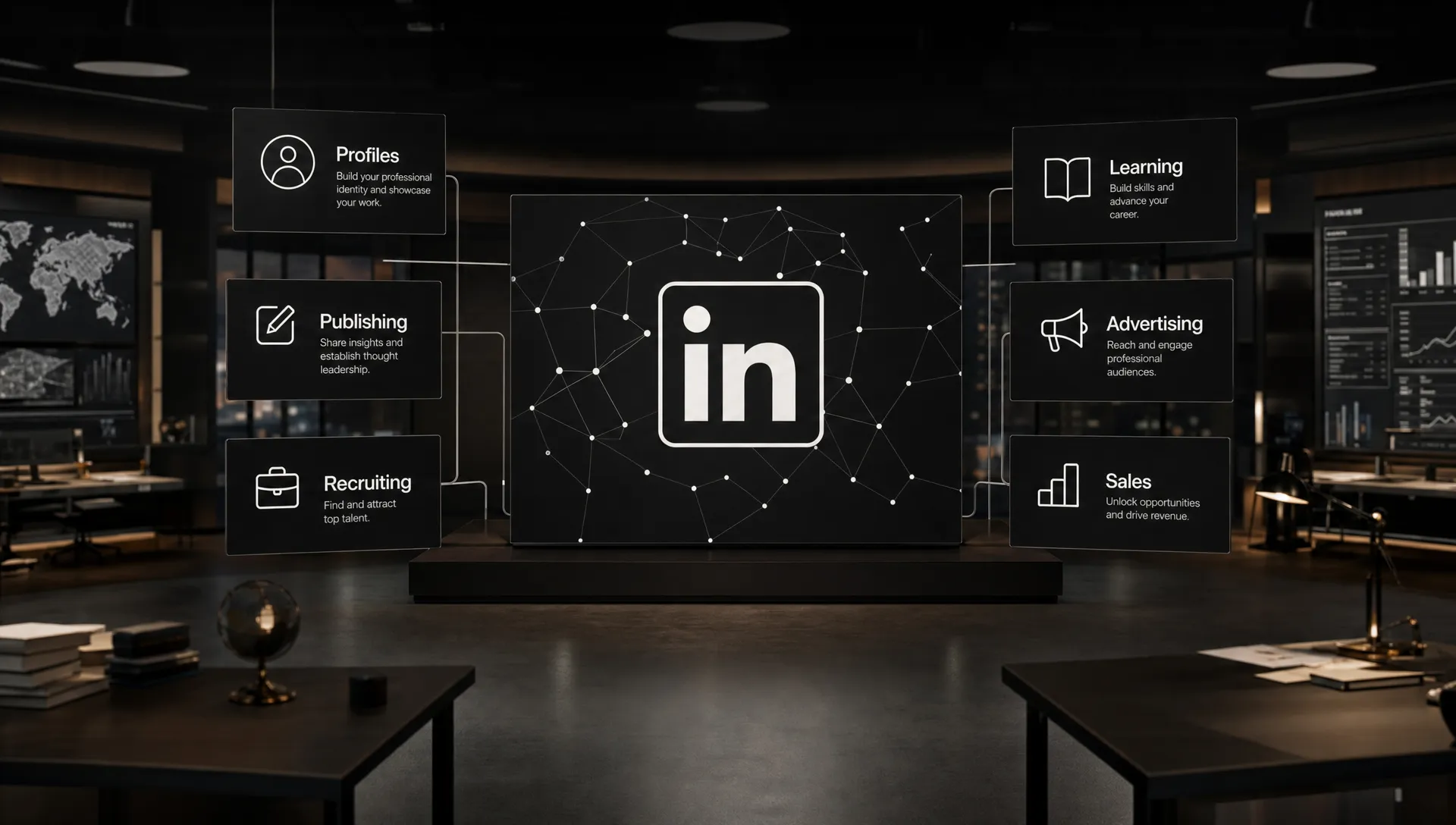
Over time, the platform became more than a place to be found. It became a place to publish, recruit, sell, advertise, learn, and build authority. The brand stretched from profiles into workflows.
That shift could have created confusion. LinkedIn could have appeared to be several disconnected products wearing the same logo. Instead, the brand continued to anchor itself in a simple idea: the professional graph. Whether someone is hiring, selling, learning, posting, or searching, the underlying promise is connected professional opportunity.
The platform also survived a major ownership change. Microsoft completed its acquisition of LinkedIn in 2016, yet LinkedIn was not swallowed by the Microsoft masterbrand. That was a brand architecture decision as much as a business decision. LinkedIn retained the equity it had built, while gaining the credibility and distribution of a larger ecosystem.
For challenger brands, the takeaway is clear: a rebrand should give your business more room to grow, but it should not sever the associations that made people care in the first place.
Lesson 1: Expand the promise without erasing equity
Many challenger brands rebrand because they feel their old identity has become too small. The product has expanded, the audience has changed, the category has matured, or the company is entering a more serious buying conversation.
That does not automatically mean the old brand should be discarded.
LinkedIn's most valuable assets have remained remarkably consistent: the name, the blue, the in mark, the professional context, and the idea of being connected to opportunity. Those assets create recognition before a buyer reads a line of copy. The visual and verbal system has evolved, but the memory structure has not been casually destroyed.
This is where many B2B challengers make a costly mistake. They confuse personal boredom with market fatigue. Internal teams often get tired of a brand years before the market has fully noticed it. A rebrand that wipes out distinctive assets can make a company feel new internally while making it harder to buy externally.
The challenger move is not to protect everything. It is to identify what still carries meaning, then build around it. Keep the signals that buyers already use to recognize you. Upgrade the parts that are limiting growth.
Lesson 2: Change the category only when the business can prove it
LinkedIn did not simply announce that it was now a broader professional ecosystem. It became one through product behavior. Content creation grew. Company pages became more important. Recruiters, sales teams, advertisers, creators, executives, and learners all found different reasons to use the platform.
The category shift followed real usage.
That sequence matters. If a B2B challenger declares a new category before the product, proof points, customer stories, and go-to-market motion support it, the market will not follow. The rebrand becomes an aspiration rather than a believable position.
Boil explored this risk in its analysis of what brands can learn from X, where a dramatic shift in name and symbol created a bigger question: had the meaning of the business changed enough for users to accept the new category frame?
LinkedIn's approach was quieter and more accumulative. The brand stretched because the platform's role in professional life had already stretched. For B2B challenger brands, that is a useful discipline. Before you claim a bigger position, ask whether customers already see evidence of it.
Lesson 3: Turn trust into a visible brand asset
Trust is not a soft metric in B2B. It affects whether buyers book a demo, forward a proposal, put you on a shortlist, or risk their reputation by recommending you internally.
LinkedIn's brand is built on professional trust. Profiles are public, reputations are visible, networks are contextual, and activity is tied to identity. The brand does not have to shout credibility because credibility is embedded in the experience.
Challenger brands can apply the same principle even without a network effect. Trust should appear in the details of the brand system: category clarity, confident messaging, proof, interface design, case studies, security language, leadership visibility, and the ease with which a prospect can understand the next step.
This is not limited to software. In high-stakes professional services, clarity can do much of the trust-building work before a conversation starts. For example, Personal Injury Lawyers of Tampa communicates its service area, location, urgency, and consultation pathway quickly, reducing uncertainty for people who may be making a stressful decision. B2B challengers should treat their own websites and sales materials with the same level of buyer empathy.
If your brand requires prospects to decode what you do, who you help, or why you are credible, the rebrand has not done enough.
Lesson 4: Build a brand system that can stretch
A rebrand is not just a logo and a homepage. It is a system for future decisions.
LinkedIn has to serve many use cases: personal profiles, recruiter tools, learning content, advertising products, sales workflows, thought leadership, executive communications, and mobile interactions. A narrow identity would break under that pressure. A strong brand system creates consistency without forcing every touchpoint to look identical.
That is one of the most practical LinkedIn rebranding lessons for B2B challenger brands. Your brand may start with one flagship product, but growth creates complexity. New offers, new markets, new buyer segments, and new channels will test the system.
A flexible brand system should define how the company sounds, how it shows proof, how it frames product value, how it names offers, how it presents customer outcomes, and how visual assets adapt across sales, marketing, product, and employer brand touchpoints.
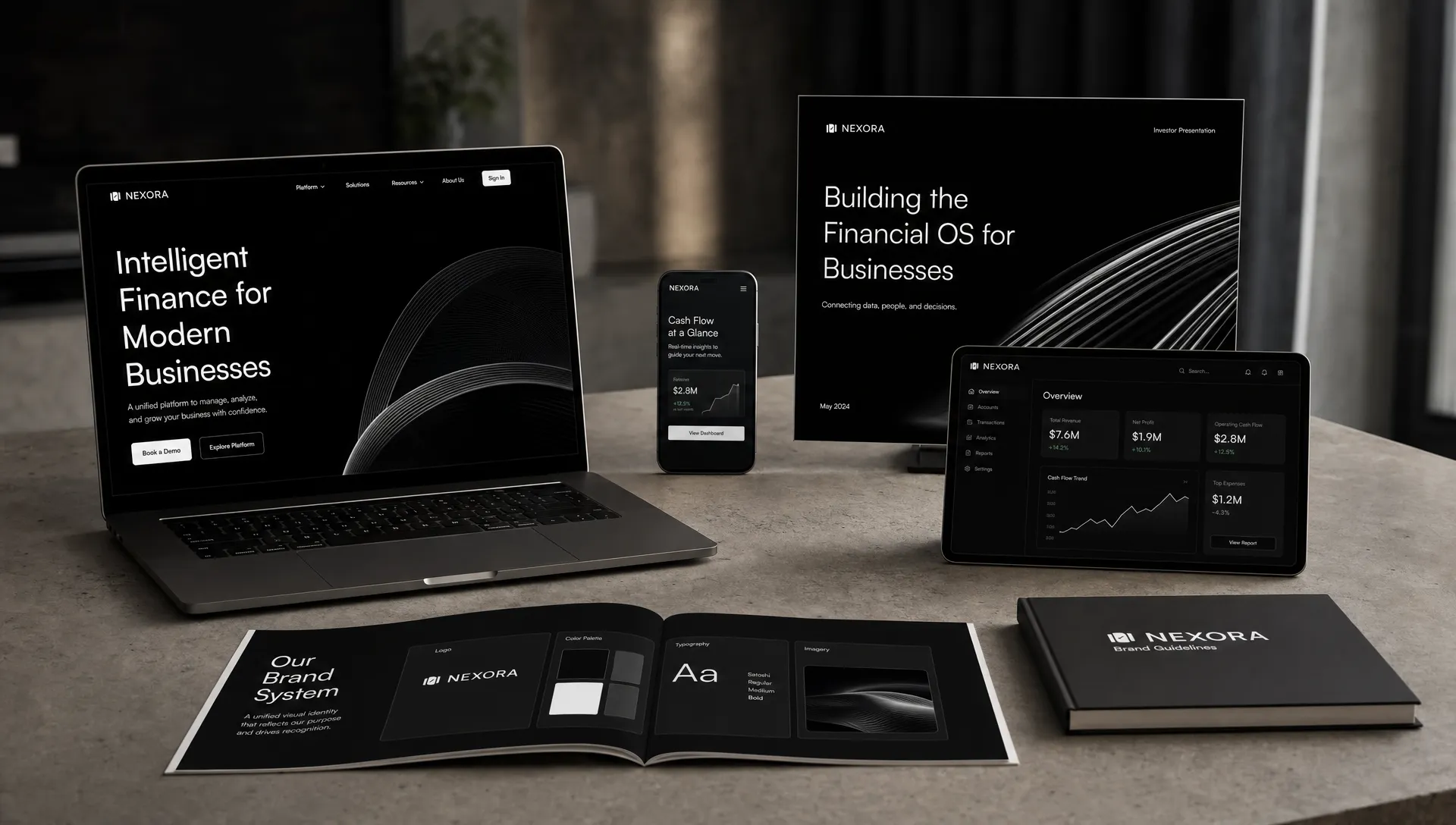
For challengers, the goal is not to look like an enterprise incumbent. It is to look coherent enough to be trusted and distinctive enough to be remembered.
Lesson 5: Make professionalism feel human
One of LinkedIn's more interesting brand challenges is emotional balance. Too formal and the platform feels sterile. Too casual and it risks losing its professional credibility.
Over time, LinkedIn has become more human without becoming unserious. People share career changes, lessons learned, hiring posts, founder reflections, customer stories, and industry opinions. Some of that content is polished. Some is personal. But the platform still sits inside a professional frame.
That balance is important for challenger brands. B2B buyers are people, but they are people making high-consequence decisions inside organizations. A brand voice that sounds human can reduce friction, but a voice that becomes vague, quirky, or over-familiar can damage confidence.
The best challenger brands speak with conviction. They use plain language. They show the people behind the work. They acknowledge buyer pain without over-dramatizing it. They avoid jargon when clarity would do more. If you are rebranding, voice is not decoration. It is part of your commercial strategy.
This is especially relevant in categories where buyers are tired of sameness. If every competitor claims to be seamless, scalable, AI-powered, and customer-centric, a more precise and human voice can become a real advantage.
Lesson 6: Rebrand through behavior, not launch-day theatre
A rebrand launch can create attention, but it does not create belief on its own. Belief is earned through repeated experiences.
LinkedIn's evolution has been reinforced by product changes, creator behavior, business adoption, recruitment habits, and professional norms. The brand became bigger because the experience repeatedly taught users that LinkedIn could do more than host a resume.
That is the standard challenger brands should hold themselves to. If your new positioning says you are a strategic partner, your sales process has to feel strategic. If your new brand claims simplicity, your onboarding cannot be confusing. If your rebrand promises category leadership, your content must have a point of view.
This is why rebranding and go-to-market strategy should not be separated. The brand tells the market what to expect. The go-to-market motion proves whether that expectation is true.
For brands rethinking their place in the market, Boil's perspective on redefining brand positioning for challenger brands is relevant here: the strongest challenger positions are not just different for the sake of difference. They are built around a belief the market can understand, repeat, and act on.
What B2B challenger brands should borrow from LinkedIn
LinkedIn's rebrand story is not a template, but it does offer a set of useful principles. The most important ones are strategic, not aesthetic.
- Protect the assets that already help buyers recognize and trust you.
- Expand the brand promise only when your product, customers, and market behavior can support it.
- Build a brand system that can handle new offers, channels, and audiences.
- Make trust visible through proof, clarity, design, language, and user experience.
- Humanize the brand without losing authority.
- Treat the rebrand as a growth system, not a one-day announcement.
The strongest lesson is restraint. LinkedIn did not need to look unrecognizable to become more relevant. It needed to make its existing meaning bigger.
That is a powerful idea for challengers. You do not have to pretend to be a different company to show the market you have grown. You have to clarify what has changed, preserve what still works, and build a brand capable of carrying the next stage of the business.
Where LinkedIn is not the right model
There is also a danger in over-learning from LinkedIn. Most challenger brands do not have a massive professional network, a global user base, or a parent company with enterprise distribution. LinkedIn can afford gradual meaning shifts because the platform is already woven into professional routines.
A challenger brand often needs more focus.
That means your rebrand should not try to signal everything you might become. It should sharpen the next commercially important move. Are you moving upmarket? Entering a new category? Consolidating multiple offers? Escaping a legacy perception? Recruiting better talent? Giving sales a clearer story? Rebuilding trust after a pivot?
Different problems require different rebrand decisions. A challenger brand that copies LinkedIn's breadth too early may become vague. The smarter move is to borrow LinkedIn's discipline: protect recognition, prove expansion, and make every touchpoint reinforce the same strategic idea.
Rebranding questions to ask before you move
Before changing your identity, messaging, or market story, leadership teams should align on a few hard questions. These questions prevent a rebrand from becoming a subjective design exercise.
- What business problem must this rebrand solve?
- Which existing brand assets still carry valuable recognition?
- What perception do we need to change in the market?
- What proof do we have that our new position is credible?
- Which audiences must understand the change first?
- How will the new brand show up in sales, product, recruitment, partnerships, and customer success?
- What will we measure after launch to know whether the rebrand is working?
If those answers are unclear, the rebrand is not ready. If they are sharp, design and messaging decisions become easier because they are serving a defined strategic outcome.
Frequently Asked Questions
What is the main LinkedIn rebranding lesson for B2B challenger brands? The main lesson is to expand what the brand can mean without destroying the trust and recognition it has already built. LinkedIn evolved gradually, keeping core assets while supporting a broader professional ecosystem.
Should challenger brands keep their existing logo or visual identity during a rebrand? Not always. The decision depends on whether those assets still carry useful recognition and meaning. If buyers already associate an asset with trust or category relevance, it may be better to evolve it than discard it.
How can a B2B brand know if it is ready for a rebrand? A brand is ready when there is a clear business reason, such as moving upmarket, entering a new category, consolidating offers, changing perception, or supporting a new go-to-market strategy. Aesthetic preference alone is not enough.
Is LinkedIn's rebranding approach better than a bold name change? It depends on the situation. LinkedIn's gradual evolution worked because the core brand still had strong equity. A bold name change can work when the old brand is actively limiting growth, but it carries more risk and requires stronger proof.
Build a B2B brand that buyers can understand and choose
LinkedIn's evolution shows that a powerful rebrand does not have to be loud. It has to be legible, credible, and connected to how the business actually creates value.
If your brand is outgrowing its current identity, entering a new market, or struggling to translate product strength into market share, the opportunity is not just to look different. It is to build a sharper growth platform.
Boil helps ambitious challenger brands with branding, rebranding, go-to-market strategy, creative design, and digital experiences designed to make them easier to notice, trust, and choose.
