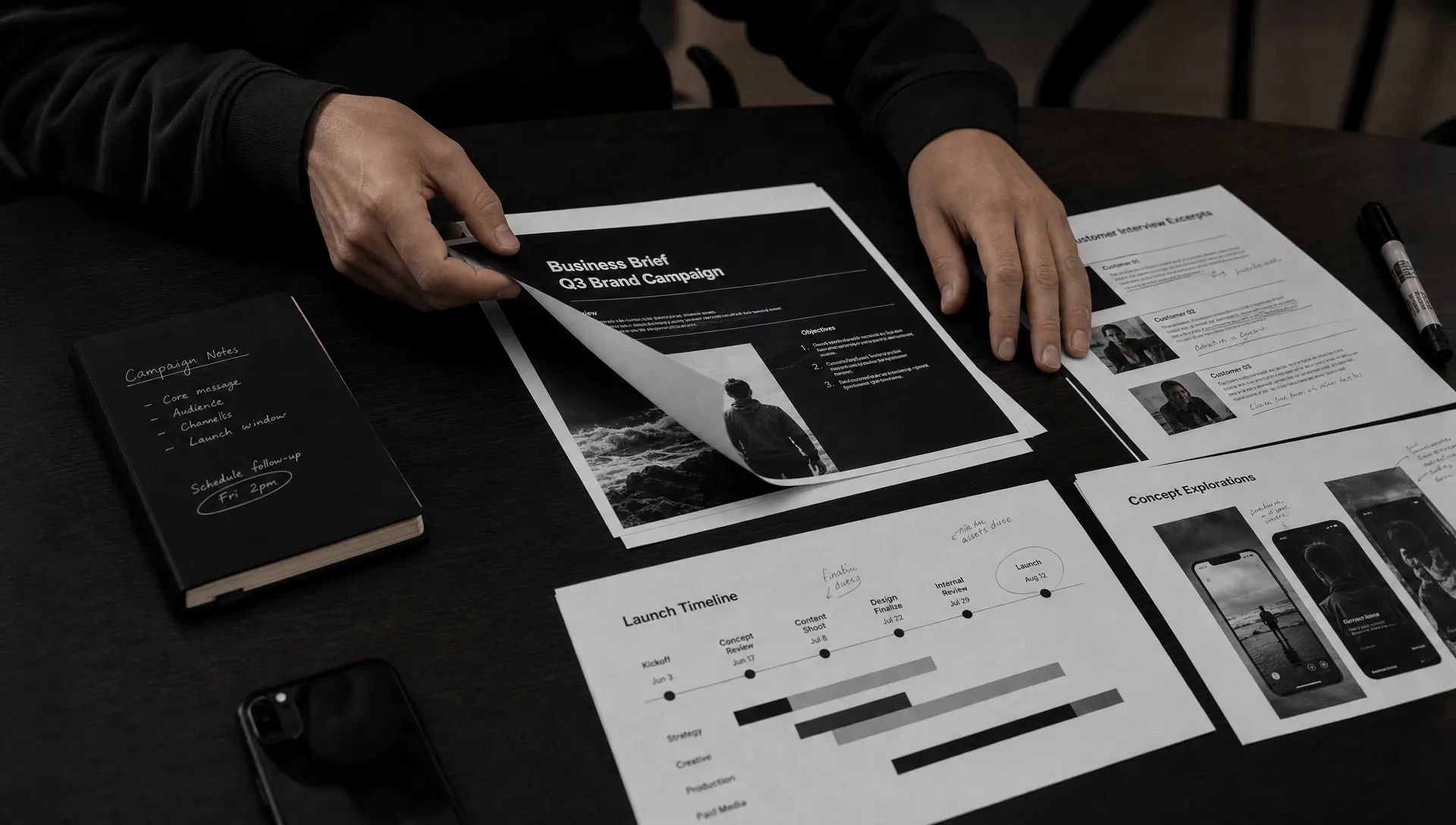
Your first strategy call with Boil Agency will be more useful if you arrive with a clear business challenge, a few pieces of customer evidence and an honest view of your constraints. You do not need a finished brand strategy or a polished presentation. You need enough context to explore what is holding growth back and whether working together makes sense.
The preparation below is a suggested checklist, not a prescribed Boil intake process or confirmed meeting agenda. Use it to organize what you know, identify what you still need to learn and make room for a productive discussion.
Start with the business problem, not the deliverable
“We need a new website” describes a potential solution. “Prospects cannot understand why we are worth switching to” describes a problem worth investigating.
Before the call, write a short statement connecting your current situation to the change you want. For example:
We are entering a new market where buyers do not recognize us. We need to establish a credible position before approaching distribution partners.
Boil works across branding, rebranding, go-to-market strategy and digital experiences. Starting with the business issue leaves room to discuss which kind of work would actually help, rather than treating your first idea as the final scope.
If you are unfamiliar with the broader engagement, reviewing what to expect from branding strategy through launch can help you distinguish the initial conversation from the work that might follow.
Build a one-page brief for Boil Agency
A working brief gives everyone a shared starting point. Keep it short enough to scan and specific enough to question. A document with clear gaps is more useful than a polished deck that hides uncertainty.
| Brief element | What to prepare |
|---|---|
| Business context | What you sell, where you operate and your current growth stage |
| Priority audience | The buyers you most need to reach or persuade |
| Growth challenge | The commercial problem behind the request |
| Reason to act | What changed and why the issue matters now |
| Desired outcome | The business result you want to improve |
| Possible scope | Your current hypothesis, such as positioning, a launch or a website |
| Constraints | Budget range, timing, internal capacity and fixed commitments |
Make the distinction between facts and assumptions visible. “Customers mention price in sales calls” is an observation. “Our positioning makes us look interchangeable” is a hypothesis. Both belong in the discussion, but they should not carry the same weight.
For a challenger brand, include the alternative you are trying to displace. That might be an established competitor, an internal workaround or the buyer’s decision to do nothing.
Bring evidence that explains the challenge
You do not need to commission research before an introductory conversation. Gather the evidence you already have and select a few items that illustrate the issue.
Useful material might include customer interview excerpts, recurring sales objections, website conversion data, lost-deal reasons or examples of messaging that gets misunderstood. Add context: which audience, which period and how the information was collected.
For your conversation with Boil Agency, three well-explained examples will usually be easier to discuss than a folder full of unexplained reports. A short customer quote can reveal a misunderstanding that an aggregate metric cannot explain on its own.
Where possible, bring a baseline for the outcome you want to improve. If the concern is poor lead quality, define what your team considers qualified. If the issue is market entry, explain what evidence of early traction would matter.
Avoid presenting a commercial metric as something branding alone can control. Sales follow-up, pricing, distribution and product experience may also affect the result. The aim is to expose those connections, not settle attribution before the work begins.
Choose references for a reason
Bring two or three references and explain what each one demonstrates. “We like this” gives little direction. “This makes a complicated service easy to understand” creates a useful discussion.
References do not have to come from your category. A regional service business might use WM Painting & Decorating as a reference when discussing how to present services, coverage areas and completed projects. A software business might bring a product page that clearly separates different buyer needs.
The purpose is to identify communication principles, not ask for a copy of another brand. Include an example you dislike if you can explain the business reason behind that reaction.
Align on budget, timing and decision-makers
A realistic investment range helps narrow the conversation. If a budget has been approved, say so. If you are still building the business case, explain how approval works and what information the decision-maker needs.
You do not need to invent a number to appear prepared. Instead, distinguish between an approved budget, a provisional range and a request for scoping guidance. Ask what can reasonably be prioritized within your constraints rather than assuming every possible deliverable belongs in the first phase.
Before speaking with Boil Agency, separate genuine deadlines from preferred dates. A scheduled launch or contractual commitment creates different constraints from an internal ambition to refresh the brand this quarter. Mention dependencies such as product readiness, legal review, technical migration or partner approval.
Also identify who owns the outcome, who approves the investment and who will contribute day to day. Invite the people needed for a useful first discussion, not everyone who might eventually provide feedback. If an essential decision-maker cannot attend, agree internally on what can and cannot be decided without them.
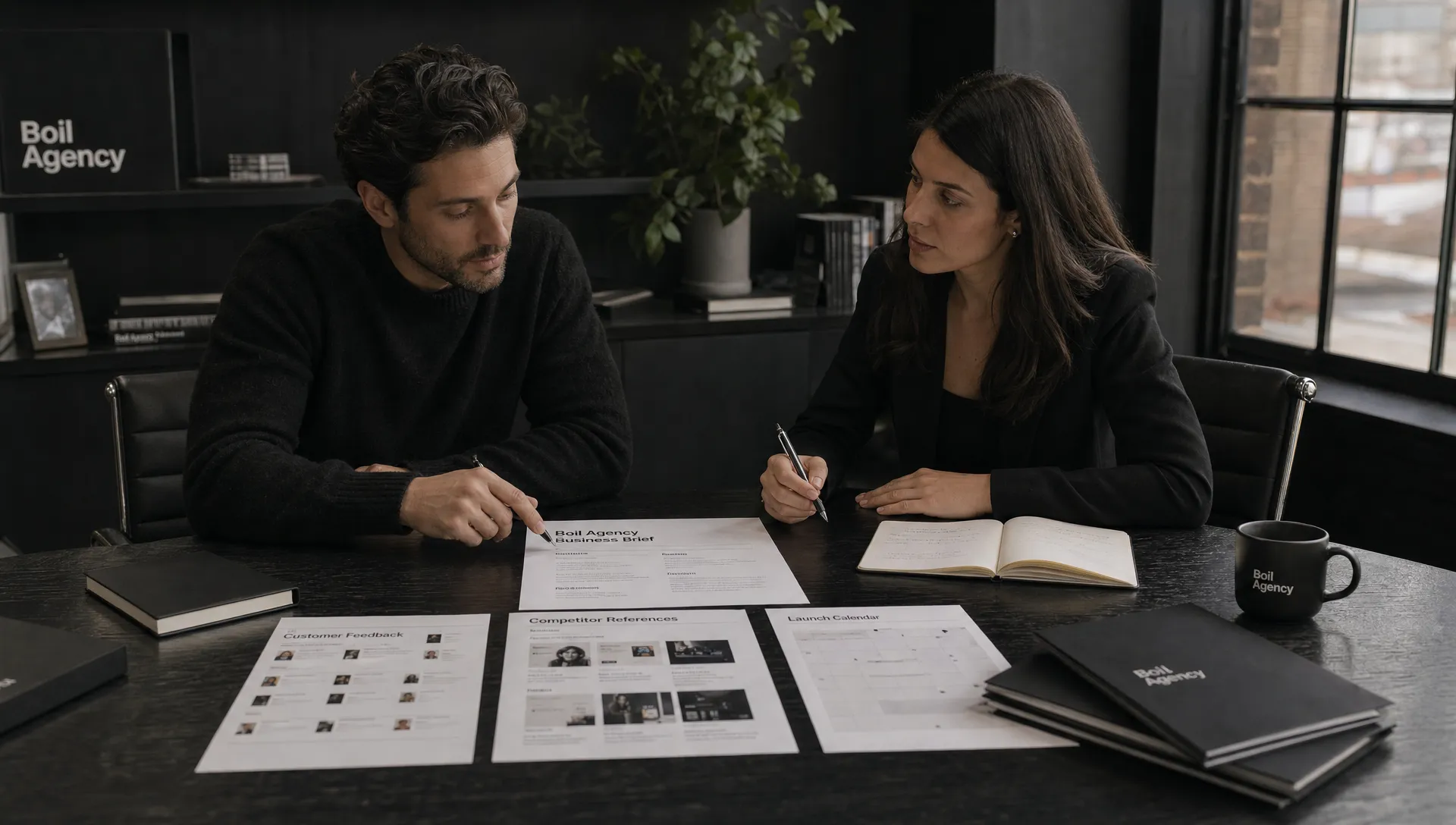
Prepare questions that help you assess fit
The call is also your opportunity to understand how an engagement could address your challenge. Questions about reasoning and responsibility are more revealing than a request for a list of deliverables.
Consider bringing these questions:
- How would you investigate whether our main issue is positioning, go-to-market execution or the digital experience?
- What would you need to understand before recommending a scope?
- Which parts of the work would require the most involvement from our team?
- How would we agree on success measures and recognize the limits of attribution?
- What assumptions or dependencies could materially change the scope, timing or investment?
Because Boil Agency’s offer spans brand and go-to-market work, ask where the handoffs would sit for your specific situation. Clarify what your team would own and what would need to be scoped separately.
If you want to understand the Boil Method, ask how it would apply to your challenge. That is more useful than assuming a framework means every client follows an identical sequence or receives the same outputs.
Use the conversation to narrow the next decision
You do not need to leave the first call with a complete strategy. A more practical aim is a shared understanding of the problem, the most important unknowns and the next decision.
Open with a concise account of your situation, then let the discussion test it. Be willing to explain why your preferred solution might be wrong. If you asked for a rebrand but the evidence points toward an unclear offer or a launch-planning gap, that distinction matters before committing resources.
As your conversation with Boil Agency closes, summarize what you heard in plain language: the challenge, the likely priorities, the unresolved questions and any agreed follow-up. Confirm who owns each next action and whether further information is needed before scope or investment can be discussed meaningfully.
Afterward, send a short recap and any materials you agreed to share. Record what remains a hypothesis rather than treating an exploratory idea as an approved recommendation. This gives your internal team a more accurate basis for deciding what happens next.
Frequently asked questions
Do I need a completed brand brief before the call? No. A one-page summary of your business, audience, challenge and constraints is enough preparation to support an initial discussion. Mark unknowns clearly instead of filling them with guesses.
What if we do not know whether we need a rebrand or a new website? Bring examples of where the current experience breaks down. Describe what customers misunderstand or struggle to do. Your conversation with Boil Agency can then focus on the underlying problem rather than defending a predetermined deliverable.
Can an early-stage business prepare without much customer data? Yes. Bring the evidence available, such as founder-led sales conversations, pilot feedback or test results. Explain the size and limits of that evidence so early signals are not mistaken for established patterns.
Should we send confidential information in advance? Ask how sensitive material should be handled before sending it. Use anonymized examples where possible and confirm any confidentiality arrangements your business requires. Customer-level data is rarely necessary just to explain the challenge.
Get your essentials ready
Set aside a short preparation session with the person accountable for growth. Draft your problem statement, collect a few useful examples and agree on your constraints. That is a stronger starting point than a presentation built around a solution nobody has tested.
When you are ready, start a conversation about your brand’s growth challenge. Bring what you know, be explicit about what you do not and use the first discussion to establish a sensible next step.
