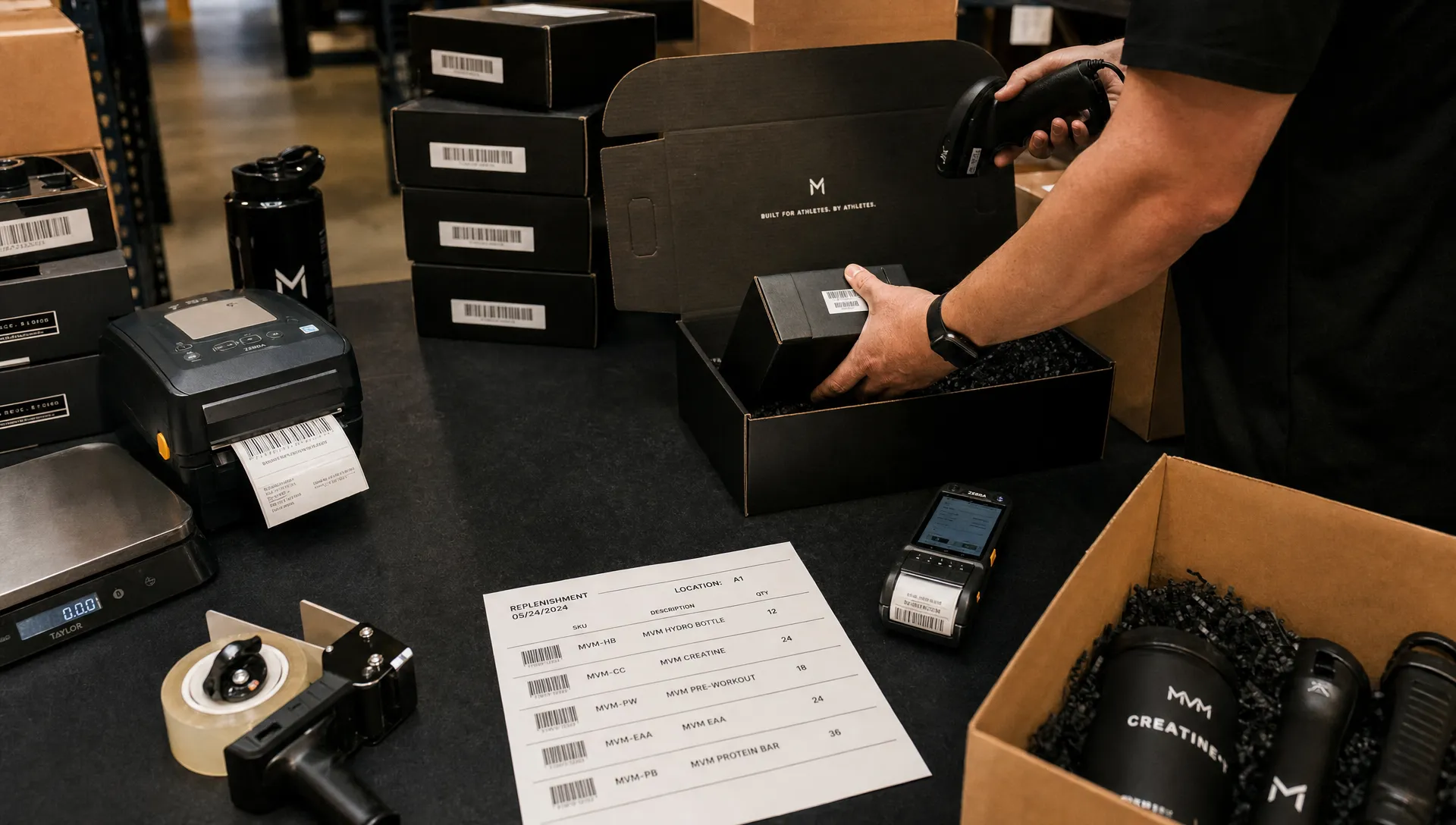
Retail partnerships can help you grow your brand by putting your products in front of shoppers who already trust the retailer. But a listing is not the same as growth. The wrong partner can tie up cash, weaken your positioning and leave inventory sitting on shelves. The right one gives customers a credible reason to try your product, then makes repeat purchases easy.
For challenger brands, the goal is not to appear in as many stores as possible. It is to build distribution that strengthens demand and produces commercially sustainable sales.
Start with the job retail needs to do
Before approaching buyers, decide what a partnership should accomplish. Are you trying to reach a new customer group, make an unfamiliar product easier to understand or give existing customers a more convenient place to buy?
Each objective suggests a different partner. A specialist store may offer knowledgeable staff and product demonstrations. A regional chain may help test demand in a specific market. An established online retailer may provide discovery without a physical rollout.
Set one primary objective and a few supporting measures. For example, a regional launch might prioritize sustained sales per store, with product recognition and repeat orders as supporting signals. This prevents an impressive store count from hiding weak customer demand.
Choose retail partners that can grow your brand
Audience overlap matters, but buying context matters just as much. Your ideal customer might visit a retailer without shopping there for your category, price point or purchase occasion.
Look at the surrounding assortment. Which products would sit beside yours? What alternatives would shoppers compare? Does the store compete through expertise, convenience, low prices or discovery? A premium product that requires explanation may struggle in an environment built around quick, price-led decisions.
Visit stores where possible and review product pages, customer reviews and promotional activity. Speak with store teams about recurring shopper questions without treating their observations as a substitute for a proper market test.
Match the partnership model to your capacity
Retail partnerships can take several forms, with different inventory and operational responsibilities. Terms vary by agreement, so clarify the actual arrangement rather than relying on its label.
| Partnership model | How it typically works | What to clarify |
|---|---|---|
| Wholesale | The retailer buys stock for resale | Payment timing, returns and promotional contributions |
| Consignment | The brand retains ownership until products sell | Stock reporting, loss responsibility and settlement timing |
| Pop-up or concession | The brand operates within a retail environment | Staffing, space costs and customer experience responsibilities |
| Retailer dropshipping | The retailer takes orders and the brand fulfills them | Delivery standards, returns and customer service ownership |
The model should help you grow your brand without creating obligations your team cannot reliably meet. A staffed concession requires different capabilities from shipping wholesale cases to a distribution center.
If you have not yet validated the offer, this guide to starting a brand without ordering inventory upfront outlines lower-commitment ways to test demand. Those tests can inform your proposition, but they do not prove readiness for a stocked retail launch.
Give the buyer a commercial reason to say yes
A buyer needs more than an attractive brand presentation. Your pitch should explain why the product belongs in their assortment and how it could earn its space.
Build the story around a specific shopper need. Show which purchase occasion you address, what makes the product meaningfully different and why the proposed price makes sense beside existing alternatives. Boil’s guide to connecting positioning with go-to-market strategy explains the strategic connection behind this work.
Prepare a concise buyer pack that covers:
- Assortment fit: The shopper, occasion and unmet need your product serves.
- Product and pricing: Proposed launch items, wholesale prices, suggested retail prices and case quantities.
- Evidence: Relevant sales history, customer feedback or documented test results, with their limitations made clear.
- Operational readiness: Lead times, ordering requirements, product information and applicable compliance documentation.
- Launch support: The activities you can realistically fund and deliver.
To grow your brand through retail, make the buyer’s decision easier rather than making the presentation bigger. If your evidence comes from direct-to-consumer sales, explain why those customers resemble the retailer’s shoppers. Do not present website conversion rates as proof of likely store performance.
Check the economics before accepting the listing
Wholesale revenue is not the same as money available to fund growth. Work out what remains after product costs, shipping, retailer-specific requirements and agreed support.
The following example is illustrative, not an industry benchmark. It assumes a hypothetical product with a suggested retail price of $24 and a wholesale price of $12. The retailer independently determines its resale price, subject to applicable law.
| Item | Illustrative amount per unit |
|---|---|
| Wholesale revenue | $12.00 |
| Product cost | $5.00 |
| Freight and handling | $0.75 |
| Allocated promotional support | $1.00 |
| Expected returns and deductions | $0.50 |
| Contribution before overhead | $4.75 |
Use your own cost data and the proposed agreement to build this calculation. Include onboarding costs, packaging changes or fulfillment penalties where applicable. Treat unknown deductions as questions to resolve, not zero-cost assumptions.
A partnership cannot sustainably grow your brand if every additional order deepens a cash shortfall. Model when suppliers need payment, when inventory must be replenished and when the retailer is expected to pay. Even a positive contribution margin can coexist with a difficult working-capital gap.
Negotiate the whole package, not just the wholesale price. A smaller opening order, narrower assortment or staged rollout may be more valuable than a large commitment with costly obligations.
Design a pilot that produces a useful decision
Start with enough distribution to learn, but not so much that execution becomes unmanageable. The appropriate scale depends on shelf life, production lead times, available staff and how differently participating stores behave.
A new brand may need to prove that shoppers understand the product. An established direct-to-consumer business may instead need to test whether its proposition works without its website, email journeys or detailed product education.
Write a short pilot brief before launch:
- Scope: Participating locations or channels, launch items and initial quantities.
- Timing: An agreed test window that reflects purchase frequency and replenishment lead times.
- Support: Placement, staff education, sampling or media commitments, with named owners.
- Data: What each party will share, at what frequency and at what level of detail.
- Decision rules: The evidence needed to expand, adjust or stop.
Agree on success criteria together rather than applying a generic sales benchmark. A high-consideration product and a frequently replenished consumable need different evaluation periods.
Your pilot should reveal how to grow your brand repeatably, not simply whether an opening order can be shipped. Record what happened in each location so stronger results can be connected to placement, availability or activation rather than guessed at later.
Make the partnership visible to shoppers
A listing needs a launch plan. Products can underperform because shoppers never notice them, store teams cannot explain them or online product information leaves essential questions unanswered.
Translate your positioning into retail-ready assets. Packaging should communicate the product’s purpose at shelf distance, while product pages should address practical buying questions. Give staff a short explanation of who the product is for, what makes it different and when to recommend it.
Coordinate activity with actual availability. Announcing a launch before stock reaches the shelf creates a poor first experience. Where appropriate, align the retailer’s email, social content or in-store activity with your own audience communications. Confirm deliverables rather than assuming a listing includes marketing support.
Boil’s approach to turning market clarity into demand is relevant here: recognizable brand assets and clear reasons to buy need to survive the move into a different customer journey.
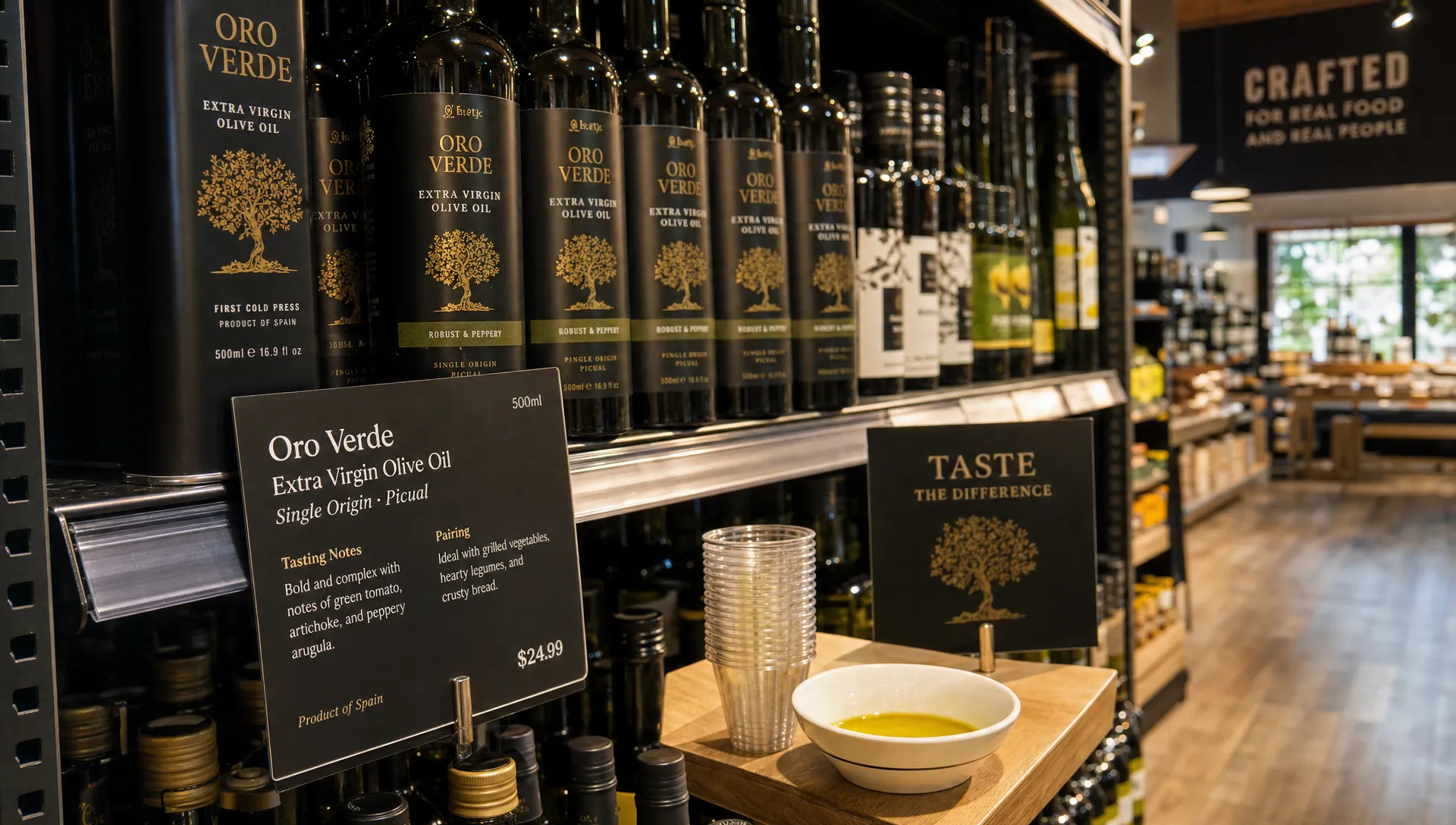
Measure shopper demand, not just distribution
Separate sell-in from sell-through. Sell-in tracks what the retailer buys from you. Sell-through tracks what shoppers buy from the retailer. A large opening order is encouraging, but it does not establish ongoing demand.
Use a small measurement set that connects commercial performance with brand learning.
| Measure | What it helps you understand | Interpretation caution |
|---|---|---|
| Net units sold per in-stock store-week | Sales pace across locations | Compare stores with similar conditions |
| Sell-through rate | How much available inventory sold during the period | Agree on the denominator and treatment of returns |
| Reorder volume and timing | Whether stock is being replenished | Check that orders reflect shopper sales rather than stock transfers |
| Contribution after retail costs | Whether sales support the business | Include agreed promotions, deductions and returns |
| Shopper feedback or recall | Whether the proposition is understood and remembered | Keep the method consistent and avoid overgeneralizing small samples |
To assess whether partnerships grow your brand, review these signals together. Strong unit sales driven entirely by deep discounts tell a different story from steady full-price sales followed by replenishment.
Request the most useful data the retailer can realistically provide. If shopper-level repeat-purchase information is unavailable, do not claim reorders prove customer retention. They show retailer replenishment, which is valuable but different.
Track out-of-stock periods and execution problems alongside results. Poor availability can make genuine demand look weak, while a heavily supported launch week can make an unsustainable sales rate look normal.
Protect your brand as the relationship expands
A successful pilot can lead to requests for more locations, new products or exclusivity. Assess each request against capacity, profitability and the wider channel strategy.
Define exclusivity precisely: which products, territories and channels does it cover, for how long and in exchange for what commitment? An open-ended restriction may block better opportunities without guaranteeing meaningful support. Have qualified counsel review material contract terms, especially around exclusivity, returns and termination.
Protect the customer experience too. Agree on product claims, approved assets, complaint handling and responsibilities for damaged or recalled products. Coordinate promotions across channels while respecting the retailer’s independent pricing decisions.
You can grow your brand without giving every partner the same assortment. Distinct bundles, pack sizes or relevant product selections can serve different shopping occasions, provided the offer remains clear and economically sound.
Keep customer data responsibilities explicit. A retail relationship does not automatically entitle either party to share identifiable shopper information or add customers to marketing lists. Use aggregated reporting where it answers the business question and obtain appropriate permissions when personal data is involved.
Frequently asked questions
How do small brands approach retail buyers? Build a shortlist based on shopper and assortment fit, then prepare a concise pitch with pricing, evidence and a realistic launch proposal. Follow the retailer’s supplier submission process where one exists. Relevant proof is more useful than a broad, unsolicited presentation.
Should a new brand choose a large retailer or a smaller specialist? Choose the partner whose requirements you can meet and whose environment helps shoppers understand the product. A smaller specialist can support focused learning, but size alone does not determine whether a partnership is suitable.
How long should a retail pilot last? Long enough to observe normal selling conditions and, where relevant, replenishment. Agree on the period before launch using purchase frequency, seasonality and lead times. Avoid judging performance only from an opening promotion.
When is a retail partnership ready to scale? Expand when demand, contribution and operations work together. Look for sustained shopper sales, manageable replenishment and support activities you can repeat. Resolve service failures or unclear economics before adding locations.
Build a retail strategy your brand can deliver
The strongest retail partnerships connect a clear proposition with the right shopping environment, workable economics and consistent execution. Choose the next location because the evidence supports it, not because a larger store count looks impressive.
If you want to grow your brand through retail, Boil can help connect your branding and go-to-market strategy. Start with a focused question: which partnership would put your brand in the right buying situation, and what must be true for it to work?
