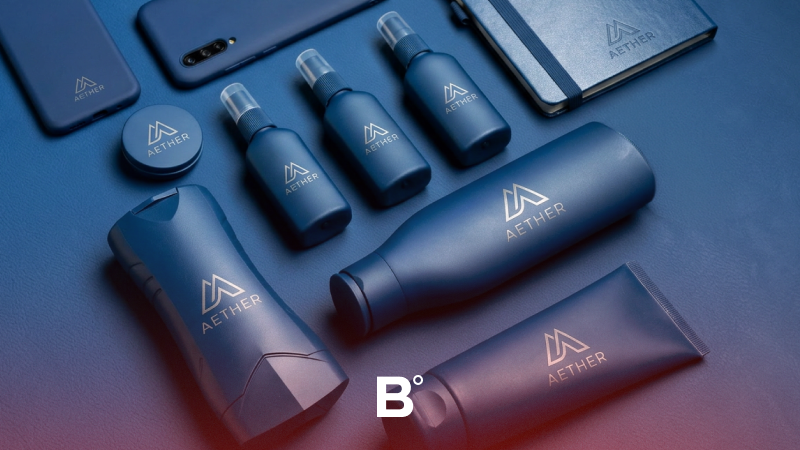
A strong brand identity is not born in a mood board. It is the visible outcome of sharper thinking: what the market is missing, what customers are trying to solve, what the company can credibly own, and how all of that should feel across every touchpoint.
That is why the best creative branding agency process does not start with colors, logos, or campaign ideas. It starts with insight. For challenger brands especially, identity has to do more than look good. It has to help the business earn attention, create preference, align teams, and convert belief into market share.
Here is how a strategic process moves from raw market learning to a distinctive, usable brand identity.
Why insight comes before identity
Branding can look subjective from the outside. A founder likes one logo. A sales team prefers another message. A designer presents three visual routes. People react from taste, habit, or fear.
Insight changes the conversation.
A real insight gives the team a reason for every creative decision. It explains why the brand should sound bold rather than reassuring, why the identity should challenge the category rather than blend into it, or why the website should lead with a problem customers recognize before introducing the product.
For a challenger brand, this matters because resources are limited. You cannot outspend the incumbent. You have to out-position, out-focus, and out-execute. The job of a creative branding agency is to turn that focus into an identity system that can travel, from pitch decks and websites to campaigns, product UX, investor conversations, and sales calls.
Step 1: Define the real brand challenge
The first step is not asking, “What should the new brand look like?” It is asking, “What business problem must the brand solve?”
A rebrand, brand refresh, or new identity project usually starts with visible symptoms. The website feels outdated. Sales teams explain the offer differently. Competitors look more premium. The company has expanded beyond its original category. Customers understand the product, but not why it matters.
A good agency translates those symptoms into a strategic challenge. For example, the actual problem may be:
- The brand is positioned around features while buyers care about outcomes.
- The company has outgrown its startup identity and needs to signal enterprise credibility.
- The category is crowded, so the brand needs a sharper point of view.
- Different business units are creating fragmented customer experiences.
- The brand has a strong purpose, but it is not connected to commercial messaging.
This diagnosis sets the direction for the entire process. Without it, identity work becomes decoration. With it, every design decision has a job.
If you are still evaluating whether you need agency support, Boil’s guide on how to choose a branding agency that fits your growth stage can help clarify the type of partner and scope that makes sense.
Step 2: Research the market, customer, and category
Once the challenge is clear, the agency moves into research. The goal is not to produce a giant report that nobody reads. The goal is to find the tensions, patterns, and opportunities that will shape the brand.
This usually includes a mix of internal and external inputs. Internally, leadership interviews reveal ambition, constraints, disagreements, and strategic priorities. Sales and customer success conversations uncover objections, buying triggers, and language customers already use. Existing brand assets show what should be preserved, removed, or rebuilt.
Externally, the agency looks at competitors, category conventions, customer behavior, cultural signals, and market shifts. In B2B or regulated sectors, this context can be especially important. A brand serving commercial energy buyers, for instance, needs to understand procurement pressure, price volatility, sustainability expectations, and the role of organizations representing commercial energy users before it can create credible messaging or identity.
Research should answer practical questions. What do buyers already believe? What frustrates them about the current options? Which promises sound generic? Which proof points create trust? Where is the category visually overused? Which words belong to competitors, and which words could the challenger own?
The output is not “data.” The output is direction.
Step 3: Distill the insight
An insight is not a statistic. It is not a customer quote. It is not a trend slide.
A strong brand insight reveals a useful truth that changes what the company should say, show, or do. It connects audience need, market tension, and brand advantage.
For example, a software company might discover that buyers are not searching for more automation. They are searching for confidence that automation will not break their workflow. A health brand might discover that customers do not want to look younger, they want to feel more like themselves. A sustainable product brand might discover that its audience is tired of guilt-based messaging and responds better to optimism, progress, and practical action.
The agency’s job is to compress messy research into a clear strategic idea. This idea becomes the creative brief for positioning, story, voice, and design. It should be simple enough for the entire team to remember, but sharp enough to guide hard choices.
If the insight could apply to five competitors, it is too broad. If it only describes the product, it is too narrow. If it helps the brand take a stand, it is useful.
Step 4: Turn insight into positioning
Positioning defines the place the brand wants to own in the mind of its audience. It is the bridge between insight and identity.
A creative branding agency will typically clarify the audience, the problem, the brand’s role, the key difference, the proof, and the emotional payoff. This is where challenger brands decide whether they want to redefine a category, focus on an underserved niche, challenge an outdated convention, or make a complex solution feel more human.
Good positioning is specific. It does not say, “We are innovative, customer-centric, and trusted.” Almost every company says that. Strong positioning creates contrast. It makes clear what the brand is for, what it is against, and why the audience should care now.
This stage often produces the core strategic foundation:
- A positioning statement for internal alignment.
- A brand promise that captures the value customers can expect.
- A messaging hierarchy for website, sales, and campaigns.
- A proof stack that supports the promise with evidence.
- A point of view that gives the brand a voice in the market.
This is also where many brands make a critical mistake: they try to sound bigger by becoming more generic. Challengers grow by doing the opposite. They become easier to choose because they are easier to understand.
Step 5: Build the brand story and verbal identity
Before the visual identity takes shape, the brand needs language. Words set the strategic and emotional frame for design.
A brand story explains why the company exists, what tension it is solving, and what future it wants to create. It should not be a corporate origin story dressed up in poetic language. It should help customers see themselves in the problem and understand why the brand is the right guide.
Verbal identity then turns that story into a usable system. This includes tone of voice, headline principles, key messages, naming logic, product language, and sometimes a manifesto or campaign platform.
The best verbal systems are practical. They help teams write faster and with more consistency. They reduce the gap between strategy and daily execution. A sales deck, homepage, recruitment post, and launch campaign should not sound identical, but they should clearly come from the same brand.
Step 6: Translate strategy into visual identity
Only now does the process fully enter visual territory. By this point, the agency is not simply designing attractive assets. It is translating positioning into recognizable form.
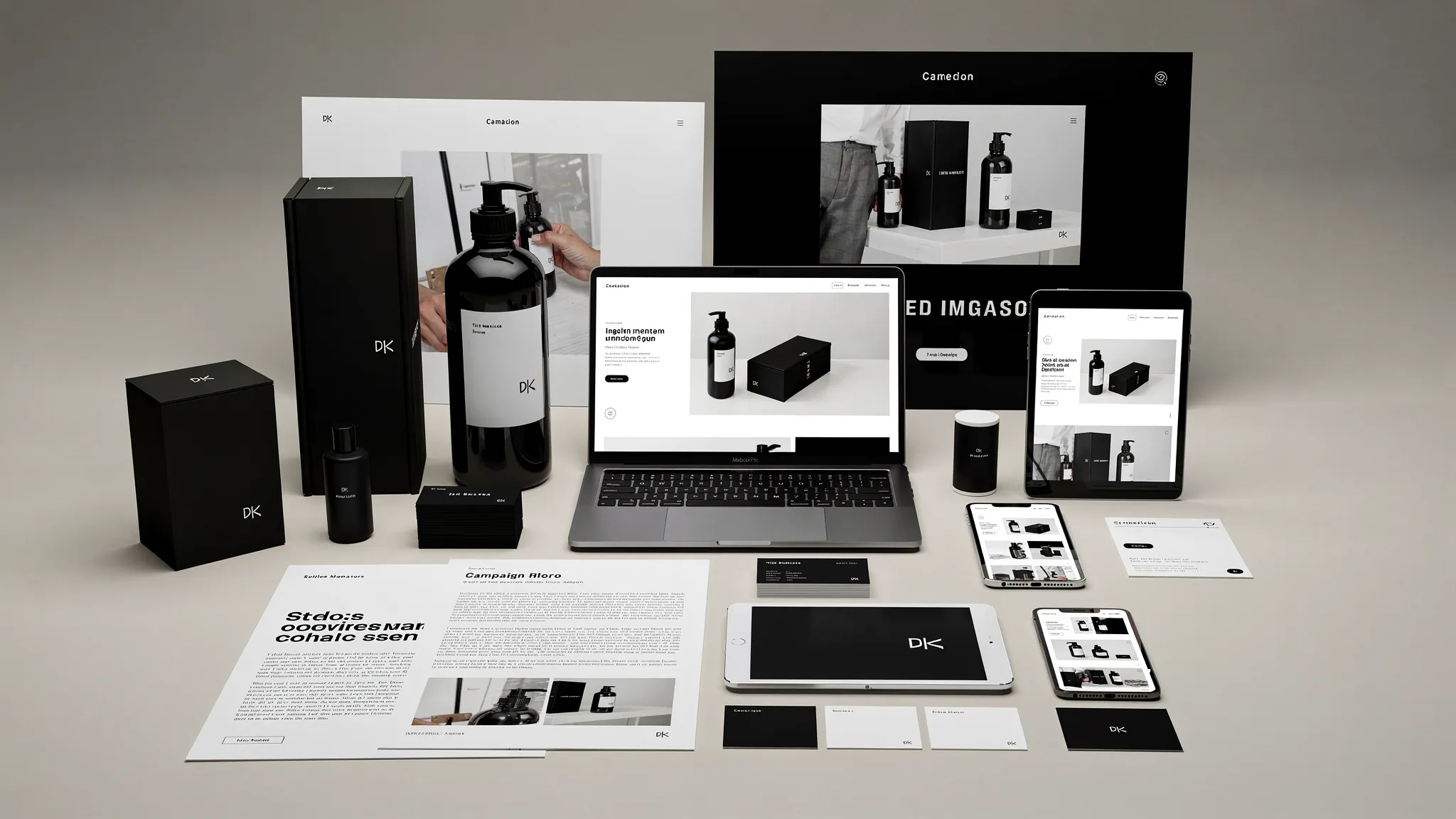
A visual identity system can include logo, color, typography, layout, imagery, iconography, motion, illustration, UI direction, and art direction. For modern brands, it should also consider accessibility, digital performance, scalability, and how the identity behaves across small screens, social feeds, product interfaces, events, and sales materials.
The question is not “Do we like it?” The better questions are:
Does it express the strategy? Is it distinctive in the category? Can internal teams actually use it? Does it create recognition quickly? Will it scale as the company grows? Does it support both brand building and conversion?
This is where craft matters. A clever concept is not enough. The identity has to work in real environments. A logo that looks great in a presentation but fails as an app icon is not finished. A color palette that feels bold but creates accessibility problems needs refinement. A visual language that only the design team understands will not survive launch.
Step 7: Pressure-test before launch
Testing does not mean asking everyone which route they like best. That usually produces the safest, least distinctive outcome.
Instead, pressure-testing should evaluate whether the brand performs against the strategy. The agency may test messaging clarity, visual distinctiveness, audience resonance, internal usability, and channel adaptability. For challenger brands, it is especially useful to test whether people can repeat the core idea after a short exposure. If they cannot remember what makes the brand different, the identity is not doing enough work.
Pressure-testing can be lean. A few customer interviews, sales team feedback sessions, landing page tests, ad concept tests, or stakeholder workshops can reveal whether the system is ready. The point is not to eliminate all risk. The point is to remove avoidable confusion.
Step 8: Launch the identity as a growth system
A brand identity is not complete when the final logo files are delivered. It is complete when the organization can use it consistently and confidently.
Launch planning turns the identity into market behavior. Internally, teams need the story, rationale, guidelines, templates, and decision rules. Externally, the brand may need a refreshed website, launch campaign, sales materials, social assets, product updates, investor narrative, PR messaging, or go-to-market plan.
This is where brand and growth must connect. A beautiful identity that never reaches customers will not change market share. A launch campaign without strategic clarity will create noise. The strongest process links brand strategy, creative identity, digital experience, and go-to-market activation.
For challengers, launch should also be treated as a learning moment. Track what the market understands, where conversion improves, what sales teams adopt, and which messages earn the strongest response. Brand is not static. It becomes stronger when it is used, measured, and refined.
What clients should bring to the process
A great agency process still depends on client input. The strongest outcomes happen when leadership is clear, available, and willing to make decisions.
Clients should bring honesty about the business challenge, access to customers or customer-facing teams, clarity on decision makers, openness to evidence, and ambition for differentiation. They should also bring constraints. Budget, timing, technical limitations, stakeholder sensitivities, and market realities are not obstacles to creativity. They are the conditions that make creativity useful.
The worst input is vague consensus. The best input is clear tension: “We need to look more premium without losing our approachable character,” or “We need to enter a conservative market without sounding like every incumbent.” Tension gives the agency something meaningful to solve.
How to know the process is working
A creative branding agency process is working when decisions become easier. The team has a sharper language for the brand. Stakeholders stop debating personal preferences and start evaluating against strategy. The identity feels distinct, but not random. The sales team can explain the value proposition faster. The website communicates the brand before visitors scroll too far.
Over time, the impact should show up in measurable signals: higher conversion, stronger recall, better quality leads, improved sales confidence, more consistent content, stronger employer appeal, and greater willingness from customers to pay attention.
Not every metric will move overnight. Brand building compounds. But the process should create immediate clarity and long-term leverage.
Frequently Asked Questions
What does a creative branding agency actually do? A creative branding agency helps define, design, and deploy a brand. That can include research, positioning, messaging, visual identity, verbal identity, website direction, launch assets, and go-to-market support.
How long does a branding process take? It depends on scope, stakeholder complexity, and the number of touchpoints involved. A focused identity project may move quickly, while a full rebrand with research, strategy, design, website, and launch planning takes longer.
Should branding start with strategy or design? It should start with strategy. Design is most effective when it translates a clear insight, position, and story into a recognizable system.
How do you avoid ending up with a generic brand identity? Start with a specific market insight, define a clear point of view, study category conventions, and make creative choices that express difference rather than simply following trends.
Is a new logo enough to reposition a brand? Usually not. A logo can signal change, but repositioning requires messaging, proof, experience, internal alignment, and consistent activation across the market.
Ready to turn insight into identity?
If your brand looks good but does not yet help you win attention, explain your difference, or grow market share, the issue may not be design quality. It may be the process behind it.
Boil helps ambitious challenger brands connect branding, go-to-market strategy, and digital experience so their identity is not just visible, but commercially useful. Explore how Boil can help you sharpen your position and build a brand system that is ready for growth at boil.agency.
