
Most brands don’t lose because their product is worse. They lose because buyers can’t quickly answer three questions:
That clarity is your brand market position. It is not your logo, not your tagline, not a slide in a deck. It is the space you occupy in the buyer’s mind and the way the market explains your value when you’re not in the room.
This guide is a practical, no-fluff approach to owning a niche, especially if you’re a challenger trying to win share from incumbents.
What “brand market position” actually means (and what it’s not)
Your brand market position is the specific place you want to be remembered for within a market context. It answers:
Positioning is not the same as messaging
If you skip positioning and jump to messaging, you end up with “pretty” campaigns that do not compound.
Positioning is not “we’re different”
Differentiation that does not matter to a buyer is decoration. Effective positioning ties your difference to:
Why owning a niche beats “going broad” for challengers
When you are not the default, you need focus to create momentum.
A tight position does three jobs at once:
There is also a brand science angle: being mentally available and easy to recall in buying situations is a major driver of growth. The Ehrenberg-Bass Institute’s work on mental availability and distinctive assets is a good starting point if you want the evidence base behind why “clear and consistent” wins over “clever and inconsistent.”
The 5 positioning traps that keep brands stuck
1) Competing on “better” instead of “different”
If your story is “same, but better,” incumbents can neutralize you with budget, distribution, and familiarity.
2) Defining your market too wide
If your target is “SMBs” or “health-conscious consumers,” you do not have a market, you have a hope.
3) Picking a niche you can’t credibly win
A niche is only ownable if you have (or can build) a real advantage. Advantage can come from product, business model, community, distribution, partnerships, or a unique insight.
4) Confusing a segment with a strategy
“Mid-market” is a segment. “Mid-market teams that need X outcome under Y constraint” is the beginning of a strategy.
5) Treating positioning as a workshop artifact
Positioning that is not activated in go-to-market becomes brand theater. Positioning must show up in:
A practical method to own your niche
You do not need a 60-page deck to improve your brand market position. You need a sequence of decisions, validated by reality.
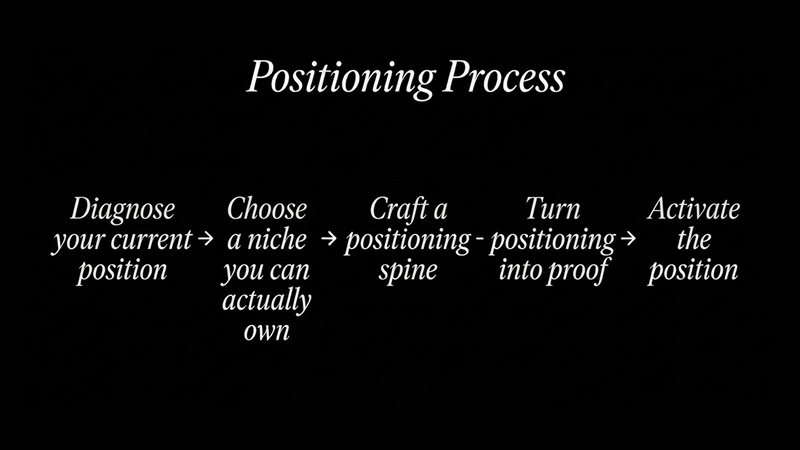
Step 1: Diagnose your current position (even if you never chose one)
Whether you like it or not, the market already positioned you.
Collect signals from:
A fast diagnostic question set:
If you want a deeper approach to avoiding untested assumptions in growth decisions, Boil has written about the cost of the “assumption trap” and how to validate what you think you know.
Step 2: Choose a niche you can actually own
Owning a niche does not mean your total addressable market is small. It means your entry point is sharp.
Define your niche with four filters:
A niche becomes ownable when you can complete this sentence without sounding generic:
“We are the obvious choice for [specific buyer] when [specific situation] because [specific advantage], unlike [specific alternative].”
Step 3: Craft a positioning spine (the part that should not change every quarter)
You want a small set of decisions that anchor everything else.
Here is a practical positioning spine you can use:
That last one, the trade-off, is the difference between “positioned” and “vaguely appealing.”
Step 4: Turn positioning into proof (so it survives contact with skepticism)
Challengers need credibility fast. Proof is how you borrow trust.
Strong proof can be:
If you are early and light on logos, you can still create proof:
Step 5: Activate the position across brand and go-to-market
This is where most teams fall apart. They “have positioning,” but the buyer never experiences it consistently.
Activation checklist (the essentials):
If you are building or rebuilding a launch plan, it is worth pressure-testing common GTM mistakes that blur positioning or spread resources too thin.
Positioning vs category design: when to reshape the game
Sometimes the best way to own a niche is not to squeeze into an existing category, but to redefine the category itself.
Category design is powerful, but it is not a shortcut. It is long-term and comes with trade-offs (education costs, risk, the burden of leadership). If you are exploring that path, Boil has a solid primer on what category design is, plus an honest take on its drawbacks.
A practical rule:
How to know your brand market position is working
Positioning should produce measurable pull, not just internal alignment.
Look for movement in:
Also watch language. When customers start repeating your words back to you, your position is taking hold.
A simple positioning example (template you can adapt)
Here is a fill-in-the-blanks example that stays grounded and specific:
“Our brand is for [buyer] who [context trigger]. We help them achieve [outcome] by [mechanism]. Unlike [alternative], we [trade-off or unique advantage], proven by [proof].”
If that statement feels hard to write, the issue is not copywriting. It is decision-making.
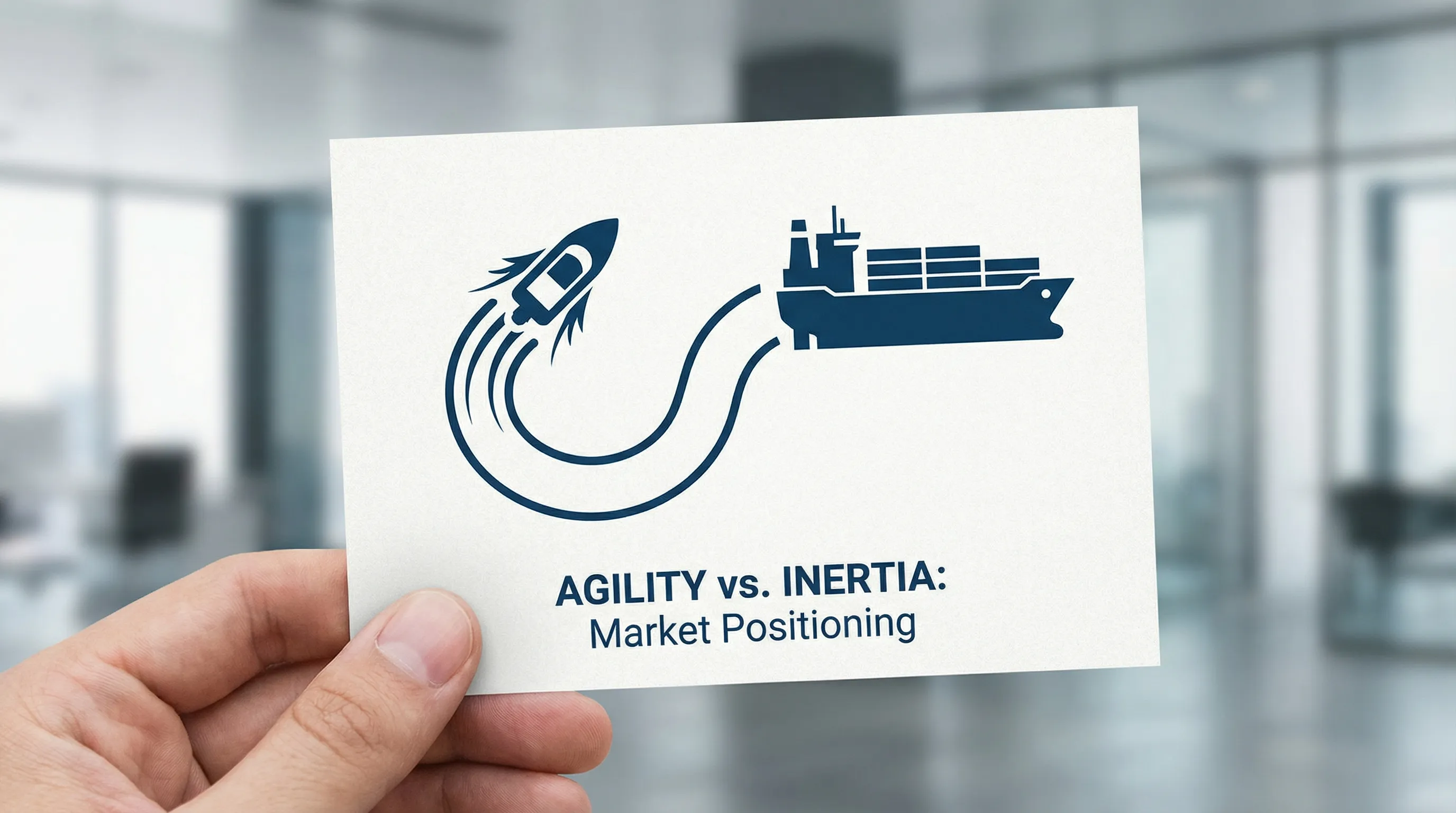
Where challenger brands have an advantage in positioning
Incumbents are often trapped by what made them successful:
Challengers can do the opposite:
If you want the philosophical layer behind this, Boil’s view on the challenger mindset is a useful companion piece.
Frequently Asked Questions
What is a brand market position in simple terms? A brand market position is the clear idea the market associates with you, what you are known for, who you are for, and why you are the best choice in a specific context.
How do I choose the right niche without limiting growth? Choose a niche as your beachhead, not your ceiling. A tight niche helps you win credibility and momentum, then you can expand to adjacent segments with similar needs.
What is the difference between positioning and brand identity? Positioning is the strategic decision about where and how you win. Brand identity is how that decision becomes recognizable through design, language, and experience.
Can I reposition without rebranding? Yes. If your identity is still effective and trusted, you can adjust positioning through messaging, offers, and GTM execution. Rebranding is helpful when your current identity no longer matches your strategy or audience.
How long does it take to establish a strong market position? You can clarify positioning quickly, but market adoption takes consistent repetition across channels. Many brands see early sales and inbound improvements in months, while strong association can take longer.
Own your niche with a positioning and GTM partner built for challengers
If your brand feels like it is competing in a crowded category, the fastest unlock is often not “more marketing,” it is a sharper, more ownable brand market position that shows up everywhere your buyer interacts with you.
Boil is a next generation branding and go-to-market agency built for challengers. If you want help tightening your niche, pressure-testing your positioning, and turning it into a digital experience and launch plan that actually converts, explore Boil’s work and start a conversation at boil.agency.
